
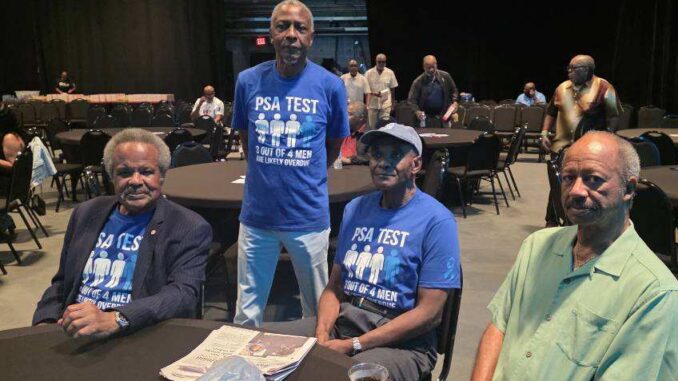
By Lynn Jones | A movie premiere at WJCT Studios became more than a night at the theater as dozens of Jacksonville -area men gathered for screenings, health education and an often difficult conversation: prostate cancer and its disproportionate impact on Black men.
The award -winning docudrama ‘The Black Walnut,” was presented as part of a weekend of prostate cancer awareness activities in partnership with Mayo Clinic’s Cancer Health Equity Research Program (CHERP) and iCCaRE Partnership Engagement Services. Mayo Clinic’s Dr. Floyd Willis hosted the events, which included free PSA testing in partnership with Agape Health, a health fair, meet-and-greet and question-and-answer session.
More than 75 men attended the ‘popcorn and beer” movie night, where the film used friendship, family and personal experience to explore how a gland roughly the size of a walnut can have a profound impact on a man’s health and quality of life.
“The Black Walnut” follows a Black man with a wife, two children and a promising corporate career whose decline health eventually leads him to seek medical care. He is diagnosed with prostate cancer and begins treatment, turning his experience into a broader story about early detection, health advocacy and survival.
Although the story is dramatized, the health disparities behind it are real. Black men in the United States have higher rates of prostate cancer incidence and mortality than white men, according to national cancer data.
For the film’s writer, producer, director and actor Terrance Afer-Anderson, the subject is personal. Afer-Anderson has discussed his own prostate-health journey and said the film was designed to create a setting where men and women could openly discuss issues that are often avoided.
“These are very important health disparities that we are facing,” Afer-Anderson said. “The film created an atmosphere for men and women to talk.”
The film also examines mistrust of the medical system within some Black communities, including the historical legacy of the Tuskegee syphilis study, while encouraging patients to become active participants in their health care. It tackles another subject that men may be reluctant to discuss – the potential effects of prostate cancer and treatment on sexual function and quality of life.
Because early prostate cancer may cause no noticeable symptoms, screening became a central part of the Jacksonville event. Attendees were offered PSA blood tests and encouraged to discuss their individual risk factors and screening options with health care professionals.
For A.J. Merriweather, a Mayo Clinic prostate cancer ambassador and survivor, seeing men participate in the screenings was an important part of the weekend.
The message organizers hoped men would take home was straight-forward: Don’t wait for symptoms to start paying attention to prostate health. Understanding personal risk factors and discussing screenings with a health care provider can help men make informed decisions about their care.
For more info visit https://www.mayoclinic.org/