
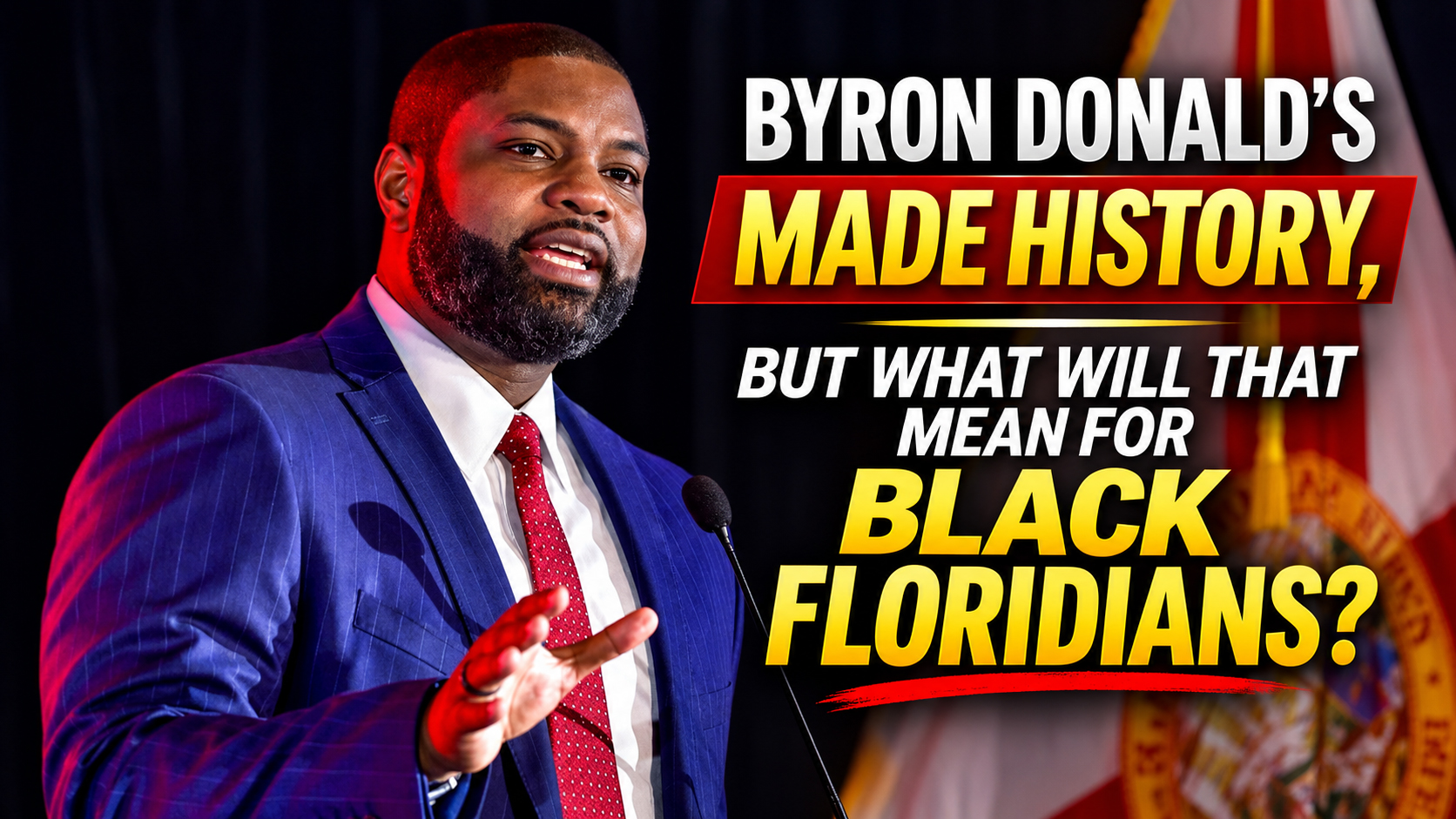
 Republican Byron Donalds made history election night, becoming Florida’s first Black governor and the first Black Republican elected governor in American history. His victory over Democrat David Jolly shattered a racial barrier in a state with a long history of segregation, voter suppression and unequal opportunity.
But from Jacksonville’s Northside to communities across Northeast Florida, a more important question remains: Will this historic achievement translate into meaningful progress for Black Floridians?
Donalds’ victory extends more than three decades of Republican control of Florida’s governor’s office. It also underscores the complicated intersection of race, political ideology and party loyalty. For some voters, his election represents progress and expanded political representation. For others, particularly those concerned about the rollback of civil rights protections, it raises questions about the state’s future.
Regardless of political affiliation, history was within reach. A Donalds victory would break a racial barrier, while a Jolly victory would have ended Republican control of the governor’s office for the first time since 1994.
But representation alone does not guarantee progress.
Jacksonville is home to one of Florida’s largest Black populations, yet many historically Black neighborhoods continue to struggle with disinvestment, rising housing costs, educational disparities and limited economic opportunity.
From New Town and Durkeeville to Moncrief and the Eastside, residents need more than political promises. They need affordable housing, stronger schools, safer neighborhoods and greater access to economic opportunity.
Donalds has championed lower taxes, school choice and reduced government regulation. The challenge will be ensuring those policies benefit communities historically excluded from Florida’s prosperity.
Will Black-owned businesses gain greater access to state contracts and capital? Will economic development reach underserved neighborhoods? Will working families and seniors find relief from rising property taxes, insurance premiums and everyday expenses?
These are the issues that will define his administration for many North Florida residents.
Education and civil rights may present Donalds’ greatest challenges.
Florida’s ongoing debates over African American history instruction, diversity initiatives and public education have particular significance in Jacksonville, where generations fought to desegregate schools and secure equal opportunities.
Donalds’ opposition to government diversity, equity and inclusion programs reflects his conservative philosophy of individual merit and equal treatment. Civil rights advocates, however, warn that eliminating such initiatives without addressing existing disparities could deepen inequalities.
His support for school choice also raises questions about the future of traditional public schools serving economically disadvantaged communities.
Teaching Black history, protecting equal opportunity and providing quality education should not be partisan issues. They are fundamental responsibilities of government.
Donalds now has an opportunity to govern beyond party lines and demonstrate that his administration will serve all Floridians, including those who did not vote for him.
That means engaging Black business leaders, educators, faith organizations and civil rights advocates throughout Duval County and North Florida — not merely for ceremonial appearances, but as meaningful partners in shaping public policy.
There is no diminishing the significance of Florida electing its first Black governor. Generations of Black Floridians fought for the political access that makes such a milestone possible.
But breaking a racial barrier and dismantling racial inequality are not the same achievement.
For families struggling to afford homes, entrepreneurs seeking opportunity and parents demanding better schools, symbolism will never substitute for results.
Byron Donalds has made history by becoming Florida’s first Black governor. Whether he makes history for Black Floridians will depend on what he does with the power voters have entrusted to him.
Breaking barriers makes history. Breaking cycles of inequality makes progress.