
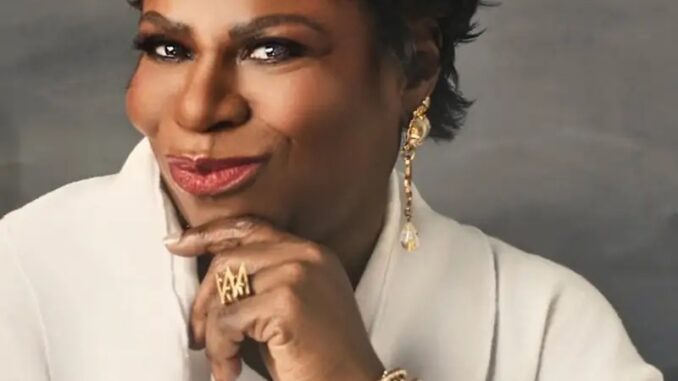
For World AIDS Day: Why Black Women Must Be at the Center of the HIV Conversation | By Grazell Howard, chairperson and managing director of the Black AIDS Institute
As the world observes World AIDS Day on December 1, the Black AIDS Institute (BAI) is calling attention to a critical but often overlooked part of the HIV conversation: Black women.
There is a simple question we should be asking whenever we talk about the health and well-being of the Black community: Who are we talking to?
Because if you’re not talking with Black women, then you’re not talking to the Black community.
This is not a slogan. It is a call to action. It’s a powerful statement on its own, and it’s the focus of the latest campaign by the Black AIDS Institute (BAI) in tackling HIV.
It’s no secret the reverence that Black women hold in our communities. They have long been at the center of our families, our communities and our movements. We are mothers and daughters, sisters and aunties, caregivers, professionals, educators, entrepreneurs, advocates and community leaders. We often carry information from one generation to another and help shape the health decisions of the people around us.
Yet too often, Black women are spoken about rather than spoken with,
The distinction matters.
According to AIDSVU.ORG, Black women had the highest rate of new HIV diagnoses among women of all races/ethnicities in 2022. When it comes to HIV, sexual health and prevention, we cannot afford to have conversations that are designed without the voices and lived experiences of the women we are trying to reach. We cannot simply create a campaign, put a Black woman in the photograph and call it community engagement. Representation is not the same as participation. Black women often influence how families understand health, where people seek care and whether important conversations happen at all.
Without honest, relevant and inclusive conversations with Black women, we are missing one of the most powerful forces shaping the health of Black communities.
If we want to move the needle on HIV, we have to listen to Black women, regarding what prevents them from accessing care; what makes them feel safe to ask questions; what information they trust and what barriers stand between them and the services they need.
And those conversations must happen across multiple generations.
HIV is not a “gay man’s disease,” like it was portrayed back in the 1980s when it was introduced to us on the evening news. Today, HIV is a multi-generational community health matter that impacts people across genders, ages and backgrounds. It intersects relationships, reproductive health, aging, mental and social well-being, stigma and access to healthcare.
Most importantly, Black women are not a monolithic population, and HIV education cannot take a one-size-fits-all approach. While Black women share many common experiences, their individual circumstances, health needs and barriers to care are not the same. Effective HIV education must recognize these differences and develop culturally relevant approaches that speak to women where they are.
For example, a young Black heterosexual or cisgender woman navigating relationships and sexual health may have different questions than a woman either raising children and caring for aging parents. It is imperative to reach Black women between the ages of 18-34 with relevant HIV prevention and resources. At the same time, we need to address and challenge the assumptions that Black women over 50 are no longer at risk. Age should never be a reason to overlook a woman’s need for prevention education, testing or access to care.
In addition, we must also recognize the socioeconomic factors that influence health outcomes. Black women experiencing poverty and housing instability face significant barriers to healthcare access, creating challenges to HIV education, prevention, testing and treatment. And finally, we cannot overlook the women experiencing intimate partner violence. Abuse within relationships can limit a woman’s ability to make sound decisions about her sexual health, negotiate safer sex or access HIV prevention services.
There is no single Black experience. If we want to reach the Black community, we must understand Black women’s perspective and realities.
If we want healthier Black communities, we have to address the whole person.
HIV is still a public health threat, therefore, we have to recognize the influence that Black women have within the larger community. If we want to reduce health disparities and create healthier Black communities, then Black women must be at the center of the conversation.
Because when Black women are informed, engaged and empowered, the impact extends far beyond the individual.
If you’re not talking with Black women, you’re not talking to the Black community.
Grazell Howard is the chairperson and managing director of the Black AIDS Institute (BAI), a nationally recognized HIV/AIDS policy, education, advocacy, and community mobilization organization dedicated to ending the HIV epidemic in Black communities. Guided by its mission to stop the AIDS epidemic in Black communities by engaging and mobilizing Black institutions and individuals to confront HIV and AIDS, BAI operates through an unapologetically Black, community-centered framework grounded in health equity, self-determination, dignity and social justice. The agency maintains its headquarters in Los Angeles, California, with a satellite office in Charlotte, North Carolina, and has an established presence throughout the Southern United States. For more information, visit BlackAIDS.org
MEDIA CONTACT:
Wyllisa Bennett, publicist du jour
wrb public relations
310-266-9704
wyllisa@aol.com