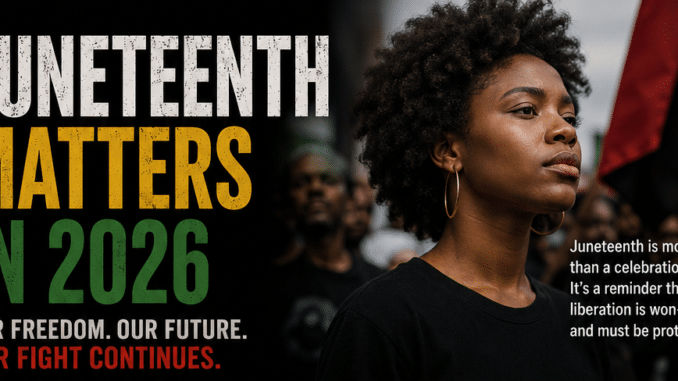
As many Americans mark the Juneteenth season in 2026 with parades, festivals, educational programs and community gatherings, the holiday remains as relevant today as ever — not only as a celebration of freedom, but as a reminder of the nation’s ongoing pursuit of equality and justice.
Juneteenth commemorates June 19, 1865, when Union troops arrived in Galveston, Texas, and informed enslaved African Americans that they were free — more than two years after President Abraham Lincoln issued the Emancipation Proclamation. The day has long been celebrated within Black communities and gained national recognition when it became a federal holiday in 2021.
More than 160 years later, Juneteenth serves as an opportunity to reflect on the resilience, achievements and contributions of African Americans while remembering the lasting effects of slavery and discrimination. The holiday represents both a celebration of freedom gained and an acknowledgment that true equality has often been delayed, contested and incomplete.
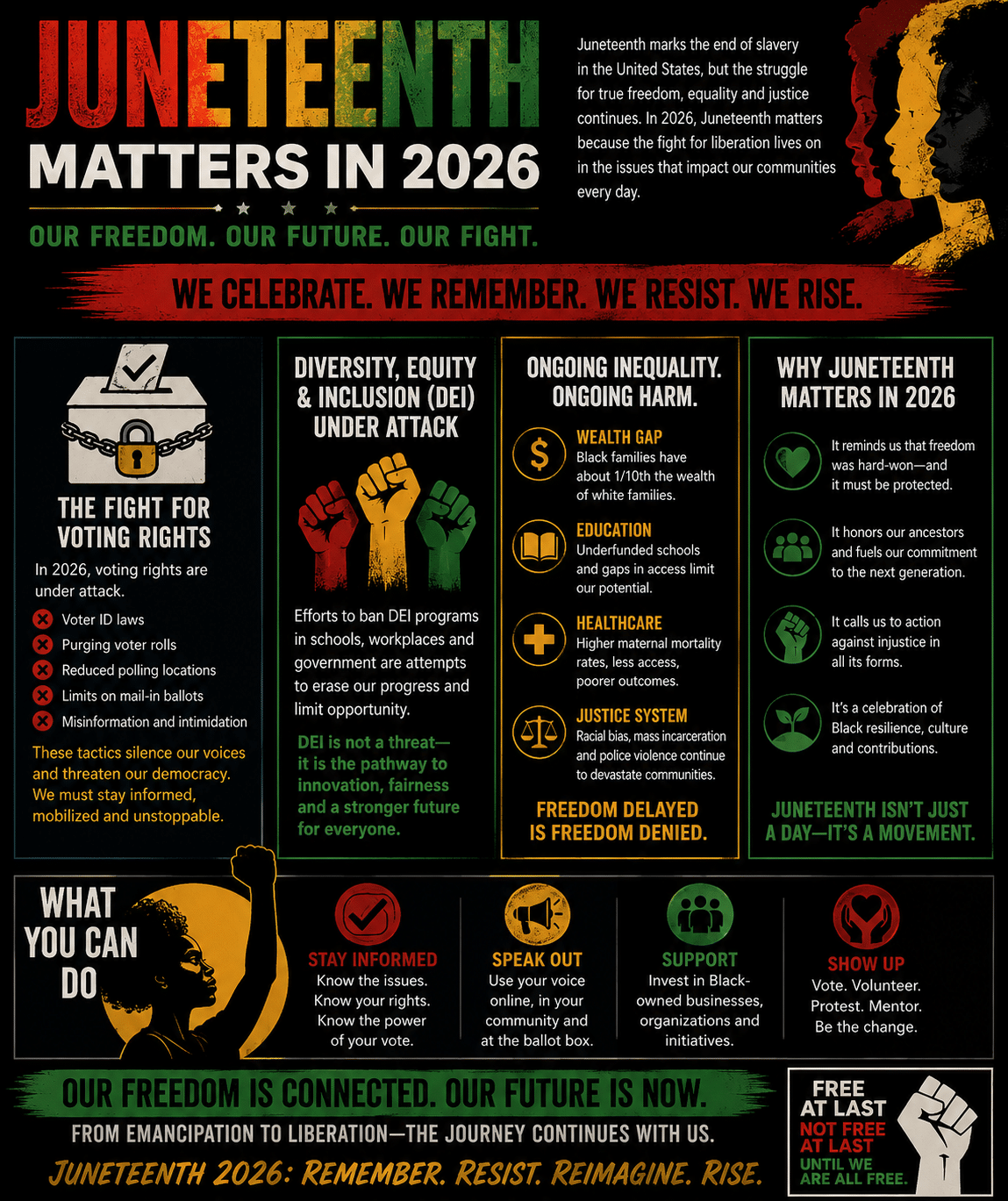
Across the country, communities are using Juneteenth observances to promote education, civic engagement economic empowerment and cultural preservation. Events often include historical exhibits, voter registration drives, health fairs, business expos and discussions about civil rights and social progress.
The holiday’s significance extends beyond history lessons. In an era of ongoing restrictions over previously attained voting rights, education, economic opportunity and racial equity, Juneteenth provides a space for Americans to reflect on the nation’s past while considering its future.
This year the holiday can be regarded as deeply personal, connecting generations through storytelling, cultural traditions and shared remembrance. As celebrations continue nationwide, remember Juneteenth remains a powerful symbol of perseverance, progress and the enduring promise of freedom for all Americans as the fight is only beginning again.