
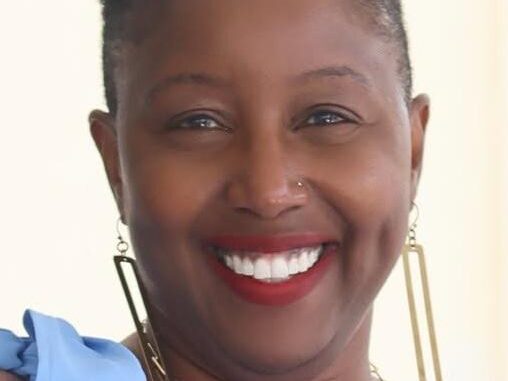
By Nataki Garrett Myers
Let’s start with the numbers, because America often values economic losses over human suffering.
According to a 2020 Citigroup analysis, racism cost the United States economy $16 trillion over twenty years. McKinsey & Company later estimated that the entertainment industry alone leaves roughly $10 billion annually on the table by systematically undervaluing Black-led work, despite repeated evidence that it outperforms on return on investment.
Now imagine the cost across every sector where Black women are asked to save institutions while being denied the support, protection, and authority necessary to sustain ourselves inside of them.
Imagine the economic impact of forcing experienced Black women out of leadership. Imagine the innovation lost when women leave industries entirely after years of public hostility, workplace retaliation, pay inequity, burnout, and institutional betrayal. Imagine what it costs this country when the very people expected to stabilize democracy, workplaces, schools, nonprofits, healthcare systems, and communities are themselves treated as disposable.
We do not have enough language for this crisis because we keep calling it burnout.
But burnout suggests overwork.
What many Black women are experiencing is extraction.
And extraction has become foundational to how this country functions. Black women remain among the highest labor force participants in the nation while carrying disproportionate burdens from inflation, caregiving responsibilities, stagnant wages, rising grocery and gas prices, and housing insecurity.
We are navigating massive layoffs in industries that once loudly proclaimed commitments to diversity and inclusion. We are watching voting rights protections erode while redistricting battles deliberately weaken Black political representation and dilute community power.
At the same time, Black women continue to be called upon to organize, mobilize voters, steady institutions, lead teams through crisis, and hold families together through economic uncertainty.
The language changes every decade. The dynamic does not.
We are expected to carry democracy while being denied full protection within it.
I know this because I lived it.
Like many Black women in leadership, I spent years believing that if I worked hard enough, sacrificed enough, and loved the mission deeply enough, the institution would eventually love me back. I worked through maternity leave while helping save a major American theater institution. I sat through back-to-back meetings, afraid to drink water because even a short break would interrupt the demands being placed on me. I raised millions of dollars while navigating public scrutiny, political hostility, and private retaliation.
And when it was over, some people described the work as a “hatchet job.”
That phrase stayed with me because it revealed something much larger than one organization or one industry. It exposed the ease with which institutions rewrite the labor of Black women once they no longer need us.
Across sectors, Black women are describing eerily similar experiences.
Women recruited to lead the transformation are blamed for the discomfort the transformation creates. Black women executives are questioned about whether they will “center their identity” in leadership roles despite decades of proven experience.
Leaders are publicly undermined by boards while simultaneously being asked to stabilize organizations in crisis. Women are pushed out quietly and then replaced through what I have come to call “trading” institutions, swapping one Black face for another to preserve appearances while leaving underlying systems untouched.
And all of this unfolds against a broader political backdrop in which the rollback of diversity efforts is now treated as pragmatic governance rather than what it actually is: a retreat from accountability.
The current backlash against DEI did not emerge because equity failed. It emerged because equity disrupted longstanding arrangements of power and comfort.
What many institutions wanted was representation without redistribution. Visibility without structural change. Progress without discomfort.
But there are trap doors built into systems long before Black women arrive.
You can be the first woman. The first Black leader. The first after a crisis. The first after a founder. The first at a certain budget size. And still discover that your appointment did not close the trap doors beneath you. It only made you the next person expected to navigate them quietly.
And perhaps most dangerously, extraction trains us to mistake trauma responses for leadership skills.
Hypervigilance becomes professionalism. Self abandonment becomes dedication.
Over functioning becomes excellence. Silence becomes grace.
We call Black women resilient while watching them disappear in real time. What we are living through now is not simply a labor issue or a leadership pipeline issue. It is a democracy issue.
Because the same systems attempting to silence Black political power through voter suppression and redistricting are mirrored in workplaces and institutions that punish Black women for exercising authority. The same culture that depends on Black women to turn out voters during elections also expects us to quietly absorb inequity once the election is over.
And eventually the body keeps score.
The exhaustion so many Black women are carrying is not weakness. It is the cumulative impact of navigating systems that demand extraordinary performance while withholding basic protection.
For years, many of us believed surviving these environments was proof of strength. But surviving harm is not the same thing as thriving. Resilience is not a leadership strategy. It is a response to injury.
Black women do not need more praise for enduring broken systems. We need infrastructure. Protection. Investment. Honest governance. Sustainable leadership models. Economic opportunity. Voting protections. Safe workplaces. Accountability. And institutions courageous enough to examine why the people most committed to their missions are so often the people most harmed by serving them.
Because the future cannot be built on extraction disguised as excellence.
And Black women should not have to bleed to prove we belong in the room.
Nataki Garrett Myers is the founder and CEO of Ladder Leadership Services, Inc., an organizational-readiness and leadership-coaching practice. Follow her on Substack, “Be a Ladder Leader,” and her podcast, “We Come to Lead”.