
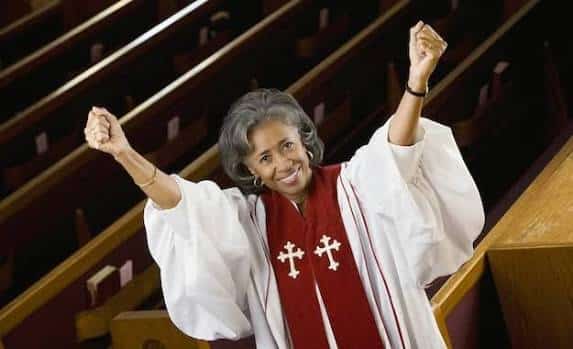

The Southern Baptist Convention’s vote to strengthen enforcement of its prohibition on women pastors landed like a thunderclap in some corners of American Christianity. In much of Black America’s church community, however, it exposed a contradiction that has existed for generations: women are often trusted to do the work of ministry, but not always granted the authority that comes with it.
Now, as the nation’s largest, most influential Protestant denomination moves to formally enforce gender restrictions on who can preach and pastor, Black clergy and church leaders are confronting the much larger question of who gets to answer God’s call — and who gets to decide if it’s legitimate.
If adopted, it moves the denomination from stating a doctrinal position to formally enforcing it through denominational membership standards. More than 3,875 Black congregations belong to the SBC, accounting for just 7% of the SBC’s total membership.
Albert Mohler, president of The Southern Baptist Theological Seminary and a central voice behind the amendment, declared that “(t)here’s a great line that divides liberal and biblical evangelicalism, and you can see it on this very issue.”
Supporters argue that the amendment simply tightens enforcement of what the denomination already teaches — that the pastoral office is limited to men — and resolves ambiguity between belief and practice. But opponents say the SBC already has the power to remove churches that violate its doctrinal standards.
‘This is about who gets hired’
In the Black church, women’s preaching has long existed in tension with institutional recognition—sometimes officially affirmed, sometimes informally tolerated, and sometimes resisted, even when congregations themselves have embraced women’s spiritual authority.
Standing in solidarity
The SBC vote draws a bright institutional line, even as many Black churches have historically lived with overlapping categories — exhorter, evangelist, missionary, preacher, pastor — that do not always fit neatly into Western ecclesial hierarchies.
For the wider American church, the significance is less procedural than interpretive. It raises again a question that different traditions answer differently: whether the pulpit is primarily an office granted by institutions, or a calling recognized wherever it emerges — and who gets to decide when those two are allowed to mean the same thing.