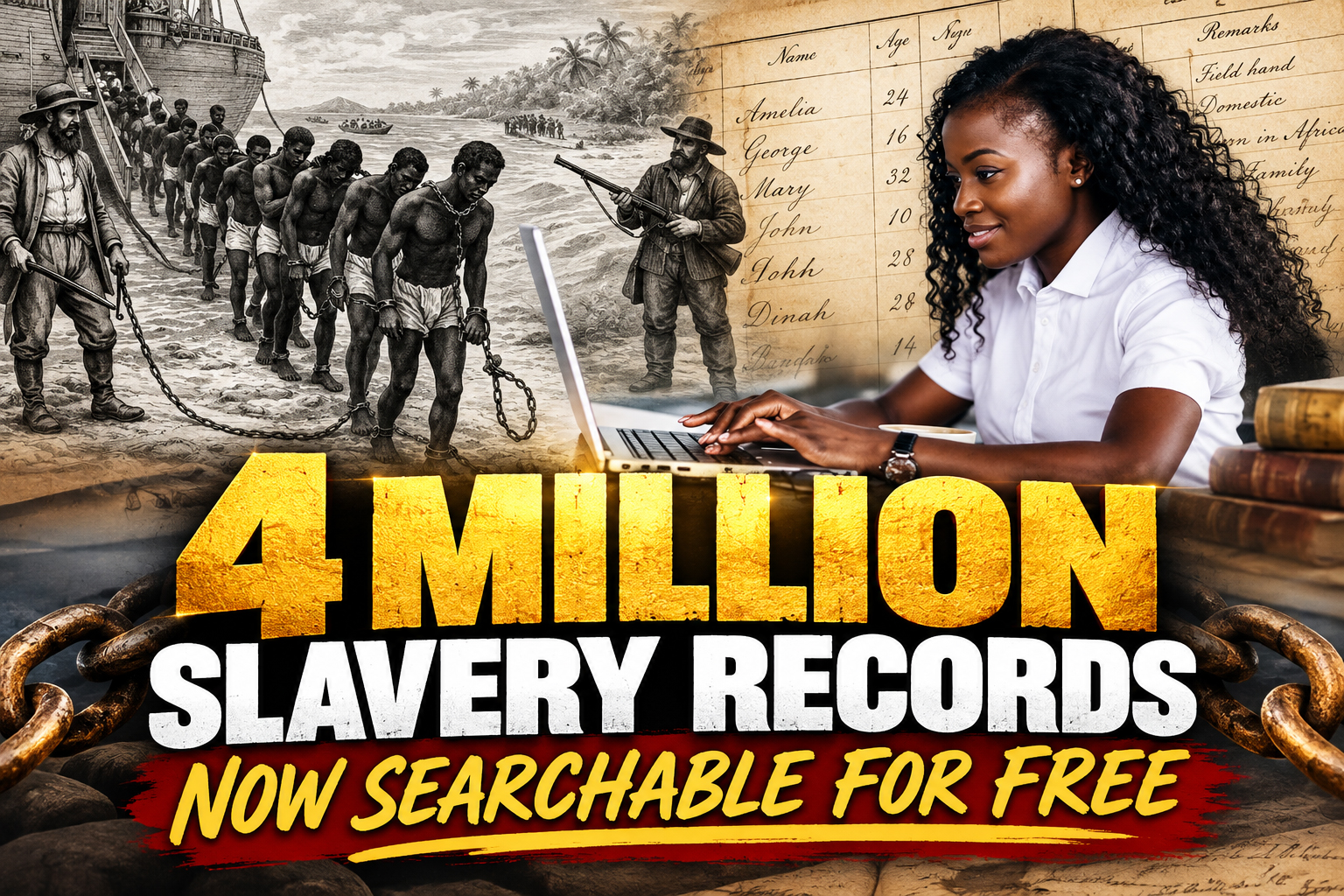
Nearly 4 million records documenting enslaved people across 20 former British colonies are now searchable online, opening a potentially powerful new door for descendants across the Caribbean and African diaspora trying to trace family histories disrupted by slavery.
The Former British Colonies Enslavement Registers span 1813 to 1840 and include nearly 300,000 digitized pages from places including Jamaica, Barbados, the Bahamas, Trinidad, Mauritius and the Cape of Good Hope in present-day South Africa.
Unlike many slavery-era documents that primarily identify enslavers, these records can contain the names, ages, family relationships, physical descriptions and places of origin of enslaved people, along with births, deaths, sales, escapes and manumissions. Some records could allow descendants to connect relatives across multiple generations.
The registers were originally created by the British government after the 1807 abolition of the transatlantic slave trade to track enslaved populations and combat illegal trafficking. More than 200 years later, documents once used to administer slavery are being repurposed to help restore identities and family connections.
The collection was digitized by Ancestry in partnership with University College London’s Centre for the Study of the Legacies of British Slavery, using original manuscripts held by the U.K. National Archives. The collection is available to search at no cost with a free Ancestry account.
WHY IT MATTERS: For descendants whose family trees often hit a wall during slavery, a name, a mother, a child, an age or a birthplace recorded two centuries ago could provide the missing link between generations.