
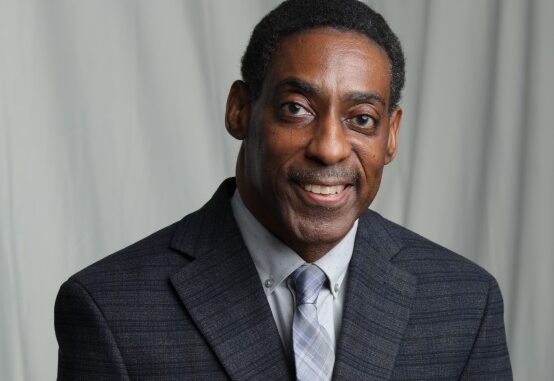

by David Marshall
(TriceEdneyWire.com) – It appears that every week, there is a news story or event that leaves us even more tired and weary of the political climate we live in. At a time when we should be paying increased attention to evolving events, we also face the personal need for emotional and mental breaks from the chaos. Taking that mental off-ramp to recharge and receive the temporary relief we need is critical. Sports can often be used as that emotional and mental off-ramp. While the same can be said of music and other forms of entertainment, sports have a unique way of uniting people of various backgrounds. This is particularly true when attending live sporting events where sports arenas and stadiums become safe spaces for passionate sports fans to escape the polarizing cultural wars between conservatives and liberals.
At the beginning of every professional sporting event, it has become an American tradition to stand during the playing of the national anthem. By doing so, it represents a moment of unified respect for our nation that goes beyond race, class, gender, age, political affiliation, and religion. It represents a time before the game when players, coaches, and fans of opposing teams are Americans first, and are joined together as one American team. The national anthem is a few precious minutes where patriotism and unity are established. It establishes an atmosphere of fan camaraderie where MAGA conservatives and die-hard liberals can cheer together for their favorite home team while being free of the political divisions from the outside world. Fans sitting in the stands can be totally unaware of the political persuasions of those around them because political differences are put aside, and support for the home team on the court or field becomes the unifying shared interest of those in attendance. It is a part of the game day experience that can easily be overlooked and taken for granted.
As starting quarterback of the San Francisco 49ers, Colin Kaepernick received backlash on multiple fronts when he used kneeling during the national anthem as a means of silently protesting racial injustice and police brutality. At the time, Joe Lockhart was the executive vice president in charge of communications and government affairs for the NFL. He later became a political analyst for CNN. In a column written in 2020, Lockhart stated, “No teams wanted to sign a player – even one as talented as Kaepernick –whom they saw as controversial, and therefore, bad for business.” Colin Kaepernick was not blackballed from the league because of his lack of skills, injuries, or salary demands. He was ostracized because he became a financial liability. “For many owners, it always came back to the same thing,” Lockhart wrote. “Signing Kaepernick, they thought, was bad for business. An executive from one team that considered signing Kaepernick told me the team projected losing 20% of their season ticket holders if they did. That was a business risk no team was willing to take, whether the owner was a Trump supporter or a bleeding-heart liberal. As bad of an image problem it presented for the league and the game, no owner was willing to put the business at risk over this issue.”
Looking back, I personally believe he should strategically use his platform as an NFL player in speaking out against racial injustice and police brutality, but his method underestimated the fan reaction when he invaded the political safe zone on game day with controversial social issues. It arguably led to Kaepernick losing his promising NFL career, and not being re-signed by any other team in the league. Recently, the New York Giants’ starting quarterback was another NFL player who misjudged a politically sensitive situation by introducing President Trump at a MAGA rally. Jaxson Dart’s decision will not cost him his job and career, but it did result in a backlash from a different perspective: The public backlash came from those defending the Black cause, including one of his New York Giants teammates. Linebacker Abdul Carter initially voiced discomfort with the optics of the event, according to multiple reports. “Some things are bigger than football, and this is one of those things,” Carter told reporters during a press conference. “If he chooses to align himself with a man like President Trump, it’s my responsibility based on what I believe and what I stand on to not only show my teammates that I’m against that, but to show the world.”
Dart, along with other Trump supporters, cannot forget that the majority of players in the NFL are Black. Abdul Carter’s comments refer to the character of a leader. If Dart is accepting the character of an anti-DEI leader, how can he, with any sense of credibility, be the quarterback and leader of a locker room that is predominantly Black? Hopefully, during the private meeting used to repair the fractured locker room, the team will learn that a player in leadership cannot bring racial insensitivity into another version of the NFL safe zone. This is why diversity, equity, and inclusion are always needed to bring racial awareness when needed.
David W. Marshall is the founder of the faith-based organization TRB: The Reconciled Body and the author of God Bless Our Divided America.