
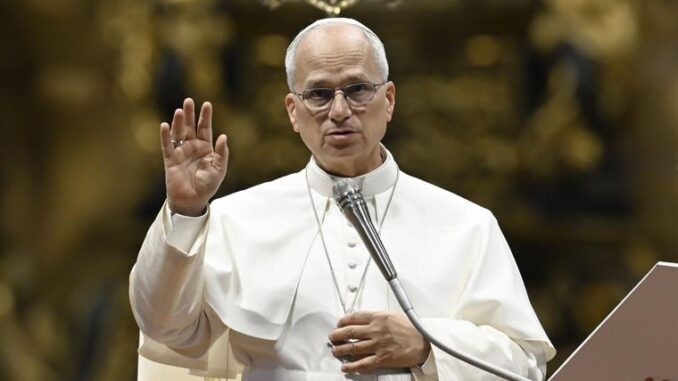
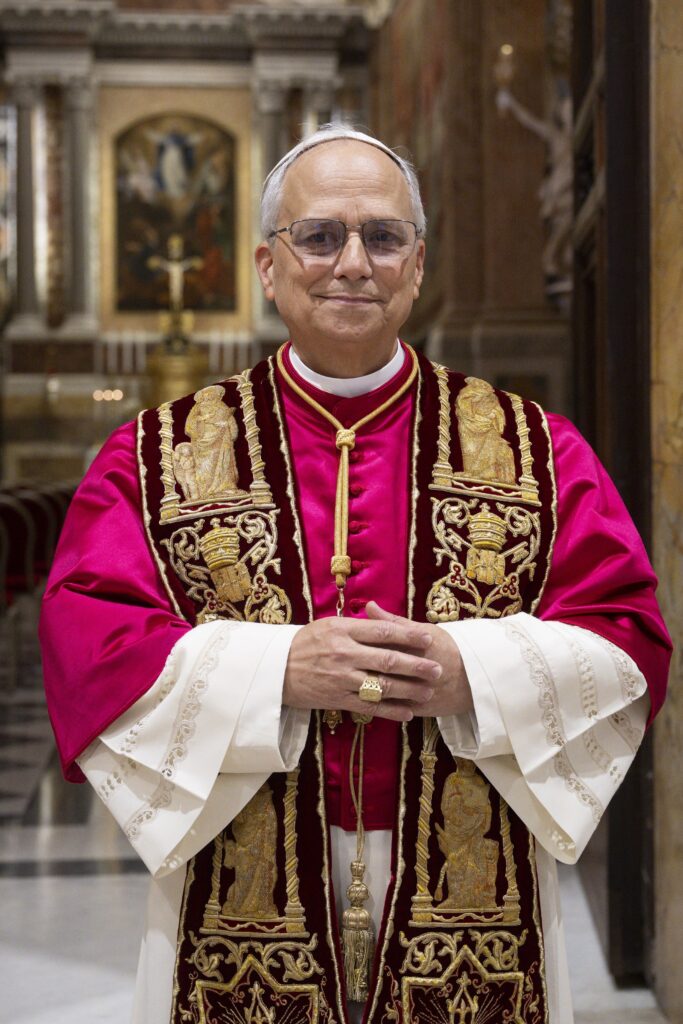
 VATICAN CITY — Pope Leo XIV has publicly acknowledged his Black and Creole ancestry for the first time, confirming that his American family history includes both enslaved people and slaveholders while stopping short of identifying himself as Black.
The comments mark the clearest response yet from the first American-born pope to questions about his racial ancestry that emerged shortly after his historic election in 2025.
“On my mother’s side, we have people who were both slaves and slaveowners,” Leo said during an interview with NBC News.
The pope, who grew up on Chicago’s South Side, framed his family’s complex history within the broader American experience of immigration and diversity. He noted that his grandparents were immigrants and described the nation’s tradition of welcoming people from different backgrounds as one of its greatest strengths.
Leo’s comments follow genealogical research that traced his maternal family to New Orleans’ historic Black and Creole community.
Researchers found that his maternal grandparents, Joseph Martinez and Louise Baquié, lived in the city’s Seventh Ward, an area with deep roots in Black and Creole Catholic culture. Historical records identified them as Black.
Research later conducted by Harvard scholar Henry Louis Gates Jr. identified at least 17 of Leo’s ancestors who were described in historical records as Black, Creole, mixed-race or free people of color. The research also identified ancestors who owned enslaved people.
The findings fueled an unusual question following Leo’s election: Could the first American pope also be considered the first Black pope of the modern era?
Leo has not made that claim. Though we are all privy to the two-drop rule.
His official Vatican biography does not identify him as African American, and his brother, John Prevost, has said the family does not currently identify as Black. Until now, the pope largely avoided publicly addressing the genealogical discoveries.
His latest remarks acknowledge the ancestry without attempting to settle the more complicated question of racial identity.
That distinction has been part of the debate since Leo’s ancestry became public. Scholars have noted that having African ancestry does not necessarily determine how a person identifies racially or culturally.
The revelation also connects the pope personally to one of the darkest chapters of American and Catholic history.
Earlier this year, Leo confronted the Catholic Church’s historical complicity in slavery, describing that history as “a wound in Christian memory” and asking forgiveness for the church’s role in legitimizing and benefiting from systems of human bondage.
His acknowledgment that his own ancestors included both enslaved people and slaveholders adds another dimension to that discussion.
It also reflects the complicated racial history of Louisiana, where generations of Black, white, Creole, mixed-race, enslaved and free families often had interconnected histories that do not fit neatly within modern racial categories.
For Leo, the discovery does not appear to have prompted him to adopt a new racial identity. Instead, he has presented his ancestry as part of the complicated story of being American.
Nearly a year after his election prompted the question of whether the Catholic Church had elected a pope with Black ancestry, Leo has now provided part of the answer: The ancestry is real. How he identifies it is another matter.