
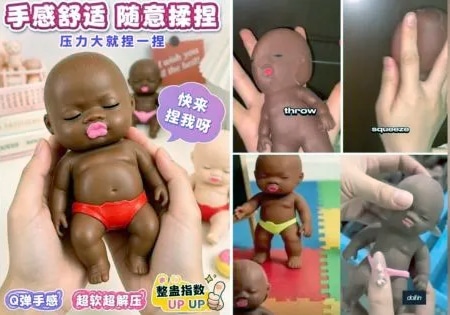
 BEIJING — Videos circulating on Chinese social media featuring the abuse of a popular toy known as the “Natasha doll” have sparked international criticism, with activists and commentators condemning the trend as racist and dehumanizing.
The doll, a soft, squishy toy marketed as a stress-relief or decompression product, has gained popularity online for its stretchable and squeezable features. However, recent videos showing users punching, stomping on and pouring boiling water over dark-skinned versions of the doll have drawn widespread backlash.
According to multiple media reports, lighter-skinned versions of the toy appear less frequently in the videos and are generally not subjected to the same treatment. An explanation attributed to a Chinese social media user suggested that the darker-skinned doll was preferred because the lighter version appeared more human-like and evoked greater sympathy when damaged.
The videos quickly spread across social media platforms, prompting accusations that the trend reflects anti-Black racism and harmful racial stereotypes.
Content creator Tanaïssa Dee criticized the videos in a TikTok post, arguing that the imagery echoes historical caricatures and dehumanizing portrayals of Black people. She said the toy’s use as an object of physical aggression raises concerns about the normalization of violence directed toward Black bodies.
Other social media users described the trend as disturbing and offensive, questioning why a doll designed to resemble a Black child was being singled out for extreme forms of mistreatment.
The controversy has also drawn attention from psychologists and child development experts. Some mental health professionals have cautioned against using human-like figures as targets for aggressive stress-relief activities, arguing that repeated acts of physical violence, even toward toys, may reinforce unhealthy emotional responses and reduce empathy.
Experts cited in media reports warned that exposure to such content could influence how young people view violence and human dignity, particularly when the target resembles a specific racial group.
The growing backlash has prompted calls for social media platforms and parents to monitor the content more closely, while advocates continue to urge greater awareness of racial bias in online trends and consumer products.
The manufacturer of the Natasha doll has not publicly addressed the controversy.