
 By Sylvia Perry
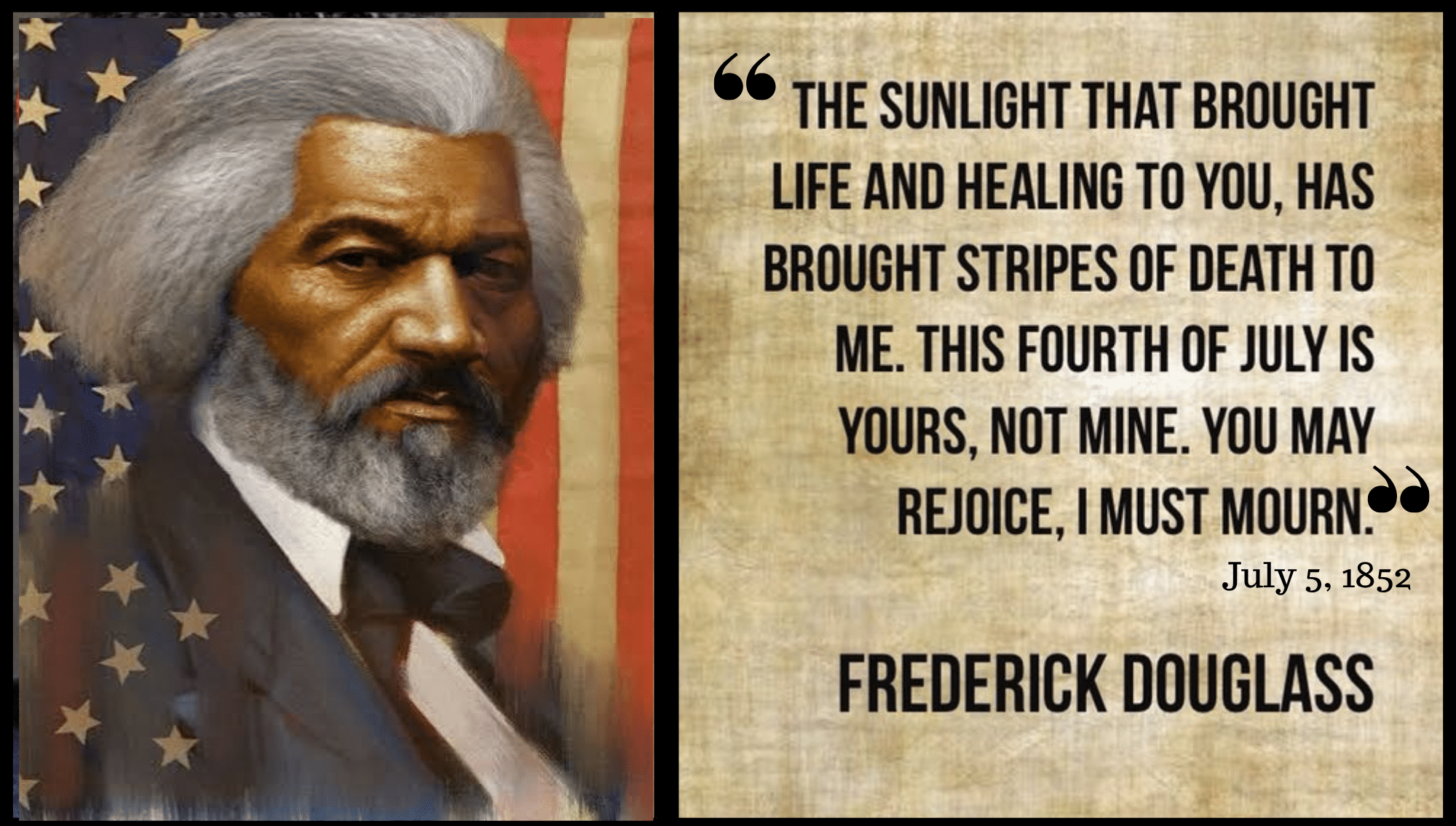
JACKSONVILLE, Fla. — When abolitionist Frederick Douglass rose to speak on July 5, 1852, he did not come to celebrate America’s independence. He came to confront it.
Standing before the Rochester Ladies’ Anti-Slavery Society in Rochester, New York, Douglass delivered one of the most powerful speeches in American history, asking a question that continues to reverberate nearly two centuries later: “What to the Slave Is the Fourth of July?” He challenged a nation that proclaimed liberty while millions of African Americans remained enslaved, exposing what he viewed as the contradiction between America’s founding ideals and its reality.
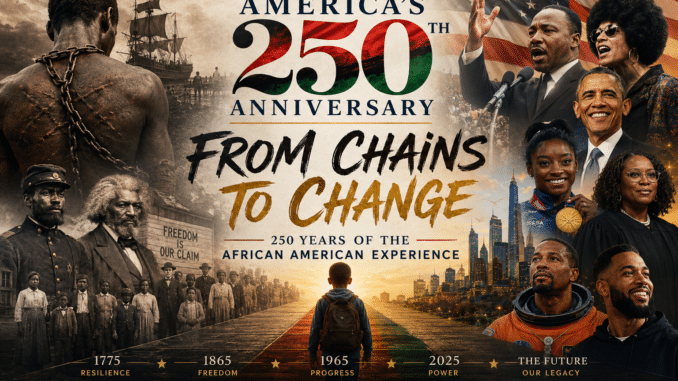
As the United States commemorates its 250th anniversary in 2026, Black America finds itself reflecting on a very different—but still evolving—American experience.
The story is no longer one of slavery alone. It is a story of extraordinary progress, hard-fought victories, painful setbacks and an enduring pursuit of equality.
It is the story of From Chains to Change.
For Douglass, Independence Day represented exclusion. Today, African Americans participate fully in every level of American life. Black Americans have served as presidents of major universities, Fortune 500 CEOs, governors, members of Congress, military leaders, astronauts, entrepreneurs and Supreme Court justices. Millions have entered the middle class, built businesses, accumulated wealth and transformed American culture through music, sports, science, medicine and the arts.
Historically Black colleges and universities continue producing generations of physicians, engineers, educators and civic leaders. Black-owned businesses contribute billions to the nation’s economy, while Black political participation has reshaped elections from city halls to the White House.
These accomplishments represent a dramatic departure from the America Douglass condemned.
Yet history has shown that progress rarely follows a straight line.
The 21st century has ushered in new debates over race, equality and opportunity. The deaths of African Americans during encounters with police helped spark nationwide demonstrations and renewed calls for criminal justice reform under the banner of the Black Lives Matter movement. For many supporters, the movement highlighted persistent inequities in policing and the justice system. Critics questioned its methods, messaging or policy proposals, reflecting broader divisions over how the nation should address racial inequality.
Another defining issue has become the future of diversity, equity and inclusion initiatives.
Once embraced across many corporations, universities and government agencies, DEI programs have increasingly become the subject of political and legal challenges. Supporters argue such initiatives seek to expand opportunity and address longstanding disparities. Opponents contend hiring, admissions and workplace decisions should be race-neutral and based solely on merit.
The conversation reflects a familiar American tension: how to reconcile equality of opportunity with the continuing effects of historical discrimination.
The struggle over voting rights also continues to connect past and present.
Douglass believed the ballot was essential to freedom. More than a century later, the Voting Rights Act of 1965 transformed Black political participation across the South.
Today, debates over voter identification laws, early voting, mail voting, district boundaries and election administration demonstrate that access to the ballot remains one of America’s most contested civil rights issues.
Economic progress tells a similarly complex story.
African Americans have achieved unprecedented levels of educational attainment, entrepreneurship and professional success. Yet wealth disparities, homeownership gaps and unequal access to capital continue to affect many Black families. Educational opportunity has expanded dramatically since the days when teaching enslaved people to read was illegal, but disparities in school funding, achievement and access remain subjects of national debate.
None of these realities erase the remarkable progress that has been made.
Nor do they suggest that today’s challenges are identical to those faced during slavery, Reconstruction or the Jim Crow era.
Instead, they underscore an enduring truth: each generation inherits a different version of the same pursuit—making America’s promises real for everyone.
Douglass believed the United States possessed extraordinary ideals but demanded that the nation live up to them. His speech was ultimately not a rejection of America but a call for America to become what it claimed to be.
As America celebrates 250 years of independence, African Americans have every reason to recognize both triumph and unfinished work.
The journey from chains to change has transformed the nation beyond what Douglass could have imagined.
But the journey itself is not over.
For many in Black America, the struggle has changed more than it has disappeared. While slavery, segregation and legalized discrimination have given way to new debates over voting rights, educational equity, economic mobility and equal opportunity, the central question remains remarkably familiar.
America has traveled a great distance since 1852.
Yet as new battles emerge over civil rights, history reminds us that some old struggles have returned wearing new faces.
Perhaps Douglass’ greatest legacy is not simply the question he asked.
It is the expectation that every generation must answer it for itself.