
 More than 75 years after four young Black men were wrongly accused in one of Florida’s most notorious racial injustice cases, state lawmakers have approved $4 million in compensation for their descendants as part of the state’s 2026-27 budget.
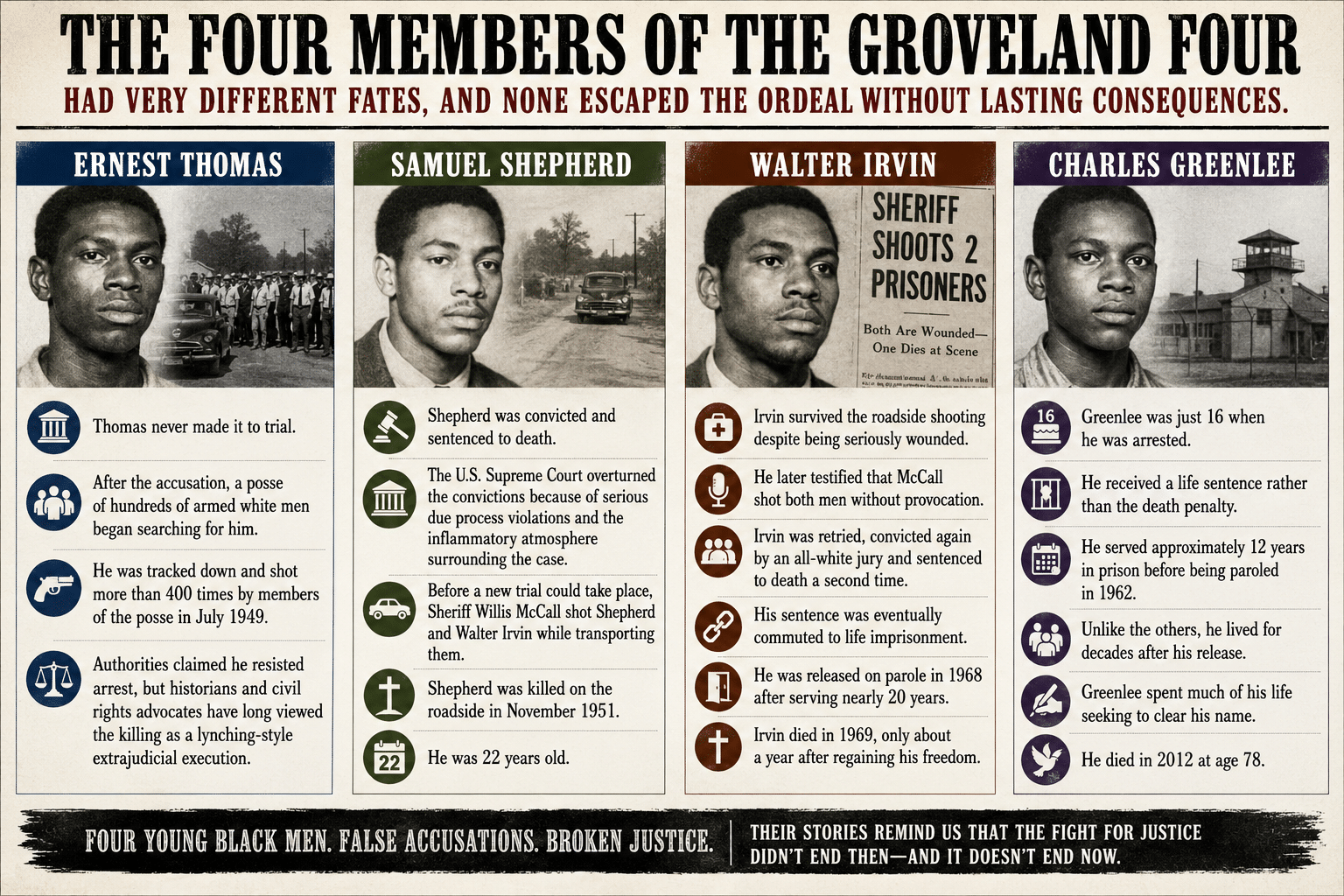
The funding, included in the final budget agreement reached by legislative leaders, would provide restitution to the families of the Groveland Four — Charles Greenlee, Walter Irvin, Samuel Shepherd and Ernest Thomas — who were falsely accused of raping a 17-year-old white woman in Lake County in 1949.
When Florida issued posthumous pardons in 2019 and a judge vacated the convictions in 2021, it marked the first official acknowledgment that the four men had been innocent victims of a racially charged miscarriage of justice. The compensation is the latest chapter in that effort to provide some measure of accountability.
Under the plan, the $4 million will be divided equally among the estates and descendants of the four men, providing what supporters describe as long-overdue recognition of the harm inflicted by the state and local justice system.The compensation effort represents the culmination of decades of advocacy by family members, civil rights activists, historians and elected officials seeking to clear the men’s names and obtain accountability from the state.
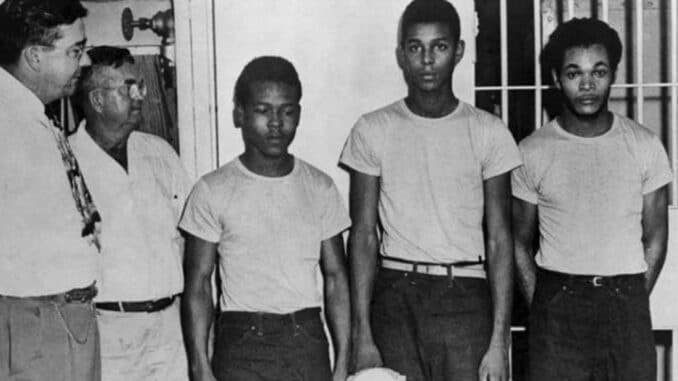
The case began in July 1949 when the four men, all Black and ranging in age from 16 to their early 20s, were accused of assaulting a white woman near Groveland, a small town in Central Florida. The allegations sparked racial unrest and mob violence. Ernest Thomas was hunted down and killed by a posse led by Lake County Sheriff Willis McCall before ever standing trial.Greenlee, who was 16 at the time, received a life sentence, while Irvin and Shepherd were convicted and sentenced to death by an all-white jury. The convictions were later overturned after future U.S. Supreme Court Justice Thurgood Marshall, then working for the NAACP Legal Defense Fund, successfully challenged the proceedings.
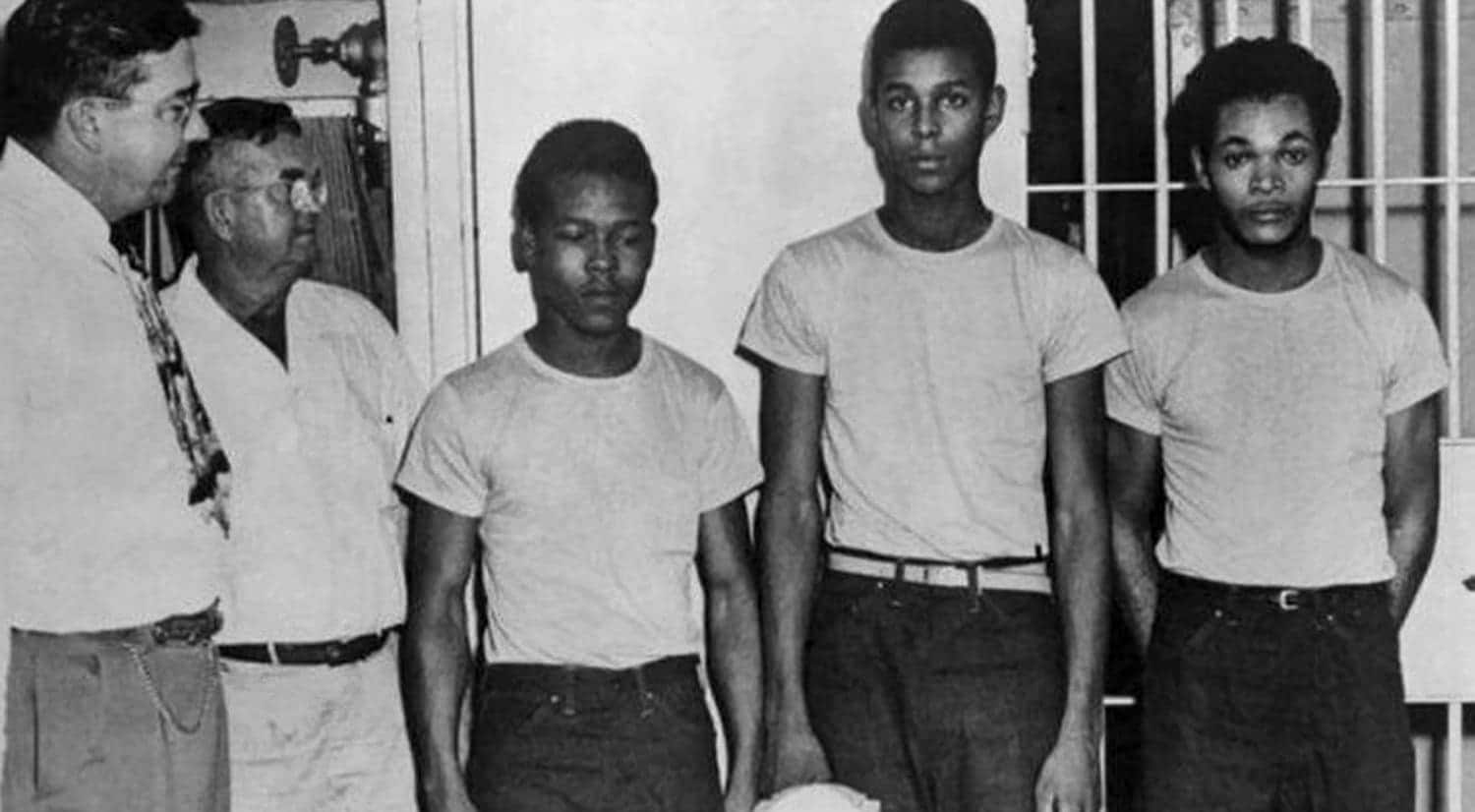
to Walter Irvin, Samuel Shepherd and Charles Greenlee in Florida in 1949.
Before a retrial could take place, McCall shot Irvin and Shepherd while transporting them, claiming self-defense. Shepherd was killed and Irvin survived despite being seriously wounded. Irvin was later convicted again and sentenced to death before his sentence was commuted to life in prison. He was eventually paroled in 1968.For decades, the families of the Groveland Four fought to have the convictions overturned and the historical record corrected. Their efforts gained renewed momentum following the publication of historian Gilbert King’s Pulitzer Prize-winning book, “Devil in the Grove,” which brought national attention to the case.
Florida formally acknowledged the injustice in 2017 when lawmakers issued an apology, declaring the men “victims of a gross injustice.” In 2019, Gov. Ron DeSantis and the Florida Cabinet granted posthumous pardons to the Groveland Four. Two years later, a Lake County judge officially vacated their convictions and dismissed the indictments.The push for financial compensation was championed by state Sen. LaVon Bracy Davis, who dedicated the legislation to the late state Sen. Geraldine Thompson, a longtime advocate for the families and one of the leading voices in preserving the history of the case. The Florida Senate unanimously approved the compensation measure earlier this year.
Bracy Davis described the funding as an acknowledgment of both the wrongful convictions and the generational trauma endured by the families. While supporters note that no amount of money can undo the deaths, imprisonment and suffering caused by the case, they say the compensation represents a significant step toward justice and reconciliation.
The budget now awaits final approval and gubernatorial action. If enacted, the payment would mark the first time Florida has provided direct financial compensation to the descendants of the Groveland Four for the state’s role in one of its darkest chapters of racial injustice.