
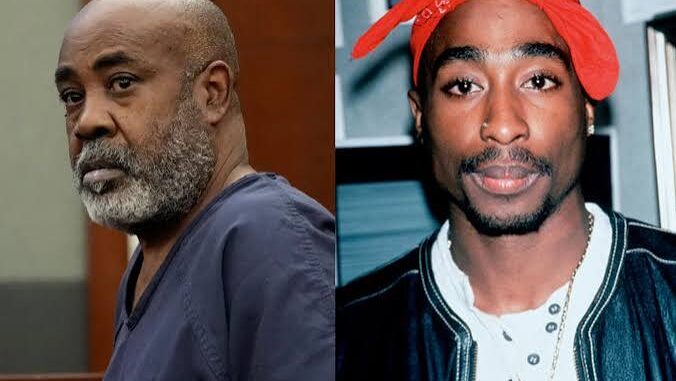
LAS VEGAS — Nearly 30 years after the killing of rap icon Tupac Shakur became one of music’s most enduring mysteries, a Nevada jury has convicted Duane “Keffe D” Davis of first-degree murder in the 1996 shooting.
Jurors on Monday unanimously found Davis, 63, guilty of first-degree murder with use of a deadly weapon following a nearly two-week trial. He faces a potential life sentence and is scheduled to be sentenced Oct. 13.
Davis was not accused of firing the shots that killed Shakur. Prosecutors instead portrayed him as the organizer of a revenge plot, arguing that Nevada law allows someone who aids or facilitates a murder to be held criminally responsible for the killing.
Prosecutors said Davis was a leader, or “shotcaller,” with the South Side Compton Crips and sought retaliation after Shakur and others attacked Davis’ nephew, Orlando “Baby Lane” Anderson, at the MGM Grand in Las Vegas.
Hours after that confrontation, Shakur was riding in a BMW driven by Death Row Records co-founder Marion “Suge” Knight when another vehicle pulled alongside them and gunfire erupted on Sept. 7, 1996. Knight survived. Shakur, 25, died six days later.
The rapper’s sister, Sekyiwa “Set” Shakur, became emotional as the verdict was announced, while Davis stood silently alongside his attorneys.
Decades-old statements become key evidence
Davis was the only surviving person prosecutors say was inside the vehicle carrying Shakur’s killer.
Much of the state’s case centered on Davis’ own words.
During interviews with investigators and in subsequent media appearances, Davis provided details about the shooting. He also discussed the killing in his 2019 memoir, Compton Street Legend, which prosecutors said helped revive the long-dormant investigation.
Chief Deputy District Attorney Binu Palal told jurors that Davis had spent years publicly acknowledging responsibility for his role in Shakur’s death.
“For nearly 18 years, Duane Davis has told the police, television, books, YouTube interviewers, anybody that will listen,” Palal said during closing arguments. “He has told you he is responsible for the murder of Tupac Shakur.”
Davis previously provided information about the killing under a 2008 agreement with federal investigators who were examining the death of Christopher Wallace, better known as The Notorious B.I.G. Davis maintained that he believed the agreement protected him from prosecution.
Prosecutors argued that it did not provide immunity for future prosecution stemming from his admissions about Shakur’s murder.
Defense questioned lack of physical evidence
Defense attorney Michael Sanft argued that Davis exaggerated or fabricated his involvement to gain money and notoriety.
The defense emphasized that investigators lacked physical evidence placing Davis at the scene and argued that authorities could not independently verify several portions of his accounts.
Sanft also pointed to inconsistencies between Davis’ interviews and his book.
“When you think about Mr. Davis’ statements, they all conflict,” Sanft told jurors.
The jury ultimately sided with prosecutors.
District Judge Carli Kierny ordered Davis to remain jailed until sentencing. Davis has indicated that he plans to appeal.
A mystery that lasted a generation
Shakur’s murder became one of the most closely followed unsolved killings in American popular culture.
Investigators spent decades pursuing leads between Las Vegas and Southern California, but conflicting accounts, reluctant witnesses and gang rivalries repeatedly complicated the investigation.
Shakur, whose music addressed racism, poverty, violence and life in Black America, has remained one of hip-hop’s most influential figures. His music continues to attract new generations of listeners decades after his death.
Monday’s verdict does not erase the decades of unanswered questions surrounding the shooting and most definitely the loss of a rap legend, but it represents something Shakur’s family and fans waited nearly three decades to see: a murder conviction in the killing of Tupac Shakur.