
 JACKSONVILLE, Fla. — For generations, Jacksonville’s historic urban neighborhoods has watched opportunity pass by.
While cranes reshaped other parts of the city and billions of dollars flowed into downtown development, many families in one of Jacksonville’s oldest Black neighborhoods continued struggling with rising housing costs, aging homes and shrinking opportunities to become homeowners.
Now, a project many believe could mark a turning point is preparing to break ground just blocks away from where Jacksonville is investing billions in its future.
The Jacksonville Community Land Trust plans to begin construction on Roosevelt Commons during the first quarter of 2027, creating a 124-home neighborhood designed specifically for working families who have increasingly found themselves priced out of today’s housing market.
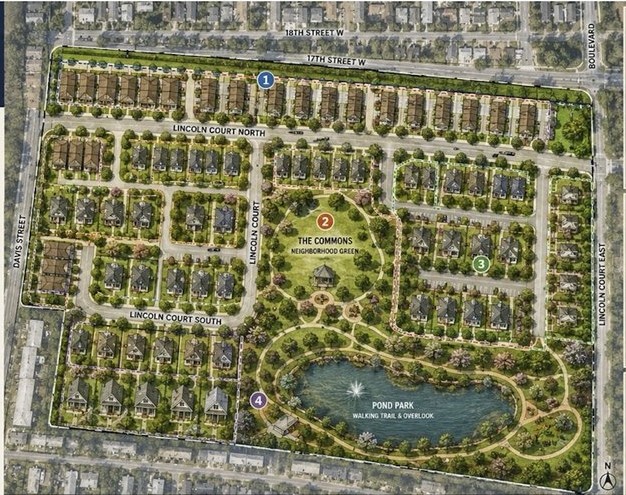
Situated on 10.6 acres between Boulevard and North Davis streets, just north of the UF Health Proton Therapy Institute, Roosevelt Commons will sit only minutes from the city’s emerging Sports and Entertainment District and the new billion-dollar Stadium of the Future.
For many community leaders, the location is symbolic.
After decades of watching investment bypass the Eastside, residents will soon have an opportunity to purchase homes within walking distance of one of the largest redevelopment efforts in Jacksonville’s history.
“It’s giving people the opportunity that they never thought they would have,” said Amanda Hardy of SVR Commercial LLC, which is marketing the homes on behalf of the nonprofit.
A Different Kind of Development
Roosevelt Commons is more than another housing subdivision.
It represents a new approach to one of Jacksonville’s biggest challenges—making homeownership attainable for families who earn too much to qualify for traditional housing assistance but too little to purchase today’s median-priced home.
At a time when the median price of a single-family home in Northeast Florida has climbed to approximately $420,000, Roosevelt Commons homes are expected to sell for $160,000 to $240,000.
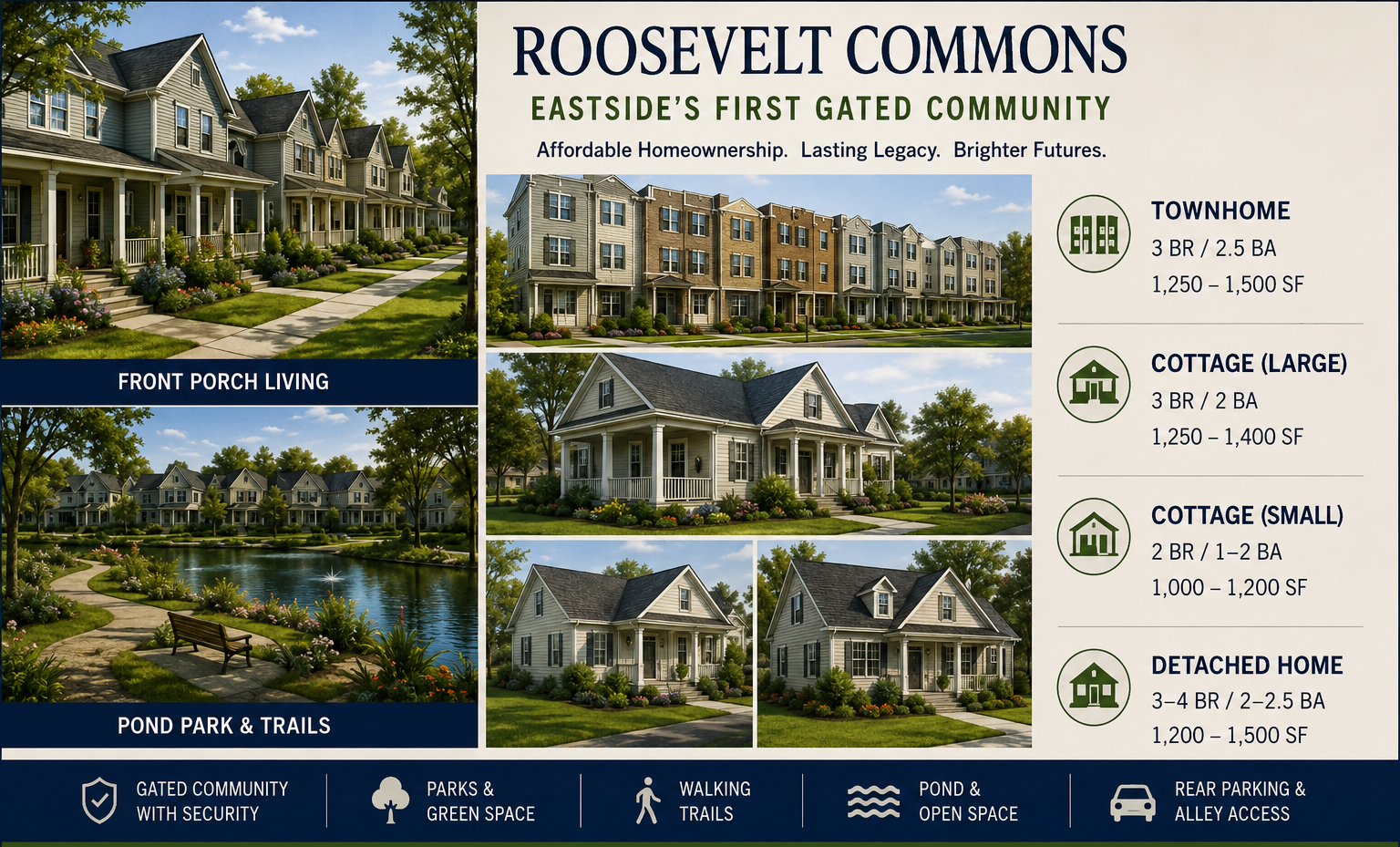
The neighborhood will include a mix of townhomes, cottages and detached single-family homes ranging from 1,000 to 1,500 square feet, with two-, three- and four-bedroom floor plans designed for singles, couples and growing families.
But perhaps the most innovative feature isn’t the homes themselves.
It’s the ownership model.
Unlike a traditional home purchase, buyers at Roosevelt Commons will own their home while the Jacksonville Community Land Trust retains ownership of the land beneath it.
Known as a community land trust, the model removes land costs from the purchase price and places resale restrictions on the property, helping ensure the home remains affordable for future buyers rather than becoming another casualty of skyrocketing housing prices.
Housing experts say the approach helps families build wealth through homeownership while protecting neighborhoods from being priced beyond the reach of working residents.
The homes will be available to qualified individuals and families earning up to 80% of the Area Median Income, including one-person households earning up to $60,880 annually.
Developers say Roosevelt Commons was intentionally designed to provide the kinds of amenities families often associate with much higher-priced neighborhoods.
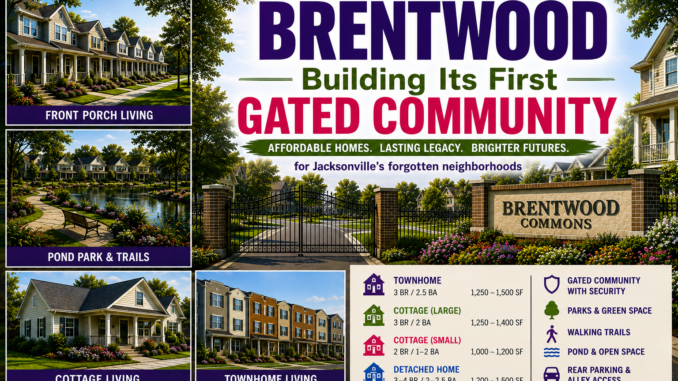
Plans call for a gated community featuring security, walking trails, neighborhood parks, a dog park, abundant shade trees, rear parking, alley access where feasible and an enhanced retention pond transformed into a central park and gathering space.
“Roosevelt Commons will be huge for families that have never experienced a safe community where they have amenities—a park, a dog park and a walkable trail around a pond,” Hardy said.
For Kathy Jett of SVR Commercial LLC, the project is personal.
“As a single mother, helping families achieve homeownership means everything,” Jett said. “Helping people have a safe home is a huge stepping stone.”
 A Breath of Fresh Air for the Eastside
For longtime Eastside residents, Roosevelt Commons represents more than new construction.
It offers the possibility that revitalization can include the people who have remained committed to the neighborhood through decades of disinvestment—not simply those arriving after redevelopment begins.
The project arrives as Jacksonville grapples with an affordable housing crisis that has left thousands of working families searching for homes they can afford near their jobs, schools and churches.
Rather than pushing affordable housing farther into the suburbs, Roosevelt Commons places it in the heart of the city, allowing residents to live near downtown employment centers, medical facilities and major transportation corridors.
It also positions working families within minutes of billions of dollars in public and private investment reshaping Jacksonville’s urban core.
The Jacksonville Community Land Trust hopes Roosevelt Commons becomes a blueprint for future neighborhoods throughout the city.
The nonprofit is already developing homes on 66 infill lots across Jacksonville, including projects on McQuade Street and Florida Avenue.
Supporters believe Roosevelt Commons demonstrates that affordable housing doesn’t have to mean sacrificing quality, safety or community.
Instead, they say, it offers something that has become increasingly difficult for many working families to achieve—a place to build equity, raise children and invest in a neighborhood without being priced out of it.
For Jacksonville’s Eastside, Roosevelt Commons may represent more than 124 new homes.
It may be the beginning of a new chapter—one where investment finally reaches a community that has waited far too long to share in Jacksonville’s prosperity. The housing is likely become available in late 2027 or sometime in 2028, but no official completion date has been announced.