

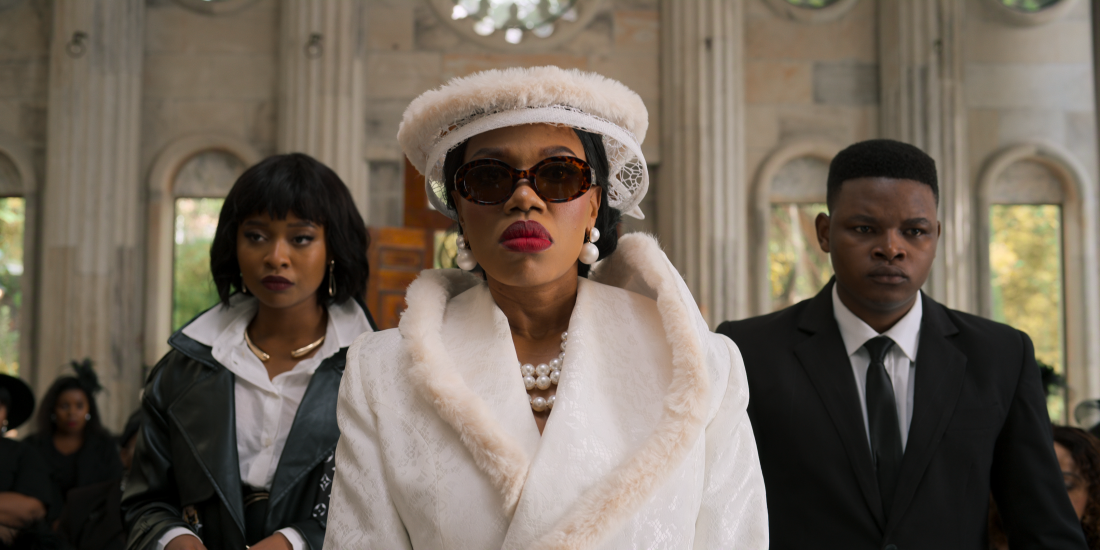
The Polygamist. Gugu Gumede as Joyce Gomora in The Polygamist. Cr. Courtesy of Netflix © 2026 / Mpumelelo Macu/Netflix
A South African drama centered on infidelity, wealth and family secrets has become an unexpected sensation with American viewers, helping propel Netflix’s The Polygamist into the platform’s Top 10 in the United States while igniting conversations about marriage, women’s rights and African storytelling.
The Zulu-language telenovela amassed more than 23 million views during its first month on Netflix, reaching the streaming service’s Top 10 in 62 countries, including the U.S., and claiming the No. 1 spot in nearly two dozen nations.
Set in Johannesburg, the 22-episode series follows the affluent Gomora family as matriarch Joyce struggles to maintain her family’s image after discovering her wealthy husband, Jonasi, has secretly established a second household with another woman. Packed with shocking plot twists, betrayals and family conflict, the series has resonated with audiences far beyond South Africa.
Among its American fans is television personality Sherri Shepherd, who praised the series on social media after binge-watching the drama, saying the portrayal of wealthy African families offered a fresh perspective rarely seen on screen.
Author Sue Nyathi, whose novel inspired the series, said international audiences are responding not only to the gripping storyline but also to its portrayal of modern, affluent African life.

Sue Nyathi, writer of the book “The Polygamist” with Gugu Zuma-Ncube, one of the producers of the Netflix series by the same name. Courtesy of Sue Nyathi
“Too often, Africa is shown through a single lens of poverty,” Nyathi said. “This series shows another reality—successful, wealthy Africans living complex lives.”
While lavish mansions, luxury vehicles and designer fashions capture viewers’ attention, Nyathi believes the show’s universal themes are what have fueled its popularity.
“At its core, it’s about infidelity, betrayal and family relationships,” she said. “Those are experiences people everywhere recognize.”
The Netflix adaptation has also revived interest in Nyathi’s novel, boosting book sales throughout South Africa as new readers seek the original story.
Nyathi said she intentionally wrote the novel from the perspectives of the women affected by a man’s secret double life, rather than the husband’s viewpoint.
“We’ve heard men justify these choices for generations,” she said. “I wanted women to have the voice.”
The series arrives amid ongoing discussions in South Africa about polygamy, which is legally recognized under traditional customary law but not under civil marriage law. Unlike the secret relationships portrayed in the series, traditional polygamous marriages require that all spouses are aware of one another.
The show’s producers, Gugu Zuma-Ncube and Thuli Zuma, daughters of former South African President Jacob Zuma, who has multiple wives, say their personal experiences helped shape the production’s authenticity.
Despite its dramatic premise, The Polygamist has generated conversations extending beyond entertainment. Public health officials and advocacy groups have used the show’s popularity to raise awareness about HIV prevention, safe sex and gender-based violence. UNAIDS has even launched a campaign featuring the show’s lead character with the message, “Don’t be a Jonasi. Keep yourself and your partners safe,” while South African officials have used the series to promote awareness about domestic violence.
Originally produced in Zulu with dialogue shifting between Zulu and English, the series has demonstrated the growing international appetite for African-produced content. Producers say its global success could open doors for more African stories to reach mainstream audiences, particularly in the United States, where viewers increasingly are embracing international programming through streaming platforms.