
 (JFP) For more than a century, Black Greek-letter organizations and civic service groups have shaped leadership in America, producing generations of educators, judges, physicians, business executives, elected officials and civil rights advocates.
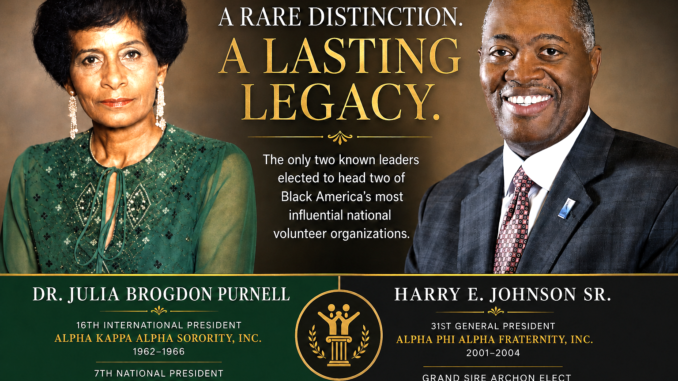
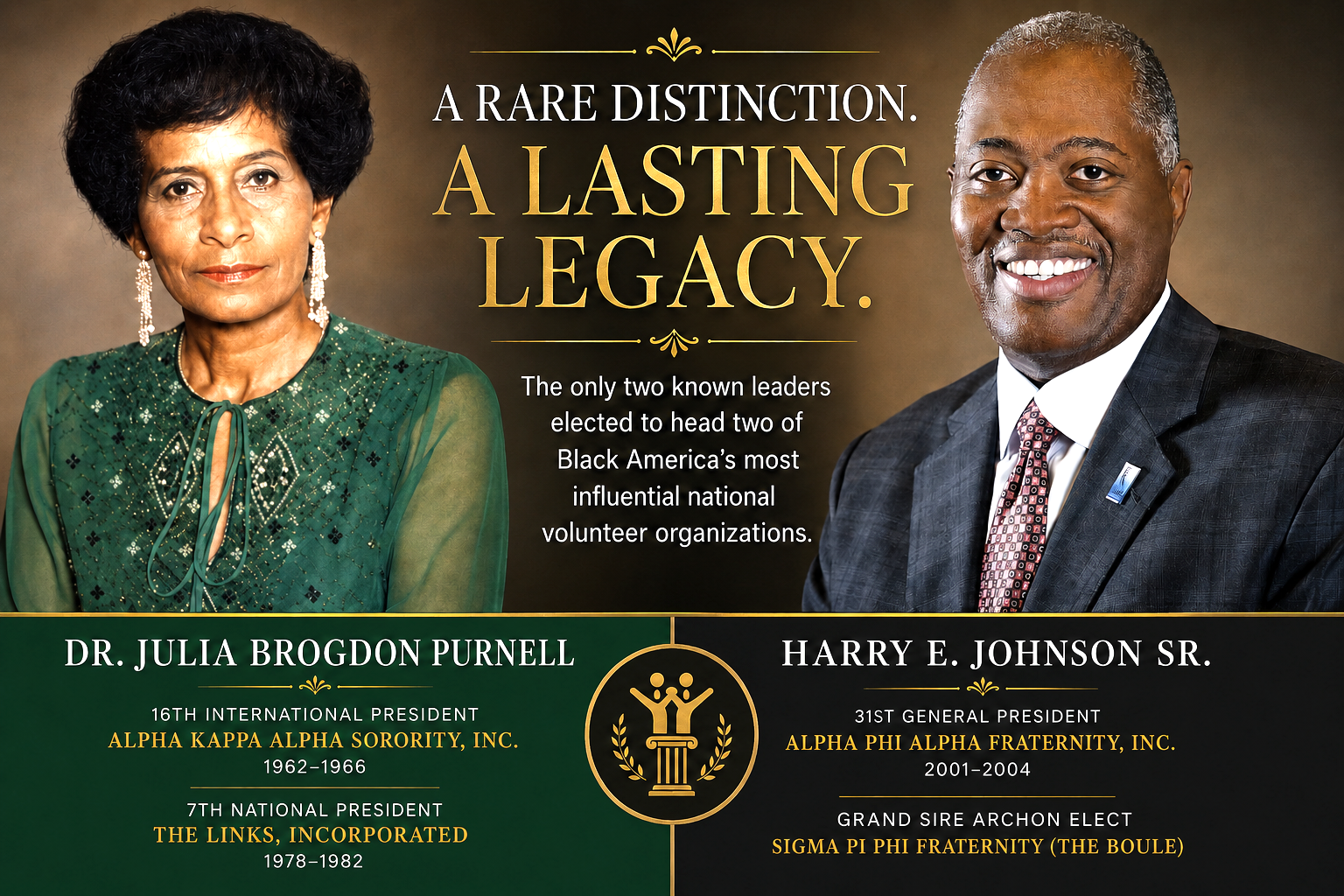
Yet among the thousands who have risen through their ranks, only two individuals are known to have earned one of the rarest distinctions in Black organizational history: being elected to lead two of the nation’s most influential volunteer organizations.
The late Julia Brogdon Purnell was elected International President of Alpha Kappa Alpha Sorority, Inc. and later became National President of The Links, Incorporated, two organizations whose memberships collectively include tens of thousands of accomplished professional women committed to scholarship, health, education and community service. Founded on Jan. 15, 1908, at Howard University, Alpha Kappa Alpha, Sorority, Inc. is the first and remains the largest historically Black Greek-letter sorority established by African American college women.
Likewise, Harry E. Johnson Sr. was elected General President of Alpha Phi Alpha Fraternity, Inc., the nation’s oldest Black collegiate fraternity, before recently
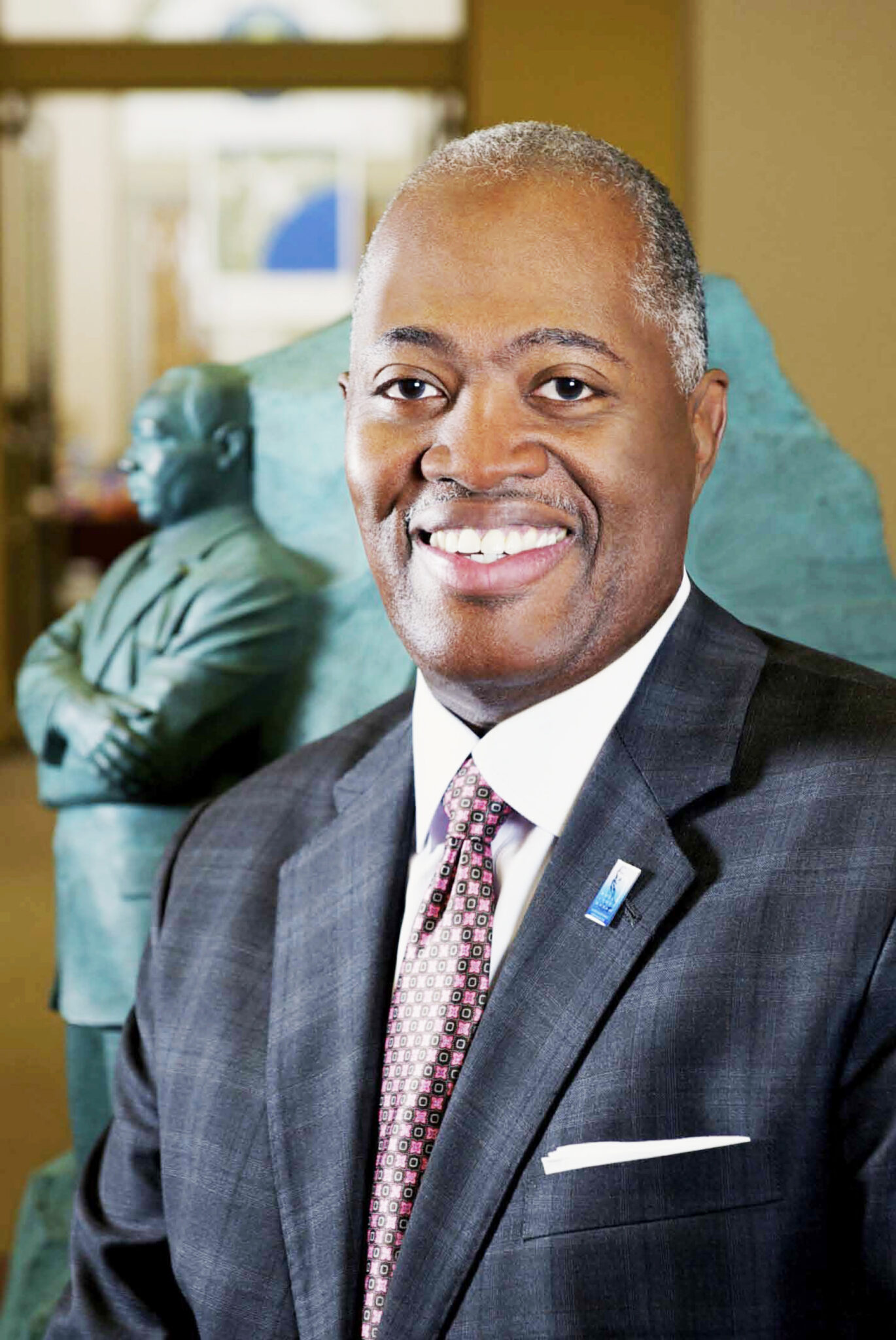
being elected Grand Sire Elect of Sigma Pi Phi Fraternity, also known as the Boule, the nation’s oldest predominantly Black professional fraternity founded in 1904. Alpha Phi Alpha Fraternity, Inc., is the nation’s oldest intercollegiate Black fraternity and one of the most influential leadership organizations in African American history, they have initiated more than 290,000 men since its founding in 1906.
Both first proved themselves as transformative leaders of historic Black Greek-letter organizations before later earning the confidence of another distinguished national membership to lead one of Black America’s most prestigious service organizations. In each case, their second election was not honorary – it represented an independent vote of confidence from peers who had already observed a lifetime of leadership, service and integrity.
Leadership experts say the achievement is remarkable because these organizations are governed almost entirely by volunteers. National presidents are elected by delegates after years – often decades – of demonstrated leadership, organizational service and the confidence of thousands of members.
“It is not simply an appointment,” leadership scholars often note. “It is the culmination of a lifetime of earned trust.”
 With a career that was rooted in education, Dr. Julia Brogdon Purnell was a distinguished educator, school administrator and civic leader, and her professional career was closely tied to public education. From 1962 to 1966, she served as the 16th International President of Alpha Kappa Alpha Sorority, Inc., leading one of the most consequential administrations in the organization’s history. During her tenure, she expanded the sorority’s global presence by chartering its second international chapter in the Bahamas, established Alpha Kappa Alpha’s first National Program Office in Washington, D.C., launched the first Undergraduate Leadership School, and guided the sorority’s historic management of the Cleveland Job Corps Center for Women—making AKA the first Black Greek-letter organization and first sorority to operate a federally funded Job Corps center. She also represented the sorority at President John F. Kennedy’s 1963 White House Conference of 300 Women, further elevating Alpha Kappa Alpha’s national profile.
She began her leadership tenure in The Links, Incorporated a little over a decade later.
From 1978 to 1982, Purnell served as the seventh National President of The Links, Incorporated, guiding the nation’s premier volunteer service organization for professional Black women through a period of organizational growth and modernization. Drawing on her earlier experience as International President of Alpha Kappa Alpha Sorority, Inc., Purnell oversaw the expansion of the organization’s national headquarters, strengthened its transition from an all-volunteer operation to one supported by an expanded professional staff, promoted chapter growth nationwide, and instituted the White Rose Banquet, which became a signature tradition of The Links’ National Assembly. Her administration further strengthened the organization’s capacity to expand educational, cultural and community service initiatives across the United States.
Unlike corporate executives hired by boards, leaders of these organizations campaign before their peers, who scrutinize not only their credentials and backgrounds among stiff competition, but their record of service, integrity and vision.
Harry E. Johnson Sr. served as the 31st General President of Alpha Phi Alpha Fraternity, Inc. from 2001 to 2004, becoming one of the nation’s most influential Black civic leaders during his tenure. He oversaw more than 700 chapters in the United States and abroad, strengthened the fraternity’s national image, expanded mentoring and membership reclamation initiatives, promoted civic engagement and community service, and represented Alpha Phi Alpha on the National Pan-Hellenic Council’s Council of Presidents. His administration emphasized operational excellence while reinforcing the fraternity’s historic mission of leadership, scholarship and service.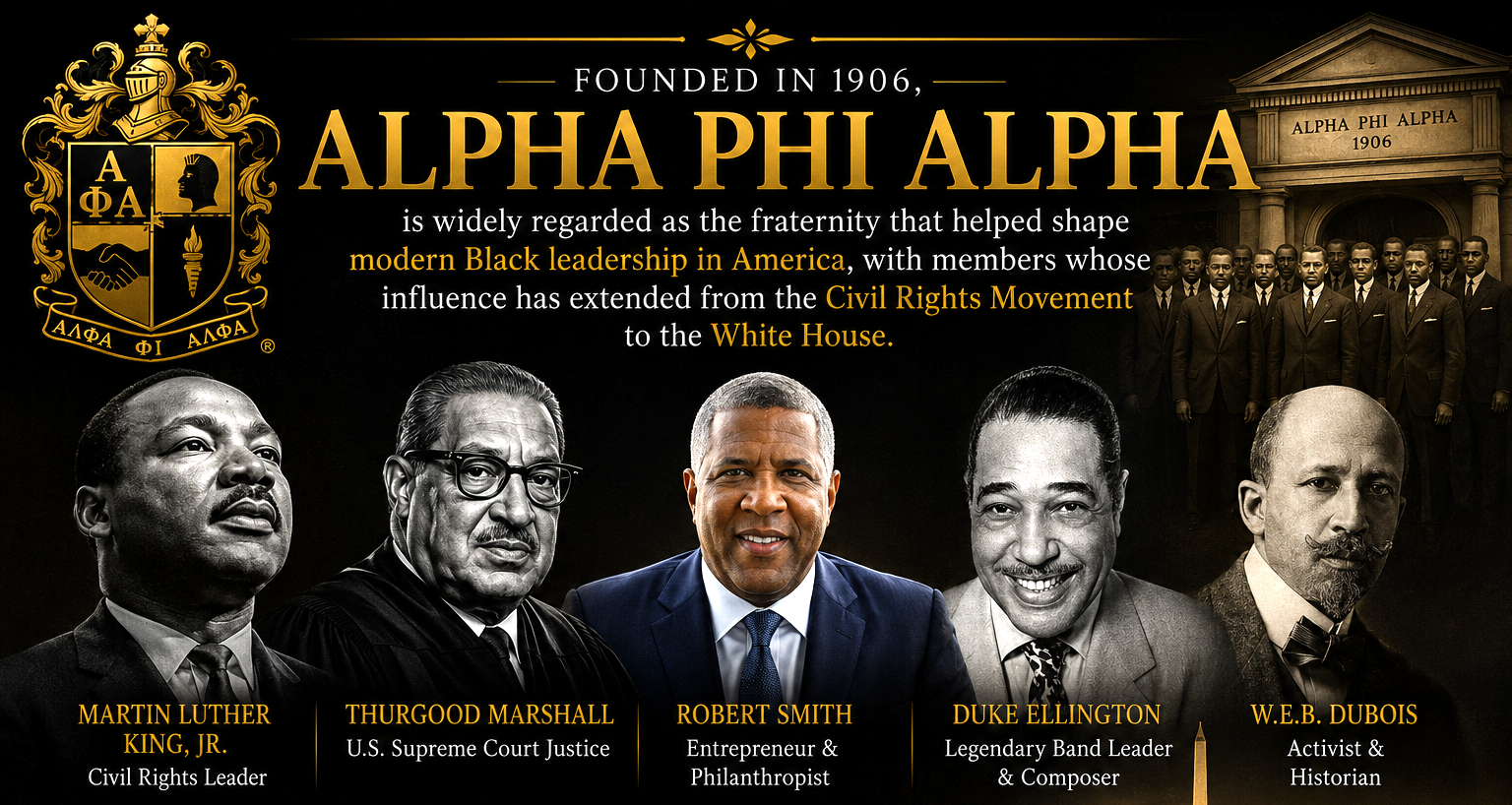
Professionally, Johnson is a Houston attorney, entrepreneur and educator whose career spans law, business, higher education and nonprofit leadership. He practiced law in Houston, served as city attorney for Kendleton, Texas, taught at Texas Southern University, built several successful business ventures, and later gained national prominence as president and CEO of the Martin Luther King Jr. National Memorial Project Foundation, where he led the fundraising of $127 million and the successful completion of the Martin Luther King Jr. Memorial on the National Mall in Washington, D.C.
Johnson’s election as Grand Sire Archon Elect of Sigma Pi Phi Fraternity reflects decades of experience leading complex organizations built on consensus rather than executive authority. His legal background equips him in governance, policy and fiduciary oversight. His entrepreneurial experience provides financial and strategic management skills, while his leadership of the Martin Luther King Jr. Memorial demonstrated an ability to unite corporate executives, philanthropists, elected officials and community leaders behind a common vision. Those same qualities -diplomacy, institutional stewardship, coalition building and strategic planning – are central to leading the nation’s oldest predominantly Black professional fraternity, whose members include many of the country’s most accomplished leaders in business, law, medicine, education and public service. During Sigma Pi Phi/s Foundation dinner, its philanthropic arm, more than $2 million was raised through the collective representation of these Black men. He will assume the Grand Sire role in 2028.
 Why They Are Important
Fraternal and civic organizations have long filled critical gaps in Black communities.
Collectively, they have awarded millions of dollars in scholarships, funded health screenings, promoted voter education, mentored young people, supported Historically Black Colleges and Universities, advocated for civil rights and provided disaster relief.
Many initiatives now viewed as mainstream – including literacy campaigns, college readiness programs and public health education – were pioneered decades ago by these organizations to create a better future for the culture.
Their influence extends well beyond their memberships. Across generations, they have served as leadership academies where members develop skills in governance, fundraising, consensus building and public service before applying those lessons throughout their professions and communities.
Unlike the investment in financial and emotional collateral invested in political leaders, volunteer organizations rely almost entirely on reputation and confidence. Leaders generally spend decades building credibility before members entrust them with national office.
A Tradition That Continues
The historic accomplishment of Julia Brogdon Purnell and Harry Johnson demonstrate that extraordinary leadership is recognized across organizational boundaries.
Though representing different institutions and generations, both earned repeated confidence from members committed to service, education and community advancement.
Their elections underscore a broader truth about Black civic organizations: they continue to cultivate leaders whose influence extends far beyond conventions and chapter meetings.
In communities of color where educational opportunities, healthcare access, mentoring and scholarship support remain uneven, these organizations continue serving as pillars of opportunity – and reminders that leadership is measured not only by titles held, but by trust earned.