
by Dr. Julianne Malveaux
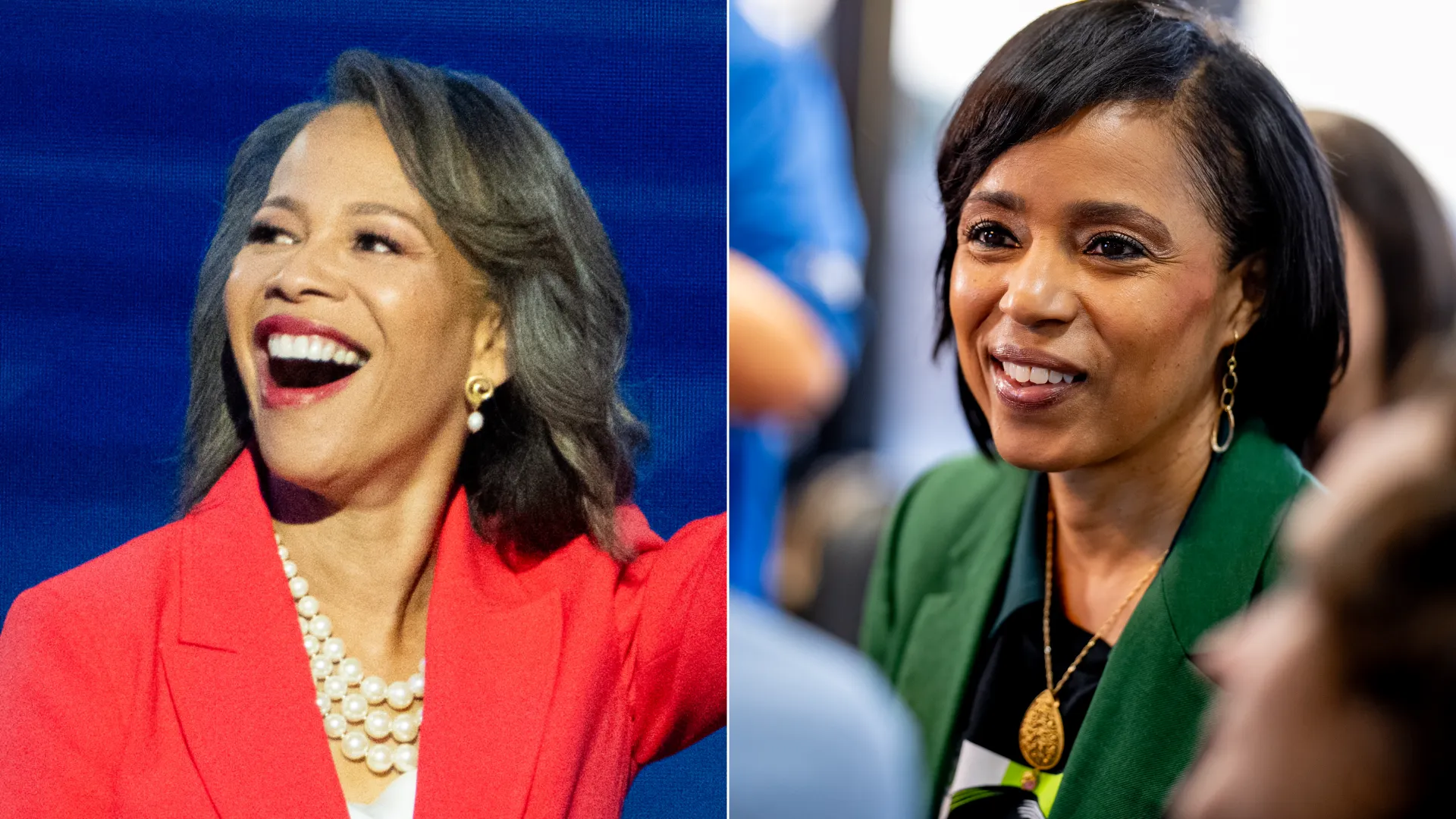
In the more than two-century history of the United States Senate, Black women have been almost entirely absent. Today, for the first time, two are serving simultaneously in the U.S. Senate. Angela Alsobrooks (MD) and Lisa Blunt Rochester (DE) now occupy seats in a chamber that, for most of its existence, excluded both women and people of color.
The U.S. Senate began operating in 1789. In more than two centuries, roughly 2,000 people have served in that chamber. Only about 60 have been women—barely three percent—and only five have been Black women.
The Struggle for women’s political equality has long carried its own contradictions. At the 1913 suffrage parade in Washington, Black women—including members of the newly formed Delta Sigma Theta—were asked to march at the back of the procession so as not to offend southern white supporters of the movement. Many refused to accept that relegation, insisting that the fight for women’s political rights must include Black women as well, especially in the U.S. Senate.
Proud as I am to see Alsobrooks (MD) and Blunt Rochester (DE) serving in the Senate, I cannot help reflecting on the complicated lineage they inherit. The first woman ever sworn into the United States Senate was Rebecca Latimer Felton (GA), who took the oath in 1922—just two years after women won the right to vote nationally. Felton was 87 years old and served only one day, appointed largely as a ceremonial gesture before the newly elected senator took office. Yet the first woman senator was also a defender of lynching.
In the 1890s, Felton declared that if lynching were necessary to protect white womanhood from what she described as “human beasts,” then it should occur “a thousand times a week.” Her words were spoken during the decade when mob violence against Black Americans was reaching its peak.
At the very same moment, journalist and anti-lynching crusader Ida B. Wells was risking her life documenting the truth about mob violence after three of her friends were murdered in Memphis in 1892 for operating a successful Black-owned grocery store that competed with a white merchant. Wells’s investigation revealed that many lynchings were not responses to crimes at all but acts of terror directed at Black people who were economically successful or unwilling to submit to white dominance. She spent decades demanding federal anti-lynching legislation. Yet the Senate, where Felton would briefly serve, blocked such laws for more than a century, finally passing the Emmett Till Antilynching Act in 2022.
Nearly a century later, a similar contradiction surfaced in Mississippi. When Cindy Hyde-Smith (MS) became the first woman elected to the Senate from that state in 2018, the milestone might have been celebrated as uncomplicated progress. Instead, her campaign was overshadowed by a remark that she would sit in the front row of a “public hanging.” Hyde-Smith (MS) had first entered the Senate earlier that year by appointment after Senator Thad Cochran resigned. She then faced voters in a special election runoff against former U.S. Agriculture Secretary Mike Espy, who was seeking to become Mississippi’s first Black senator since Reconstruction. Hyde-Smith won the runoff and later secured a full six-year term.
Hyde-Smith stands in the political lineage of a senator who defended lynching, echoing that history when she said she would sit in the front row of a “public hanging.” The parallel is unsettling: the expansion of political opportunity for women has not always coincided with progress on race.
That history helps explain why the election of Carol Moseley Braun (IL) in 1992 was so significant. For nearly two centuries after the founding of the Senate, no Black woman had ever served in the chamber. Moseley Braun’s victory shattered a barrier that had stood since the founding of the republic.
A generation later, Kamala Harris (CA) followed that path when she was elected to the Senate in 2016 before becoming vice president of the United States. Another Black woman, Laphonza Butler (CA), served briefly after being appointed to fill a vacancy.
The Senate has diversified in other ways as well. Women of color such as Mazie Hirono (HI), Tammy Duckworth (IL), and Catherine Cortez Masto (NV) have joined the chamber in recent years—signs that an institution once dominated by white men is slowly beginning to reflect the nation it governs.
The presence of Alsobrooks (MD) and Blunt Rochester (DE) is therefore both historic and instructive. Their election reflects genuine change in an institution that long resisted it. At the same time, the path that brought them there—from Felton’s defense of lynching to the slow emergence of women and people of color in national office—reminds us that the expansion of American democracy has rarely been smooth—and almost never evenly shared.
From the Black women who insisted on marching in Washington’s suffrage parade in 1913 to the election of two Black women to the United States Senate, the arc of political inclusion has been long, uneven, and hard won.
Dr. Julianne Malveaux is a DC based economist and author. Juliannemalveaux.com, Malveauxnewsletter@gmail.com.