
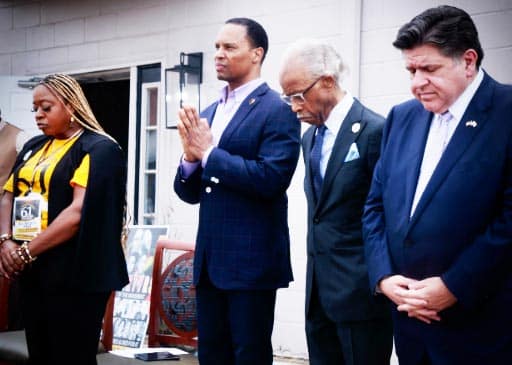
Family members, civil rights leaders and dignitaries gathered in Selma, Alabama, for a culminating tribute to the Rev. Jesse Jackson, closing a series of memorial events honoring one of the most influential civil rights figures of the past half-century.
The Selma observance, held during events commemorating the historic voting-rights marches of 1965, brought together members of Jackson’s family, clergy, activists and longtime allies who reflected on his legacy and lifelong commitment to justice. His son, Yusef Jackson, along with siblings and other relatives, attended the service following a week of tributes across the country celebrating the civil rights icon’s life and impact.
A week of tributes from death to burial
Jackson died Feb. 17, 2026, at age 84 after a prolonged battle with a neurological disorder. His passing prompted tributes from political leaders, civil rights activists and faith leaders worldwide.
In the days following his death, memorials were held in several cities tied to his life and activism. Flags in numerous states were lowered to half-staff in his honor.
The most prominent public tribute occurred March 6 in Chicago at the 10,000-seat House of Hope church, where thousands attended a nationally televised homegoing service that blended elements of a worship service and political rally.
Among those delivering remarks were former presidents Barack Obama, Joe Biden and Bill Clinton, as well as former Vice President Kamala Harris and civil rights leader Al Sharpton.
Obama credited Jackson with helping reshape American politics, telling mourners that Jackson’s presidential campaigns “paved the road for so many others to follow.”
Clinton remembered Jackson as a persistent moral voice who pushed the nation toward equality, while Biden urged Americans to continue Jackson’s fight for justice and democracy.
The service also featured gospel performances and tributes from activists, elected officials and community leaders who worked alongside Jackson during his decades of activism.
Following the large public ceremony, family members and close associates gathered for a more intimate memorial service at the headquarters of the Rainbow PUSH Coalition, the civil rights organization Jackson founded.
At that gathering, Jackson’s children reflected on their father’s faith-driven activism and urged supporters to carry forward his mission of economic and social justice. The event included remarks from international leaders and longtime activists who credited Jackson with influencing global struggles for equality.
After the private ceremony, Jackson was laid to rest at Oak Woods Cemetery in Chicago following a family burial service.
Final tribute in Selma
The culminating tribute in Selma carried deep historical symbolism. Jackson had long participated in annual commemorations of the 1965 voting-rights marches and had close ties to the movement led by the Rev. Martin Luther King Jr..
During the Selma gathering, speakers described Jackson as a bridge between the civil rights movement of the 1960s and modern struggles for voting rights and social justice. Clergy and activists urged attendees to honor his legacy through civic engagement and activism.
Many participants also attended the annual Bridge Crossing Jubilee events, marking the anniversary of “Bloody Sunday,” when peaceful demonstrators were attacked on the Edmund Pettus Bridge during the Selma-to-Montgomery march.
Life and legacy
Born in Greenville, South Carolina, in 1941, Jackson rose to prominence as a protégé of King and a leader in the Southern Christian Leadership Conference during the civil rights movement.
He later founded the Rainbow PUSH Coalition and became one of the nation’s most recognizable advocates for civil rights, economic equality and voter participation. Jackson also made history with his groundbreaking presidential campaigns in 1984 and 1988, which mobilized a multiracial political coalition he called the “Rainbow Coalition.”
Over decades of activism, Jackson championed causes ranging from voting rights and economic justice to international human rights and anti-apartheid efforts. His work earned him the Presidential Medal of Freedom in 2000.
A lasting call to action
Speakers throughout the week of memorials emphasized that Jackson’s life represented a continuing call to action.
“He carried history in his footsteps and hope in his voice,” one tribute read, describing him as a leader who challenged America to live up to its ideals.
As the final tribute concluded in Selma, mourners reflected on Jackson’s enduring message — one he repeated throughout his career: keep hope alive.