
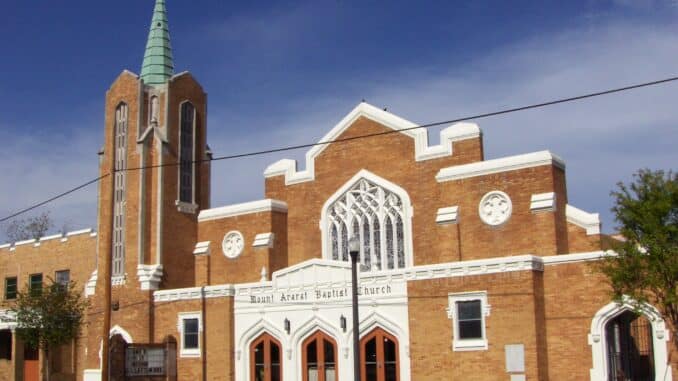
The U.S. Civil Rights Trail is expanding in 2026 including a creation of a Jacksonville Civil Rights Trail. Mt Ararat Baptist Church on Myrtle Avenue will be the first
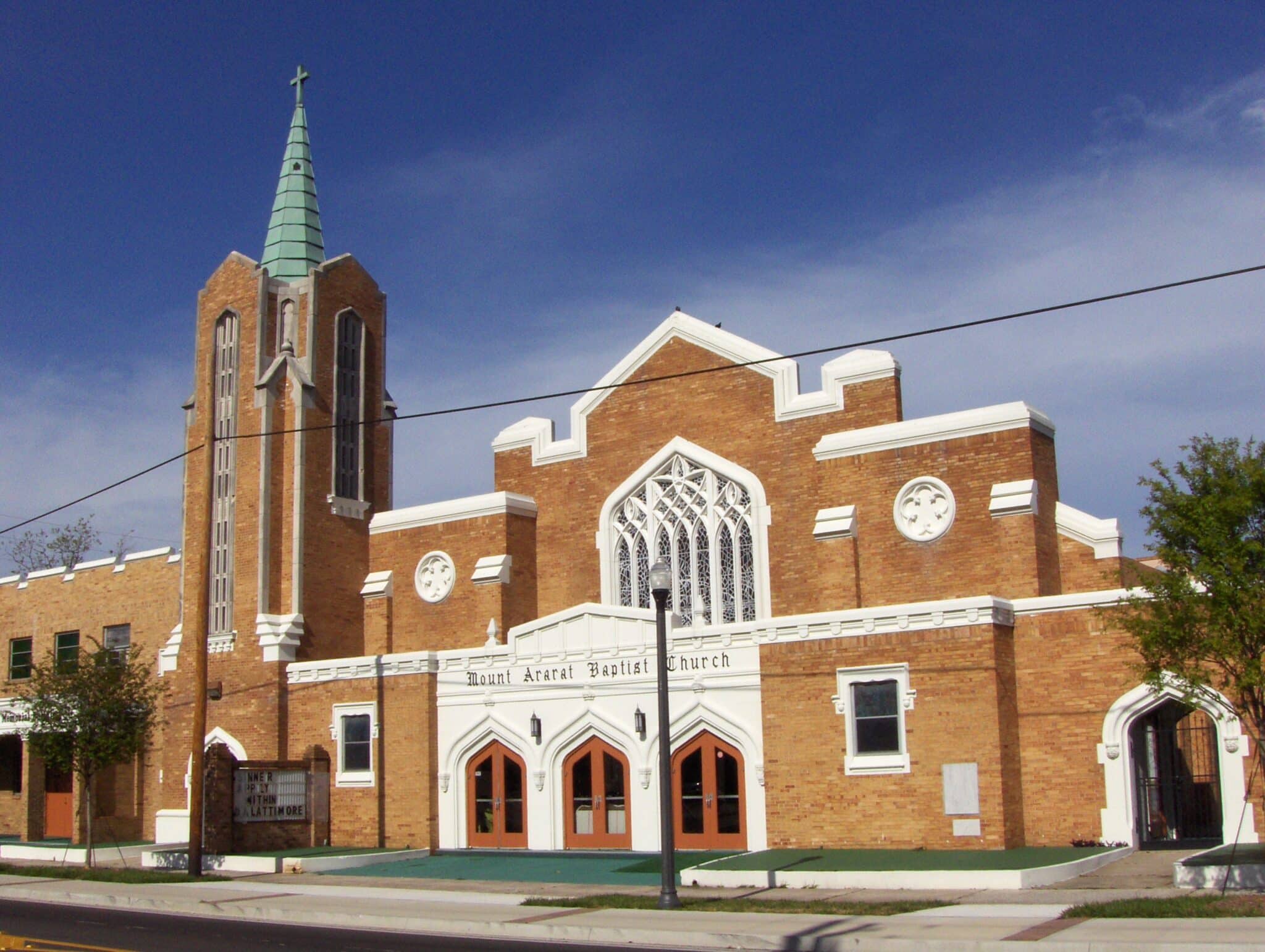
site officially installed among 40 markers Feb 25th at 1 p.m. followed by an installation of three to five markers per month. On March 19, 1961, Dr. Martin Luther King, Jr. delivered his “This is a Great Time to Be Alive” sermon at the location at an event sponsored by the Duval County Citizens Benefit Corporation and the Interdenominational Ministerial Alliance.
Other expansion sites include historic locations in Virginia, Louisiana and Tennessee, offering travelers new destinations to explore pivotal stories, places, and voices that shaped the nation’s civil rights movement.
The Jacksonville Civil Rights Trail will consist of place-based markers, education, and storytelling which will highlight where history unfolded and connect visitors to the streets, neighborhoods, and institutions where organizing took root. The Trail will honor both landmark events and everyday leaders who worked across neighborhoods and generations to sustain the movement, inviting visitors to reflect on the power of community action to create lasting change.
Among the sites proposed for inclusion on the city’s trail are James Weldon Johnson Park, where Ax Handle Saturday took place in 1960; Lackawanna Elementary, one of the first white schools to be integrated in Jacksonville in 1964; and several churches where Black Jaxsons gathered to plan protests in the ’60s.
 “We are honored to be chosen as one of the U.S. Civil Rights Trail’s 2026 expansion locations and grateful to everyone who worked so hard to make it possible,” said Jacksonville Mayor Donna Deegan. “Each of the Jacksonville sites being added to the Trail will add unique and powerful stories that will deepen our understanding of the Civil Rights Movement and the role our city played in it.”
Launched in 2018, the U.S. Civil Rights Trail is a collection of more than 130 churches, courthouses, schools, museums and other landmarks primarily in the Southern states where activists challenged segregation in the 1950s and 1960s to advance social justice. The people, locations and destinations included in the Civil Rights Trail provide a way for families, travelers and educators to experience history firsthand. For details about the sites and stories from civil rights pioneers, visit CivilRightsTrail.com.