

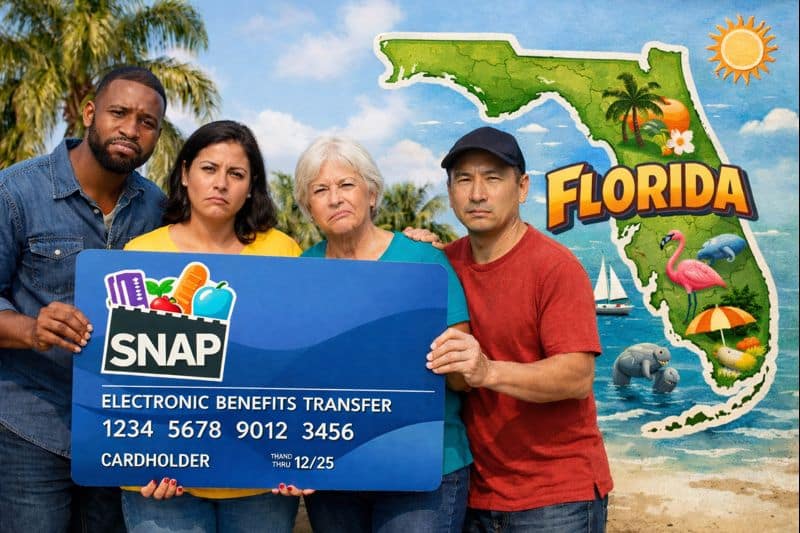
 New work requirements for the Supplemental Nutrition Assistance Program went into effect Feb. 1, threatening benefits for hundreds of thousands of Floridians.
Adults aged 18 to 64 without dependents under age 14 will be required to work, participate in SNAP Employment and Training programs or volunteer for at least 80 hours per month to receive benefits. Previously, only adults aged 18 to 54 without dependents under age 18 had to meet those requirements thus adding on an additional 10 years.
H.R. 1, known as the “One Big Beautiful Bill Act,” set these new SNAP requirements and made changes to many other federal programs when it was signed into law in July 2025.
About 181,000 Floridians have already been moved under the expanded work-requirement rules for SNAP benefits as a result of the law, according to state estimates. These are recipients who now must meet the stricter work requirements (such as working or participating in job training to retain eligibility). Adults who do not meet the requirements can only receive SNAP benefits for up to three months in a three-year period.
As of the most recent federal data, about 2.98 million Florida residents received Supplemental Nutrition Assistance Program (SNAP) benefits on average each month in fiscal year 2024 — roughly 12.7 % of the state’s population. Two major changes to SNAP
Most SNAP recipients must meet general work requirements by applying for and accepting available work, participating in SNAP Employment and Training and not voluntarily quitting or reducing work hours below 30 a week without good reason.
Some recipients are automatically exempt from this requirement based on factors like age, while others must submit exemption forms if they meet other criteria like homelessness or certain health conditions.
A smaller group of SNAP recipients known as ABAWDs, or able-bodied adults without dependents, must meet further requirements if they are not exempt.
SNAP recipients must also continue to update their income and household information to ensure they are receiving the correct benefits and meeting the applicable requirements.