
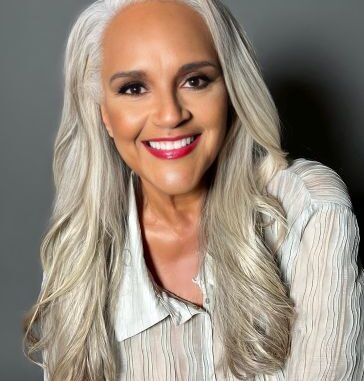

Jayne Kennedy on the cover of her memoir “Plain Jayne.” (Courtesy Photo)
Keith L. Underwood | LA Sentinel, Entertainment Writer
Jayne Kennedy has never viewed her life as a series of isolated moments. In her memoir, “Plain Jayne,” she presents her journey as a complete portrait — career, family, health, faith, ambition and reinvention woven together rather than compartmentalized.
“It was very important to me to not just tell a story about how I grew up,” Kennedy said. “You won’t find just a chapter on Hollywood. You’ll find my full life in this book.”
That insistence on wholeness shapes how Kennedy understands her place in entertainment history. She is widely recognized as one of the first Black women to co-anchor a major national sports broadcast when she joined CBS’ “The NFL Today,” then the most-watched football program in the country. While the role marked a breakthrough, Kennedy is clear that visibility did not come with institutional protection.
“Things have not changed a lot, even though they appear to be,” she said. “We still have a lot of issues that we have to address as African Americans, as people of color in this industry.”
Even reaching the audition stage required persistence. Despite a highly publicized talent search, Kennedy recalled being discouraged by her own representatives.
“My agent kept telling me, ‘They’re not looking for someone like you,’” she said. “Which meant they didn’t want someone Black.”
Kennedy ultimately gained access through former NFL star and civil rights advocate Jim Brown, who connected her directly with CBS decision-makers. Still, when she arrived for the audition, the environment made expectations unmistakable.
“They were all blonde,” Kennedy said. “So it told me they definitely had an eye in mind in terms of what they wanted to see on television — what America wanted to see.”
Her audition shifted the room. At its conclusion, veteran sportscaster Brent Musburger, one of the most prominent figures in sports broadcasting at the time, stood up in support.
“He said, ‘It’s Jayne or nobody,’” Kennedy recalled. “And he walked out.”
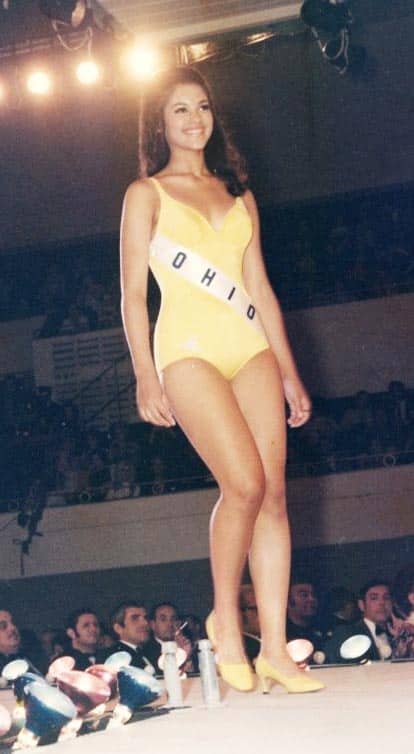
Looking back, Kennedy sees that moment as emblematic of the industry’s pace of change. “Yes, we have some wonderful women that have come behind me,” she said. “But it didn’t come fast enough. We are still in the ditches.”
Acting, Kennedy explained, was never a sustainable path on its own. “The Black actress in the ’70s maybe got a job every six years,” she said. “That wasn’t what I was intending to do.”
Her solution was expansion. “I couldn’t be just an actress, even though that’s where my heart was,” she said. “I knew that I had to do other things as well.”
Producing became one of those avenues. “I started being a producer because I wanted to show what I could do other than acting,” Kennedy said. She produced the film “Body and Soul” and later the stage musical “The Journey of the African American,” which was originally planned for a six-week run and ultimately extended to seven months. The production later performed during Nelson Mandela’s visit to Los Angeles.
“I had to spread my wings,” she said. “I had to work.”
Health and motherhood eventually forced a deeper recalibration. Kennedy revealed she was dealing with endometriosis while traveling almost constantly.
“I was gone 255 days out of the year,” she said. “How was I going to raise a family like that?”
She described stepping back not as retreat, but alignment. “Sometimes I think I got sick because that’s what God’s message was for me,” Kennedy said. “You need to stay home more.”
Motherhood expanded her purpose beyond her own children. Kennedy spoke of mentoring young women — particularly athletes — many of whom she helped guide toward college scholarships.
“They started calling me Mama Jayne,” she said. “That meant the world to me.”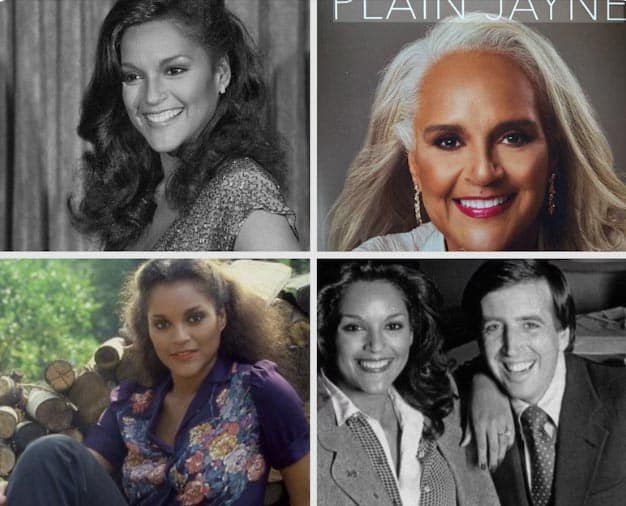
Kennedy’s belief in contextual storytelling also shapes her participation in the documentary “Black Quarterback,” which examines how race shaped perceptions of leadership in football. She pointed to Doug Williams — the first Black quarterback to lead a team to a Super Bowl victory — as an example of how achievement was often minimized.
“How can you take that away from him?” she said.
Today, Kennedy continues to create on her own terms. She recently launched two organic fragrances, “Jayne Kennedy Sun” and “Jayne Kennedy Moon,” designed to reflect personal identity rather than Hollywood trends.
“I wanted ancillary property to come out at the same time,” she said. “But I also wanted it to mean something to me.”
Inspired by her first trip to Africa, the fragrances incorporate elements such as frankincense, myrrh, tobacco leaf and East African opal. “I never wanted to be a Hollywood image,” Kennedy said. “I just wanted to be me.”
Despite renewed attention, Kennedy remains candid about a lingering sense of erasure. “I feel like I’ve been erased in many ways,” she said. “People don’t know who I am anymore.”
Still, she is clear about the future. “My life is not over yet,” Kennedy said. “This is me again.”