

by ReShonda Tate | Defender Network
For many families, Black Greek life is more than colors, calls, and college memories — it is a legacy.
It’s the sound of a grandmother’s stories from her HBCU days, the pride in a father’s old step show photo tucked into a family album, the sparkle in a child’s eyes when they attend their first Founders’ Day brunch.

“Pinning my daughter was one of the highlights of my life,” said Benita Wright Smith, a member of Delta Sigma Theta Sorority, Inc. “To share with her the joy in our sisterhood and our hearts for service will be hard to beat.”
For families like Smith, generational Greek life is more than legacy. It’s love, continuity and living proof that their stories don’t start with them — they run through them.
Black Greek letter organizations were founded to create community, provide leadership training, and offer safe spaces for Black students who were barred from white institutions. Over time, they became pillars of Black excellence, serving as breeding grounds for activists, educators, innovators, and civic leaders.
With that history comes a powerful emotional inheritance. For families who are “legacy” members, joining a sorority or fraternity is a way of honoring the past while stepping into a long-standing tradition of Black excellence.
“Growing up Greek” often means watching service in real time: parents organizing charity drives, volunteering at schools, mentoring youth, leading voter initiatives, or gathering for chapter anniversaries. The work becomes familiar long before the letters do.
Three generations of sisterhood: An AKA family tradition
For the family of Cynthia A. Spooner, pink and green aren’t just colors — they’re a lineage.
Spooner traces that lineage back to Baton Rouge, Louisiana. Her mother, Gloria Dean Turner Spooner, joined Alpha Kappa Alpha Sorority Inc. at Beta Psi Chapter at Southern University in fall 1950. Her dean was the late Dr. Jewel Limar Prestage, a pioneer in political science and the mother of longtime Fort Bend County Commissioner Grady Prestage.
“I wanted to share something important and enduring that would connect me to her and all the women who had poured into
me since childhood.”Cynthia Spooner
“I grew up in a family of women who were service-oriented and committee women who served our home communities,” Spooner said.
Her sister, Silver Star member Carmen Elizabeth Spooner, pledged in 1981 at Southeastern Louisiana University’s Atlanta Omicron Chapter. She was pinned by both their mother and 16th Supreme Basileus Julia Brogdon Purnell.
Cynthia followed in 1988, joining the Gamma Eta Omega Chapter in Baton Rouge, her mother’s graduate chapter. In true “village” fashion, her mother quietly submitted her application.
“I most sought membership as a legacy for a greater bond with my mother,” Spooner said. “I was her independent child, and I wanted to share something important and enduring that would connect me to her and all the women who had poured into me since childhood.”

That bond has now stretched into a fourth generation. Spooner’s great-niece, Jamé Marie Robinson, first appeared as her “reluctant AKA debutante” in 2022, then pledged at LSU in fall 2024. She was pinned by her grandmother, Gloria, and now holds an executive office in her chapter while preparing to graduate with a degree in real estate.
“In my chapter, there were so many women who were firsts — Dr. Prestage, the first Black woman to earn a Ph.D. in political science; Dr. Dolores R. Spikes, one of the first Black women to earn a Ph.D. in mathematics and to become president of a university system; and Supreme Basileus Julia Brogdon Purnell,” Spooner said. “Those women were my surrogate moms, exemplars in professional life and community service vanguards.”
For this family, membership is an heirloom — a gift passed from hand to hand, shaped by service and sisterhood. What gets passed down isn’t just letters, but love for community, leadership, and the confidence that comes from seeing generations of women walk in purpose.
Added Shelley Price, who joined Alpha Kappa Alpha in Spring, 1989 at Southern University, “I wanted my daughter, Mecca, to be a member of Alpha Kappa Alpha Sorority, Inc. because of the incredible experience I have had as a member. I wanted her to be able to be a part of this sisterhood and to experience it in all its grandeur for herself.”
‘We were raised on the hymn’
For Rossana Deadrick, Alpha Kappa Alpha also runs deep.
Her great-aunt started the family’s AKA legacy at Grambling State University. Her mother became what she calls the first “real legacy,” initiated in 1956. Two aunts followed in 1974.
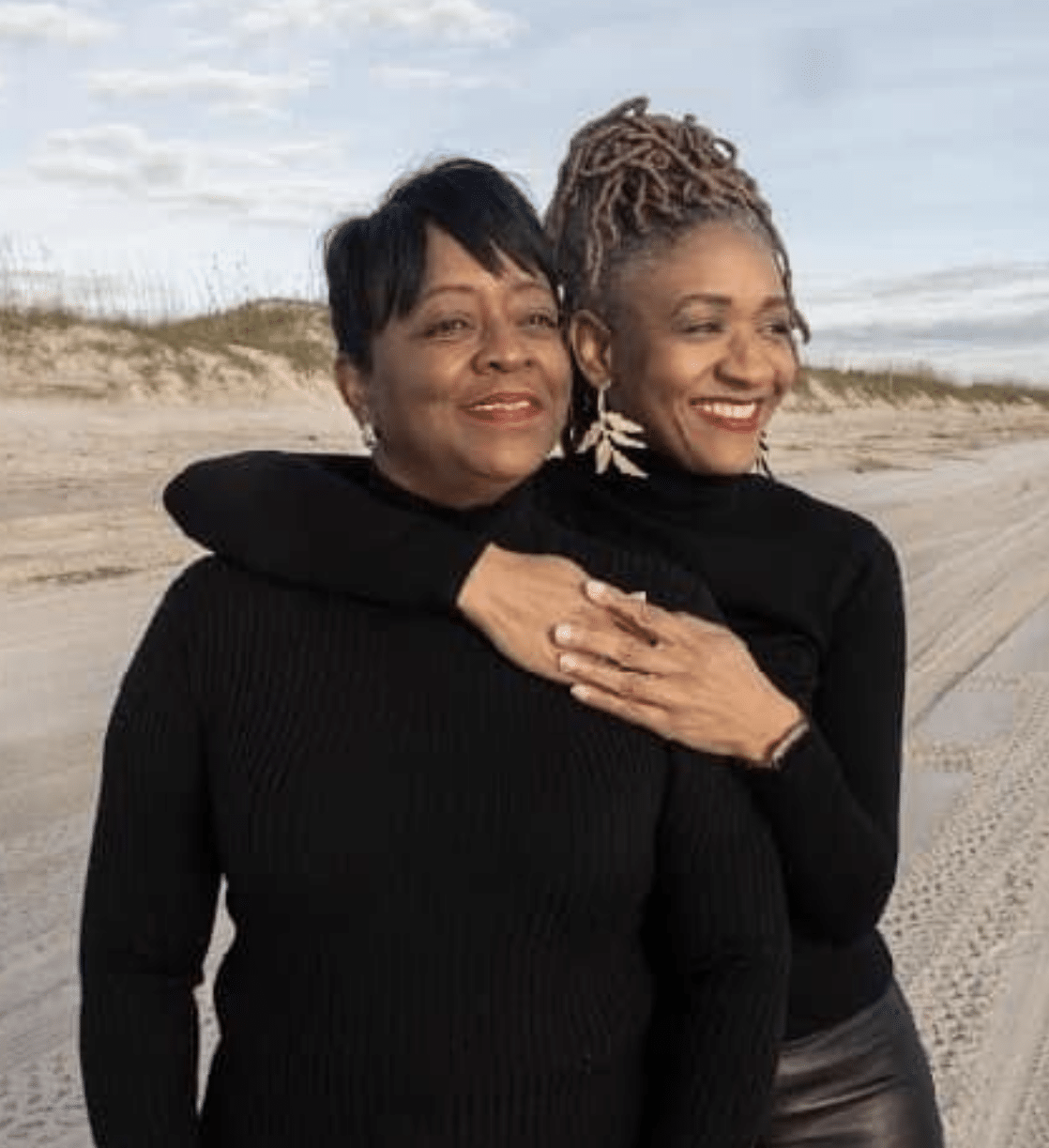
“I am celebrating 50 years this year,” Deadrick said. “I am the first of our third generation, and my three sisters also became AKA women.”
Greek life, she said, was woven into everyday family moments.
“Our mom used to sing the sorority hymn when she put us to bed,” Deadrick said. “We were taught to serve, and the rest is history. My daughter, our fourth generation, proudly carries on the tradition. I also have seven soror cousins. We know there’s no other like our family and sisterhood.”
Nina Wilson Jones, also a member of AKA, said her family’s pink-and-green story began with her sister, a charter-line member at the University of Florida. Their mother became a Silver Star member after retiring from public school teaching.
“My sister actually began our family legacy,” Wilson Jones said. “I was initiated in fall 2021, and it was so important to complete the legacy because I didn’t realize how much of the sorority I had ingested and carried in life due to proximity all these years.”
Between their extended family and their godmother’s family, Wilson Jones said, “we have a rich legacy and multi-generational bloodline of pink and green.”
“When your daughter becomes your sister (Soror) is a lifelong treasure and continued bond.” said Willetta Richie.
Father-son brotherhood
For many Black fathers and sons, fraternity membership is the bond that bridges boyhood and manhood.
Felton Greer counts three generations of Phi Beta Sigma men in his family, each initiated decades apart but joined by lineage, ritual, and pride.

“It’s flattering that my son would choose Phi Beta Sigma Fraternity,” said Greer. “He was raised around it, everyone he calls uncle growing up has been members. As a dad, it’s flattering that he would choose to go a path that I did. That has everything to do with him and making that decision. My dad is a Sigma. I get to experience both ends of it. Without being prompted or prodded.”
Today, as a father himself, Greer sees how the fraternity continues to sharpen his son — teaching leadership, discipline, academic excellence, and community responsibility.
Donovan Campbell was excited to welcome his son, Dylan into Omega Psi Phi Fraternity, Inc. He sees how the fraternity continues to sharpen his son — teaching leadership, discipline, academic excellence, and community responsibility.

What gets passed down: strength, advocacy, discipline, and a brotherhood that shapes Black men into leaders.
Delta mother-daughter pair: Service as a shared language
Smith pledged Delta at Prairie View A&M University in the 1990s. Her daughter, Raisha, later joined Delta at Texas A&M University. Their bond is woven through community service projects, civic engagement work, and countless red-and-white family photos marking Founders’ Day each January.
Raisha said her mother’s Delta work was her first example of structured service.
“I saw how they moved in the community,” she said. “I wanted to be part of something that powerful.”
What gets passed down: social action, bold leadership, and a legacy of Black women committed to justice.
Zeta aunt and niece: ‘Incredibly special’
For Stephanie Matthews, Zeta Phi Beta Sorority Inc. created a bond she didn’t know she needed.
“The connection between myself and my niece in Zeta Phi Beta, because I don’t have a daughter, is incredibly special,” she said.
Through conferences, service projects, and late-night calls about Zeta business, Matthews says she’s been able to pour into her niece in a way that feels both maternal and sisterly.
Sigma Gamma Rho legacy: A sisterhood by choice and by blood
For Pat Tucker, her love of Sigma Gamma Rho Sorority Inc. runs deep. From a young age, her daughter Payton took part in the sorority’s youth programs, volunteering at scholarship events and watching her mother serve.
“I started the Sigma Gamma Rho journey in my family,” Still said. “I now have two first cousins, one second cousin, a niece, and just recently, my sister joined.”
Her niece practically grew up on campus.
“She spent a lot of time on campus with me — she was four at the time,” Still said. “She always said, ‘When I get older I’m gonna be a Sigma Gamma Rho,’ and that’s just what she did.”
What gets passed down: pride, mentorship, and the understanding that family and sisterhood can coexist beautifully.
What it means to grow up Greek
Across all these families, certain themes echo.
Service as a lifestyle.
Children see service modeled long before they know its significance. Neighborhood cleanups, school supply drives, youth mentoring, and scholarship banquets become family traditions, not just chapter events.
Belonging that begins at home.
From toddler strolls at homecomings to piggyback rides at tailgates, Black Greek culture becomes an integral part of the household soundtrack. Step show chants, Founders’ Day brunches, and line jackets in the closet are simply part of growing up.
Leadership as cultural DNA.
Generational Greek families tend to produce leaders in churches, classrooms, boardrooms, and neighborhoods — because leadership is the expectation, not the exception.
Why generational membership matters
BGLO legacy families help strengthen:
- Community pipelines, creating built-in mentorship across generations.
- Continuity of culture, preserving rituals, history, and pride.
- Representation, especially for Black children, is crucial, as it allows them to see themselves reflected in leadership.
- Connection to HBCUs, reinforcing the value of Black educational spaces.
When a tradition is passed down for decades, it becomes more than membership — it becomes identity.