
Members of the Congressional Black Caucus have been the targets of a string of disturbing incidents in recent weeks, ranging from physical assaults to racially charged rhetoric and threats, underscoring growing polarization and violence directed at elected officials.
Last Tuesday in Minneapolis, Rep. Ilhan Omar, a Minnesota Democrat and member of the Congressional Black Caucus, was sprayed with an unknown liquid by a man wielding a syringe while speaking at a town hall meeting. The assailant was immediately tackled and taken into custody on assault charges, and Omar was not seriously hurt. Officials and lawmakers from both parties condemned the attack.
The episode came just days after another member of Congress was assaulted. Rep. Maxwell Alejandro Frost, a Florida Democrat and the first-Generation Z member of Congress, said he was punched in the face at a private party during the Sundance Film Festival in Park City, Utah. Police arrested a suspect, who reportedly made racist remarks during the incident, and charged him with aggravated burglary and assault. Congressional leaders, including House Minority Leader Hakeem Jeffries weighed in on the mounting violence.
Earlier this month, Somali-American lawmakers have also faced sharp verbal attacks. Conservative commentator Laura Loomer drew widespread attention and rebuke for a social media post that used racially derogatory language toward Rep. Jasmine Crockett after a House vote that drew criticism from right-wing media.
The recent spate of incidents has drawn wider concern from civil rights groups and congressional leaders, who say it reflects a broader climate in which political disagreements are increasingly turning hostile and, at times, violent.
 “Violence and intimidation have no place in our democracy,” said the chair of the Congressional Black Caucus, reacting to the attacks and surrounding threats. Lawmakers emphasized the need for greater protections for members of Congress and their staff.
The Capitol Police reported a dramatic increase in threats against members of Congress in 2025, with thousands of reports of hostile communications, stalking, and potential violence. The rise in threats has been documented alongside intensifying national political rhetoric, especially targeting lawmakers who are outspoken on issues such as immigration, civil rights and policing.
While the motivations behind individual incidents vary, the attacks — both physical and verbal — have triggered debates over security for lawmakers and the broader tone of political discourse in the U.S. Critics say inflammatory rhetoric from political leaders and commentators can fuel animosity toward lawmakers who are prominent, especially those from historically marginalized communities. Supporters of free political expression warn against conflating heated debate with criminal behavior.
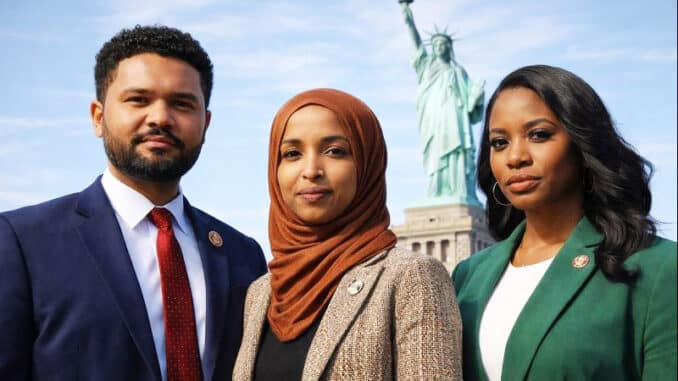
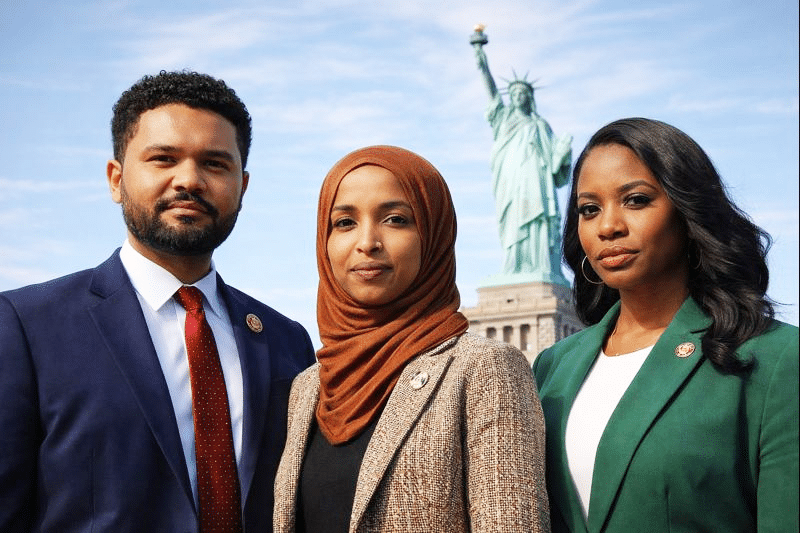
(Shown are Congressional Black Caucus members Rep. Maxwell Alejandro Frost, Rep. Ilhan Omar and Rep. Jasmine Crockett)
The Congressional Black Caucus, formed in 1971 to represent the interests of Black Americans in federal policy, has grown into a powerful bloc advocating on issues ranging from economic equity to voting rights. But its members, particularly those with high profiles or outspoken stances on controversial issues, have often been at the center of intense political battles — and, increasingly, personal threats.
As lawmakers continue to grapple with contentious national issues, including immigration reform and voting rights, the recent series of attacks has prompted renewed calls for greater civility and security on and off the political stage.