

by N.C. Green
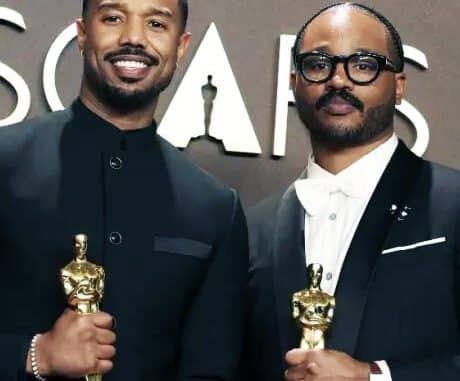
When Michael B. Jordan and Ryan Coogler each walked onto the Oscars stage Sunday night as winners for Sinners, the moment felt like the culmination of something much bigger than a single film.
It was the latest chapter in one of the most remarkable creative partnerships in modern Hollywood — a collaboration that began more than a decade ago with a small independent film and grew into a cultural force that has reshaped Black cinema.
Together, Jordan and Coogler have built a body of work that spans genres, generations, and global audiences. Their journey — from Sundance newcomers to Academy Award winners — has been defined by trust, shared vision, and an intentional commitment to telling stories that center Black experiences with depth and authenticity.
The film that started it all
Their partnership began in 2013 with Fruitvale Station, a powerful independent drama that chronicled the final day in the life of Oscar Grant, the young Black man killed by police in Oakland, California.
At the time, Coogler was a first-time director fresh out of film school. Jordan, though known for television roles on The Wire and Friday Night Lights, was still searching for a defining film performance.
Fruitvale Station premiered at the Sundance Film Festival and quickly became one of the most talked-about films of the year, winning both the Grand Jury Prize and the Audience Award. The film, which grossed over $17 million against its $900,000 budget, introduced Coogler as a fearless storyteller and Jordan as a leading man capable of carrying emotionally complex roles.
Just as importantly, it established the creative chemistry between the two men.
From Indie breakthrough to Hollywood power players
After the success of Fruitvale Station, the pair moved into larger territory.
With Creed, they revitalized the long-running Rocky franchise by shifting its focus to Adonis Creed, the son of Apollo Creed. The film blended sports drama with a story about identity, legacy, and mentorship, turning Jordan into a bona fide movie star and confirming Coogler as a director capable of handling major studio productions.
Then came Black Panther.
The Marvel blockbuster became a global phenomenon, earning more than $1.3 billion worldwide and becoming the first superhero film ever nominated for Best Picture at the Academy Awards. Jordan’s portrayal of the complex villain Erik Killmonger became one of the most memorable performances in the Marvel universe, while Coogler’s direction helped redefine what a blockbuster rooted in Black culture could look like.
The boldest chapter yet
Their latest collaboration, Sinners, may be their most ambitious.
Set in the Jim Crow South, the film blends Southern Gothic storytelling with supernatural horror. Jordan plays twin brothers Smoke and Stack Moore, who attempt to build a future through a Mississippi juke joint only to encounter a mysterious vampire threat that begins to unravel their world.
The film mixes blues culture, folklore, and historical tension into a genre rarely explored in mainstream Hollywood at this scale.
Critics praised both the film’s daring narrative and Jordan’s dual performance, and the Academy responded with historic enthusiasm. Sinners entered the 2026 Oscars with 16 nominations — the most ever received by a single film in Academy Awards history.
On Oscar night, Jordan won Best Actor while Coogler took home Best Original Screenplay, marking a milestone moment for both men.
A partnership built on trust
Hollywood has seen legendary director-actor collaborations before — Martin Scorsese and Robert De Niro, Spike Lee and Denzel Washington.
What makes the Jordan-Coogler partnership distinctive is that the two rose together.
Rather than one established figure discovering the other, their careers evolved in tandem. Each project expanded the scope of what they could accomplish, moving from intimate storytelling to blockbuster filmmaking without losing the emotional core that defined their earliest work.
That shared trajectory has created a partnership grounded not only in creative respect, but also in personal loyalty.
A moment larger than Hollywood
The success of Jordan and Coogler arrives at a moment when the film industry continues to grapple with questions about representation, ownership, and opportunity.
Even before its Oscar victories, Sinners had already made headlines for a reason beyond its storytelling. Coogler negotiated a groundbreaking deal with Warner Bros. that granted him first-dollar gross participation, final cut authority, and ownership participation in the film’s intellectual property, with rights reverting to him after 25 years — terms rarely extended to filmmakers outside Hollywood’s most powerful tier.
The gamble paid off. Sinners became both a critical and commercial success, earning widespread acclaim while generating hundreds of millions at the global box office and capturing the attention of Academy voters across multiple branches.
The film ultimately arrived at the Oscars with a record-breaking 16 nominations before taking home major wins for both Jordan and Coogler. In addition, Autumn Durald Arkapaw became the first woman ever to win the Academy Award for Best Cinematography.
For many observers, the evening’s honors represented a striking contrast to the #OscarsSoWhite controversy in 2015, when all 20 acting nominations went to white actors, sparking a national conversation about representation in Hollywood. They also come amid fierce attacks by the Trump Administration targeting efforts to expand representation more broadly.
For younger filmmakers watching from outside Hollywood’s gates, the Jordan-Coogler partnership offers another lesson as well. Their rise was not the result of a single breakout moment, but a decade-long collaboration built film by film — from an independent drama at Sundance to blockbuster franchises and now Oscar-winning cinema.