
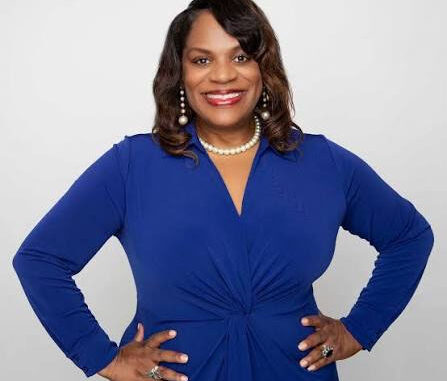
by Lashonda Holloway
By LaShonda “L.J.” Holloway
Let the record reflect that I am writing this piece at the encouragement of this newspaper’s publisher, who suggested that watching my congressional race was giving her a heart attack. Word is bond.
My hesitation was never about having nothing to say. It was about refusing to say anything now that I lacked the courage to say before.
Although I have not completed my customary precinct analysis of the Nov. 3, 2026, general election, one conclusion is already clear: The Democratic Party must reconsider how it invests in Black women candidates and the grassroots communities that sustain it.
I know the party. I know the people. And I know the work.
I have worked on Capitol Hill, served as a Democratic precinct committee member for more than 20 years and run for Congress five times across three congressional maps.
My political education began as a child, licking envelopes while my mother stuffed campaign letters. I learned that elections are won through the often-unrecognized labor of ordinary people committed to extraordinary service.
Black women have long been among the Democratic Party’s most reliable organizers, strategists and voters. We register voters, mobilize neighborhoods, raise money and deliver results. Yet too often, our political judgment is overlooked, our leadership undervalued and our campaigns underfunded.
This is not an indictment of every Democrat. Many dedicated individuals and organizations work tirelessly for progress. But loyalty to a party should never require silence about its shortcomings.
I have been the Democratic nominee for Congress three times, competing in districts shaped by redistricting decisions favorable to Republicans. Despite significant financial disadvantages, I received no direct campaign assistance from the Democratic Congressional Campaign Committee or the Democratic National Committee.
I appreciate the support I received from members of the Democratic Women’s Information Network, the Hispanic Caucus and the Disability Caucus. I also acknowledge the Duval Democratic Executive Committee chair for offering campaign space and access to campaign technology.
However, that assistance came only after I won a competitive primary against a better-funded opponent whose campaign had more than $746,000 in resources. I was outspent 30-to-1, while the Republican incumbent benefited from substantial political action committee support.
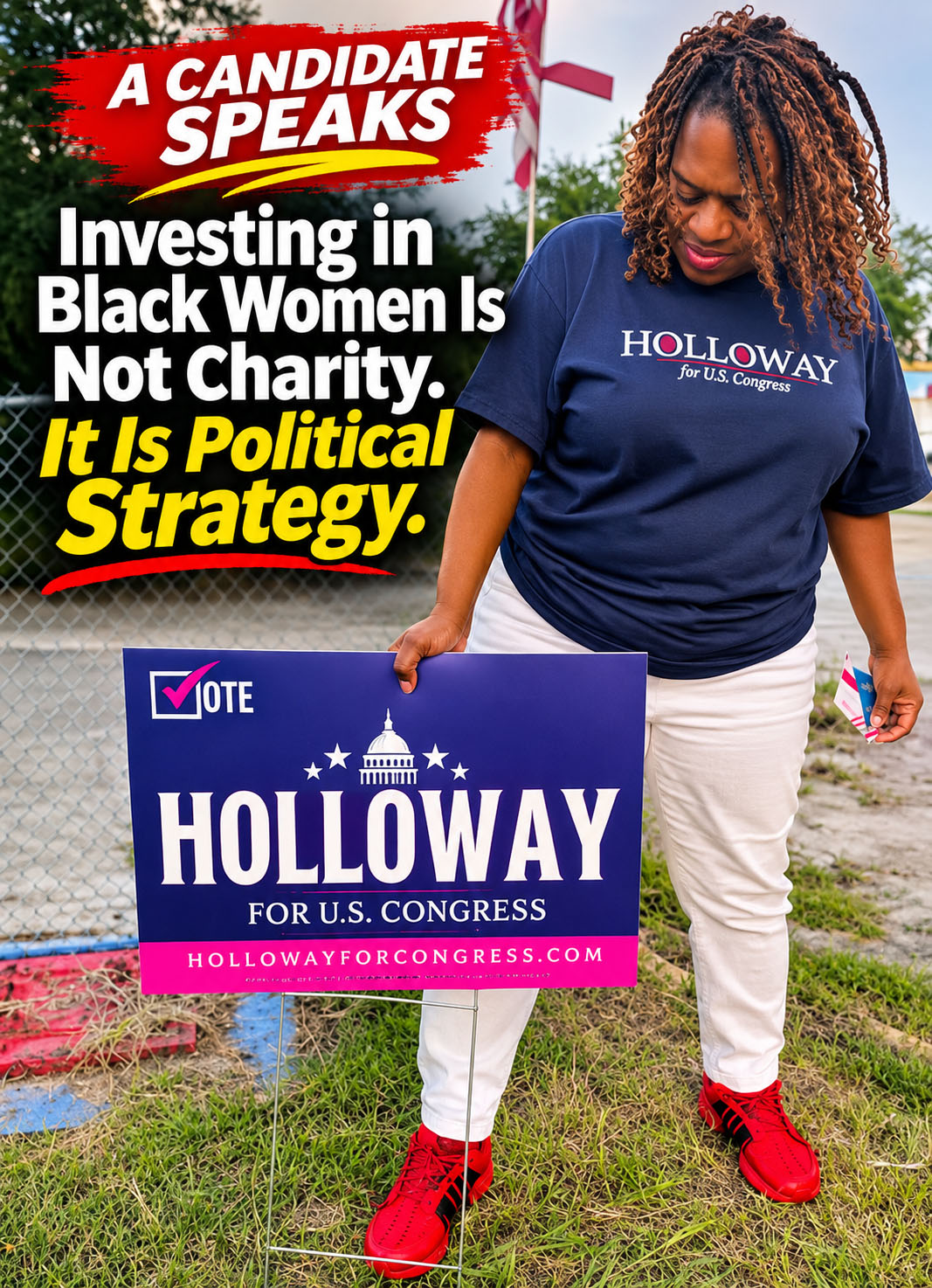 Why must experienced grassroots candidates first demonstrate they can survive without institutional investment before receiving meaningful support?
On Nov. 1, just 48 hours before Election Day, Florida Democratic Party Chair Nikki Fried texted me after visiting Jacksonville, acknowledging my work over three election cycles and encouraging me to remain hopeful.
I appreciated the gesture, but encouragement two days before an election cannot replace months of coordinated campaign strategy.
I had received no advance communication about her visit or any indication that my congressional campaign would be incorporated into those activities. Meanwhile, Democratic U.S. Senate nominee Angie Nixon was not in Jacksonville.
Earlier coordination, joint appearances and shared organizing resources could have strengthened Democratic campaigns throughout Northeast Florida.
A text message is encouragement. A coordinated campaign strategy is investment. We need both.
The election results illustrate why this conversation matters.
According to Florida’s Nov. 10 unofficial returns, I received 144,891 votes, or 48.12%, compared with Republican U.S. Rep. Aaron Bean’s 151,206 votes, or 50.21%.
The difference was just 6,315 votes — approximately 2.1 percentage points. In Duval County alone, I received 100,896 votes.
Consider that: A Black woman running a severely underfunded campaign came within roughly 2 percentage points of defeating an established Republican incumbent in a district widely considered favorable to his party.
My campaign relied on volunteers, personal relationships and grassroots organizing rather than substantial institutional funding.
Would additional resources have changed the outcome? No one can say with certainty. But a race decided by approximately 6,300 votes deserves serious examination of what greater investment in voter outreach, communications and turnout operations might have accomplished.
A race this close is not one the Democratic Party should dismiss. It is one the party should study.
Investing in Black women is not charity. It is sound political strategy.
That means identifying competitive candidates early, providing access to fundraising networks and campaign infrastructure, consulting local leaders and evaluating electoral opportunities based on evidence rather than assumptions about which districts are winnable.
It also means recognizing that Black women should not have to choose between supporting the Democratic Party and demanding equitable treatment within it.
As Democrats look toward the 120th Congress, I hope their priorities include affordable health care, restoring enhanced Affordable Care Act subsidies, protecting voting rights and establishing a fair living wage.
These issues are personal to the families I met throughout Clay, Duval and Nassau counties: seniors concerned about retirement security, parents struggling with child care costs, workers facing stagnant wages and families unable to afford health insurance.
They deserve representatives who understand their struggles and candidates with the resources to compete effectively.
I recognize that some Democrats will disagree with my assessment. But after decades of service, I believe speaking candidly about institutional shortcomings is an obligation, not an act of disloyalty.
A party committed to equality in public policy must demonstrate that commitment within its own political structure.
I remain deeply grateful to the voters who supported me in 2026 and the 165,912 who supported my candidacy in 2024. To every volunteer, contributor and supporter who believed in our campaign, thank you.
My greatest disappointment is not simply that I will not be going to Washington. It is that Florida will enter the 120th Congress without a Black woman in its U.S. House delegation, and young
Black girls in Nassau and Clay counties will have to wait longer to see someone who looks like them representing their communities in Congress.
Still, I refuse to confuse disappointment with defeat.
Our campaign demonstrated that overlooked communities are worth engaging, grassroots candidates can challenge entrenched political power and voters respond when someone takes the time to earn their trust.
The lesson is not that Black women must work harder. We have already demonstrated our willingness to do the work.
The lesson is that the Democratic Party must become more intentional about investing in those who have consistently invested in it.
My criticism is not a declaration of departure. It is a call for a stronger, more inclusive and more competitive Democratic Party.
Ultimately, this is bigger than one candidate, one election or one congressional district.
The party’s future depends on listening, accountability and recognizing the value of its grassroots leadership.
The base is not asking to be rescued. The base is asking to be respected, resourced and represented.
If we are serious about winning, we must be equally serious about investing in those who have always done the work.
For a better day,
LaShonda “L.J.” Holloway, Esquire