
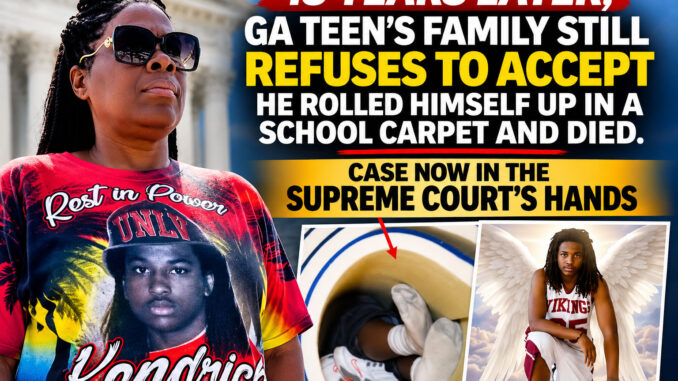
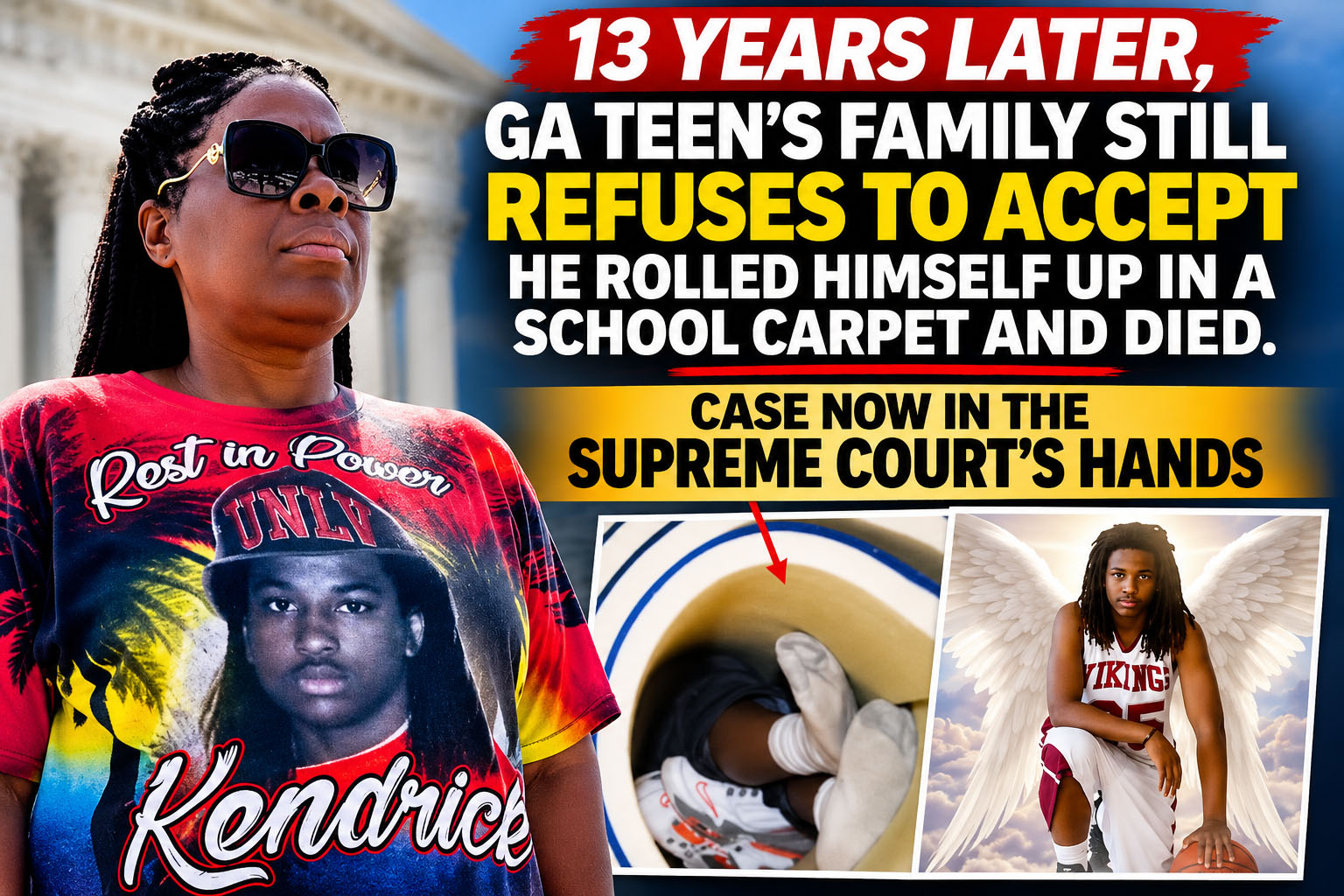
 VALDOSTA, Ga. — More than 13 years after 17-year-old Kendrick Johnson was found dead inside a rolled-up wrestling mat at his Georgia high school, his parents are refusing to let his case fade into history. Their latest effort has reached the U.S. Supreme Court, extending a legal battle that has become a national symbol of a family’s fight for answers.
Kenneth and Jacqueline Johnson have spent more than a decade challenging the official conclusion that their son’s death was accidental. Despite multiple investigations, conflicting autopsy findings and unsuccessful lawsuits, the couple maintains that Kendrick was murdered and that authorities failed to properly investigate his death.
On Oct. 30, 2026, the Supreme Court docketed a petition involving the Johnson family and the Georgia Bureau of Investigation, marking another chapter in a case that has generated national attention, allegations of a cover-up and questions about racial disparities in the criminal justice system.
But the family’s latest legal development does not mean the nation’s highest court has agreed to hear the case or reopen the death investigation. The justices must first decide whether the petition warrants review.
Kendrick was a student at Lowndes High School in Valdosta when his body was discovered Jan. 11, 2013, upside down inside a vertically stored wrestling mat in the school’s gymnasium with his shoes off. Investigators later reported reviewing footage from approximately 62 school cameras and said a camera facing the area where Kendrick was found had been knocked out of alignment nearly a year earlier.
They ultimately concluded that the teenager apparently became trapped while reaching for a shoe and died from positional asphyxia, a condition in which a person’s body position prevents normal breathing.
The Georgia Bureau of Investigation’s medical examiner ruled the death accidental.
But Kendrick’s parents questioned that explanation almost immediately, arguing that the circumstances surrounding his death and the handling of evidence warranted a homicide investigation.
The family’s suspicions intensified after an independent autopsy, commissioned following the exhumation of Kendrick’s body, reached a different conclusion. The private pathologist reported findings consistent with blunt force trauma, contradicting the state’s accidental-death determination.
Those conflicting conclusions became central to the family’s campaign for justice.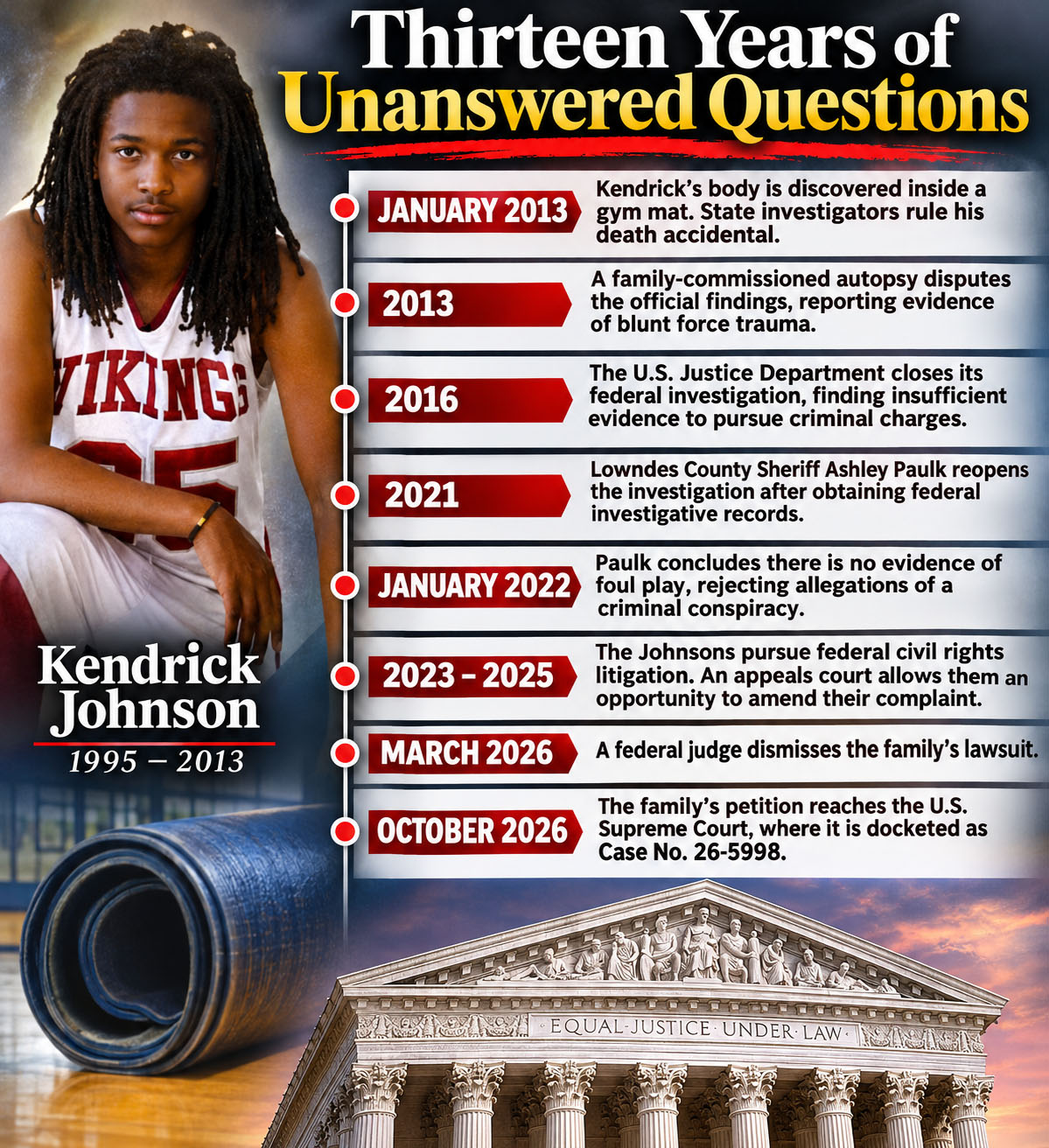
Questions about surveillance footage, the reconstruction of Kendrick’s final movements and the handling of evidence added to public skepticism. His family also raised concerns about the condition of his remains following the initial autopsy, including the discovery that newspaper had been used in place of removed internal organs during preparation of the body for burial.
The funeral home said it had received the body without the organs, while the medical examiner’s office disputed allegations of improper handling.
Although these issues fueled public concern, they did not establish that Kendrick was murdered or that authorities deliberately concealed a crime.
The Johnson family has organized demonstrations, challenged investigative findings, pursued civil litigation and repeatedly called for independent reviews.
Their persistence has kept Kendrick’s name before the public long after the initial investigation ended.
The case has also resonated within the broader national conversation about how the deaths of Black children are investigated and whether families from marginalized communities receive equal attention, transparency and accountability.
The dispute is not simply about a medical examiner’s conclusion. It is about whether every reasonable possibility was thoroughly investigated before authorities declared their son’s death an accident.
The family’s determination has made Kendrick’s case a continuing subject of civil rights advocacy, even as investigators have repeatedly reported finding insufficient evidence to support criminal charges.
Black families have long raised concerns about unequal treatment in criminal investigations, disparities in access to legal resources and whether authorities take their complaints as seriously as those of white families.
Kendrick’s case reflects those concerns, particularly when grieving parents and law enforcement reach fundamentally different conclusions about the circumstances of a child’s death.
For advocates, the broader issue is not whether a particular investigation proves racial discrimination. It is whether the justice system provides the same thoroughness, transparency and accountability to every family, regardless of race or economic standing.
The Johnsons’ persistence has helped keep that debate alive.
In October 2026, the family’s petition reaches the Supreme Court, where it is docketed as Case No. 26-5998. America’s Supreme Court justices must decide whether to hear the family’s arguments. If they decline, the lower court’s ruling will remain in place. If they agree, the case could proceed to a review of the constitutional issues raised in the petition.
Their legal fight has outlasted multiple investigations, court dismissals and changes in public attention. What remains unchanged is their conviction that the full truth about their son’s death has yet to be told.