
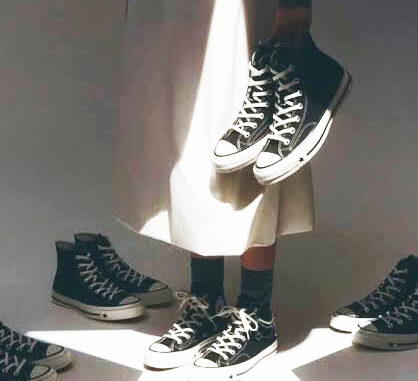
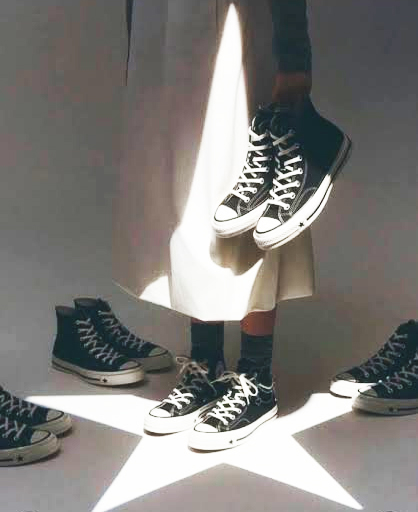
Converse has apologized and pulled an advertisement for its new Chuck 70 X sneaker after the image sparked widespread criticism from viewers who said its composition evoked some of the most painful imagery in Black American history — the Ku Klux Klan and lynching.
The campaign image featured K-pop star Karina of aespa wearing a long white skirt while holding a pair of black high-top sneakers. Critics said a triangular area of light against the white clothing resembled a KKK hood, while the dangling shoes appeared reminiscent of the feet of a person hanging from a tree. The image began circulating widely online, with some questioning how it passed through a major corporation’s creative and marketing review process. Others said they did not believe the resemblance was intentional.
Converse responded by removing the image and apologizing. The Nike-owned company said it understood why the picture was “deeply upsetting,” acknowledged that it “got this wrong” and said it was working to remove the advertisement everywhere it appeared. Converse has not said the imagery was intentional, and reporting to date has produced no evidence establishing that it was.
But for many Black consumers, the controversy carries another layer: Chuck Taylors have spent generations on Black feet.
The shoe’s connection to Black America stretches back to basketball. The all-Black New York Renaissance, or Harlem Rens, wore Converse during the early professional era, and Chuck Taylors became nearly synonymous with basketball by the middle of the 20th century. Converse later signed Julius “Dr. J” Erving to an endorsement deal in 1975, while the brand’s basketball history would also become associated with stars including everyone from Magic Johnson to rap group N.W.A..
Over the decades, basketball, hip-hop and Black street culture became deeply intertwined, helping turn sneakers from athletic equipment into cultural statements. Chucks survived changing fashion precisely because they could move between basketball courts, neighborhood streets, music, fashion and successive generations.
When Chucks eventually lost their dominance on professional basketball courts, they didn’t disappear. They moved deeper into the streets and popular culture. In Black communities — particularly on the West Coast — the inexpensive canvas sneaker became part of an unmistakable street uniform. Ice Cube has recalled growing up in Compton in the 1980s watching older brothers, friends and others wearing Chuck Taylors, which later fit the aesthetic associated with N.W.A.
That history helps explain why this controversy is about more than one poorly received photograph.
A shoe that has been worn for decades across Black basketball, music and street culture is now at the center of an advertisement that some Black consumers immediately associated with lynching — a visual connection Converse says should never have made it through.The company has apologized and removed the image.
The lingering question is how nobody saw what so many consumers saw almost immediately.