
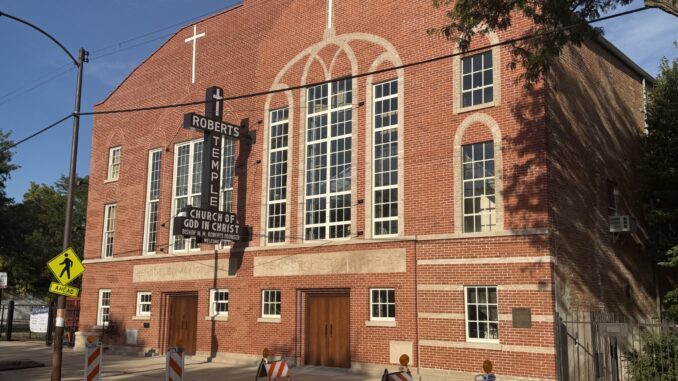
Roberts Temple Church of God in Christ in Bronzeville restores its historic façade with neon sign
It hung 15 feet above thousands of mourners as they paid their respects to a Black boy brutally murdered by two white men. As the world watched massive crowds outside around a hearse, a neon sign in the shape of a cross became part of an important place in Black history in 1955.
That year, Emmett Till’s wake and public funeral gripped the city and the world. The nine-foot neon sign that many people saw for three days bared the name of the Chicago church where it was held: Roberts Temple Church of God in Christ, a Pentecostal church in Bronzeville.
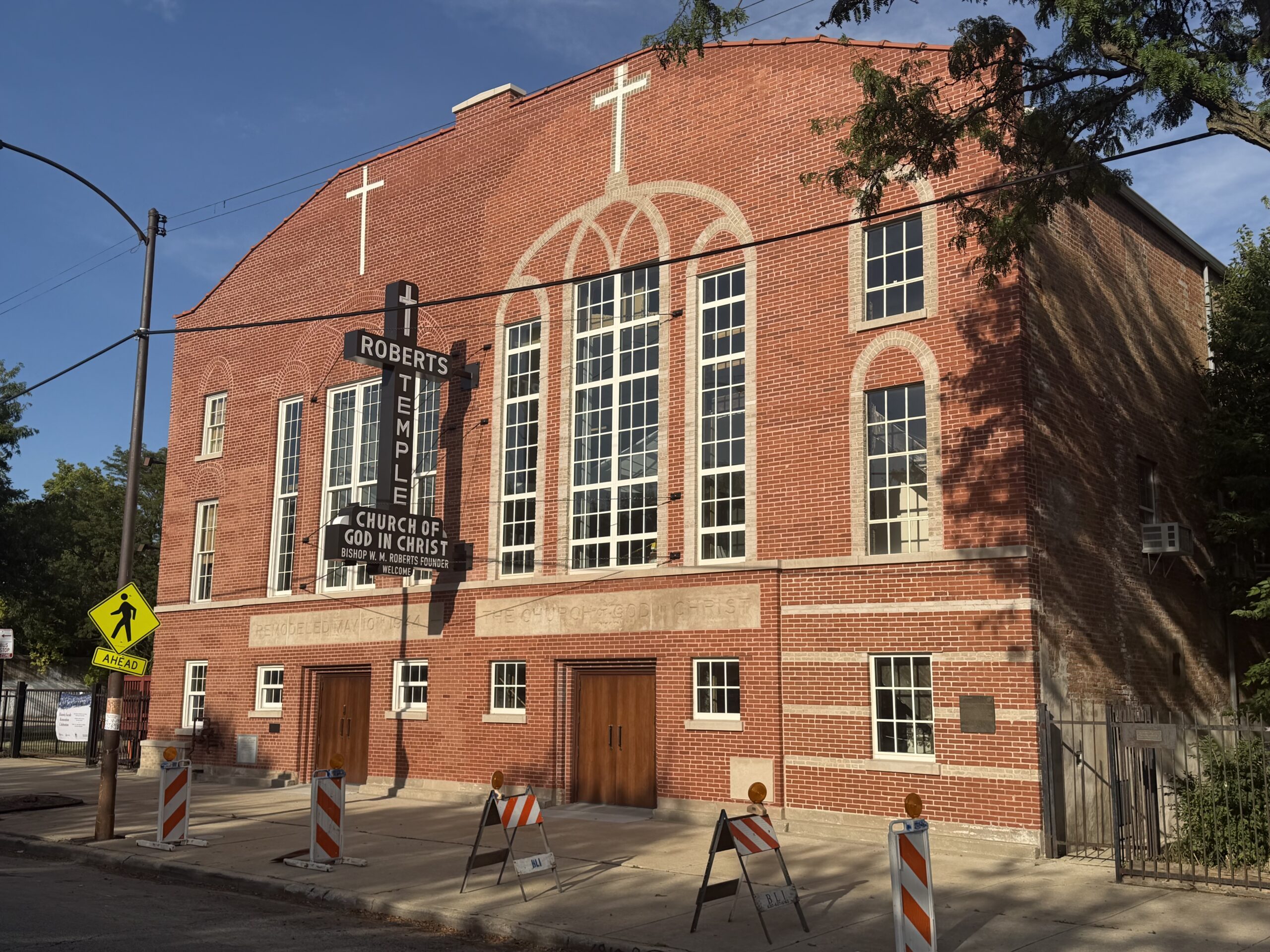
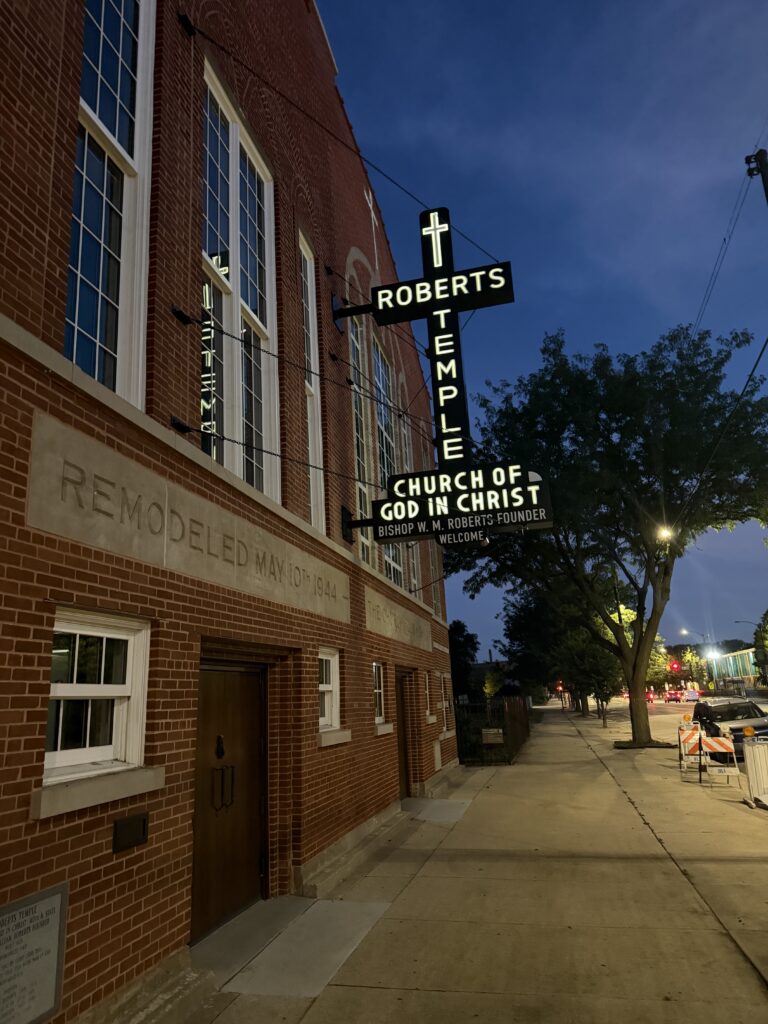
Last week, a replica of the sign was unveiled and illuminated as the final touch on the church’s façade that now looks like it did 71 years ago, when it hosted Till’s massive funeral. Today, the church is a National Monument and a Chicago Landmark. In addition to the neon sign, the arched roof, red brick masonry and windows have returned as well as the two crosses at the top.
In photos and documentaries, the sign became an iconic object and beacon of a historic event at a time when most Blacks didn’t worship with whites in many cities, especially those in the South.
In Chicago, the Pentecostal Movement was spreading under the powerful leadership of Bishop Louis Henry Ford, who gave the eulogy at Till’s funeral at Roberts Temple Church of God in Christ. That day, the sign gave visitors a sense of place at the church, where Till’s mother, Mamie Till-Mobley worshipped regularly on Sundays.
Racism and injustice brought the curious and the horrified to Till’s funeral. The neon cross shaped sign became part of something bigger as thousands of Blacks from various religions came to see the body of a boy whose innocence and death captivated a nation.
According to the church’s website, during the wake and the funeral, the building was filled to its capacity of 1,700 people for the service. Nearly 10,000 people stood outside to listen to the service from loudspeakers with the neon sign in full view.
Decades later, the sign disappeared as the church underwent several remodeling projects.
The National Parks Service is also working on restoring the building’s interior and sanctuary back to what it was during Till’s funeral.
Community leaders unveiled the sign September 9 during a ceremony at the church, 4021 S. State St. At night, the sign is illuminated daily at 7:30 pm.
The unveiling ceremony ceremony at Roberts Temple Church of Christ coincided with a Columbia College exhibition, If Emmett Till Lived, a collection of photos and original essays by Lonnie G. Bunch III, Vinson Cunningham, Paul Farber, Sherrilyn Ifill, Sarah Elizabeth Lewis, Siddhartha Mitter, Jeneé Osterheldt, and Patrick Weems.
“Roberts Temple is not only a witness to one of the most painful chapters in American history; it is a sacred place of memory, truth, and resolve,” said Brent Leggs, president and CEO of the National Trust for Historic Preservation and founding executive director of the African American Cultural Heritage Action Fund. “Preserving this church protects Emmett Till’s legacy and Mamie Till-Mobley’s courageous demand that the world confront injustice. Sites of Black history like Roberts Temple carry the power to teach, to heal, and to move our nation toward a more honest and just future.”
Tiffany Tolbert, co-director of the African American Cultural Heritage Action Fund, said, “Roberts Temple remains a living church and a national place of conscience. The exterior restoration and recreated neon sign are essential to honoring Roberts Temple as it appeared when thousands came here to mourn Emmett Till and bear witness. The Action Fund is thrilled to turn to the urgent work awaiting us inside: restoring the sanctuary and interior spaces so this National Monument can safely welcome the public, support interpretation, and continue serving as a place of faith, memory, and community.”
D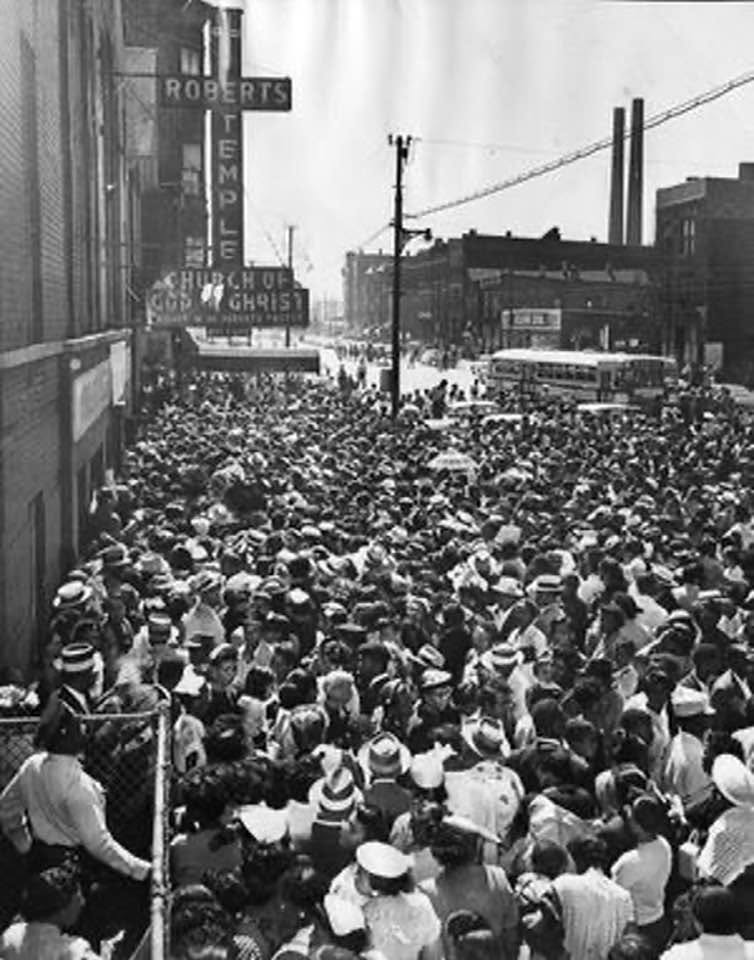 r. Marvel Parker site director for The Preserve Robert’s Temple Initiative, said “Roberts Temple Church of God in Christ, one of the first black mega churches in America, served as a respite for southerners migrating from the south in the 1930’s. It became a part of the fabric of the Civil Rights movement with the funeral of Emmett Till. The heroic decision of Mamie Till Mobley to allow the world to see the ugly face of racism, became the catalyst that challenged America to change. My husband and I are excited to lead the restoration project, we continue to keep our commitment to preserve the legacy of Emmett Till.”