
Florida voters could make history in November by electing the state’s first Black governor. But for many Black voters, the historic possibility comes with a complicated question: Is representation enough when the candidate’s politics may conflict with policies they believe protect their communities?
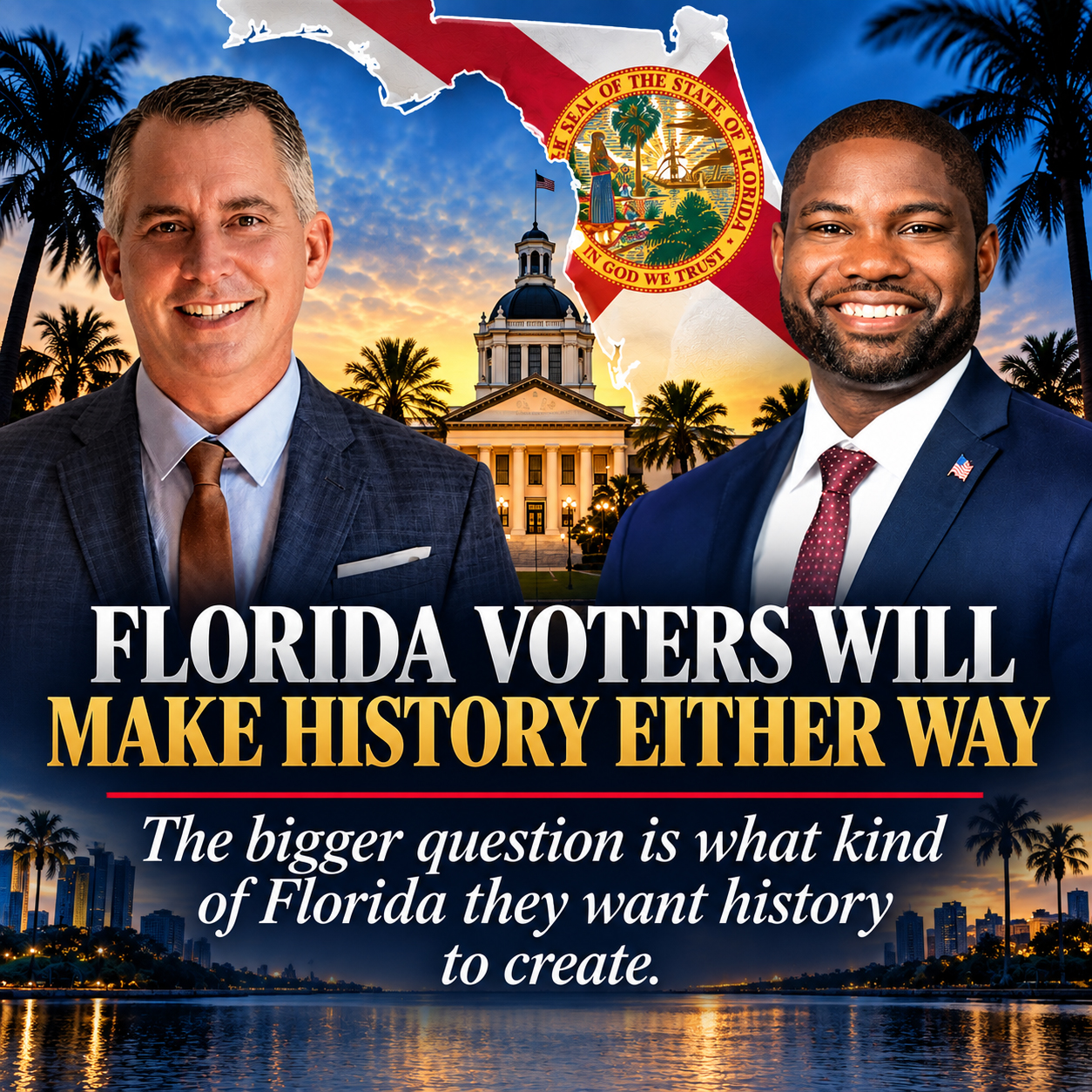
Republican Byron Donalds, a Black former congressman and staunch ally of President Donald Trump, will face Democrat David Jolly, who is white and spent much of his political career as a Republican before becoming an independent and, later, a Democrat. Both won their parties’ Aug. 18 primaries.
The matchup creates one of Florida’s more unusual political contrasts: A Black Republican could break a racial barrier that has stood throughout Florida’s history, while a white Democrat is seeking support from a Democratic coalition that has traditionally relied heavily on Black voters.
Yet the election may ultimately have far less to do with Black and white than red and blue.
For voters concerned about abortion, immigration, taxes, education, LGBTQ+ rights, voting access, diversity programs and the direction of Florida’s schools and universities, the candidates represent sharply different political paths.
Donalds is seeking to extend Republican control of a state government dominated by the GOP for more than two decades. Jolly is trying to break an even longer drought: Florida has not elected a Democratic governor since Lawton Chiles won reelection in 1994.
History — but at what price?
Donalds’ candidacy carries undeniable historical significance. No Black person has ever served as governor of Florida. If elected Nov. 3, Donalds would change that.
But racial representation and political representation are not necessarily the same thing.
That distinction has become increasingly relevant as Florida’s policies on race and education have generated intense debate. During Gov. Ron DeSantis’ administration, the state restricted certain instruction involving race, rejected the College Board’s AP African American Studies course and dismantled diversity, equity and inclusion initiatives at public colleges and universities.
Florida still requires public schools to teach African American history, including slavery, abolition, racial oppression, segregation, discrimination and the contributions of Black Americans. State law, however, also places restrictions on how some concepts involving race can be presented.
An Associated Press examination found that despite Florida’s decades-old Black history mandate, only 30 of the state’s 67 traditional school districts offered at least one standalone African American history or humanities course during the period examined. Some Black parents, historians and educators told the AP they worried recent restrictions had made comprehensive Black history instruction more difficult.
Those debates help explain why Donalds’ potential history-making victory does not automatically translate into political enthusiasm among Black Floridians.
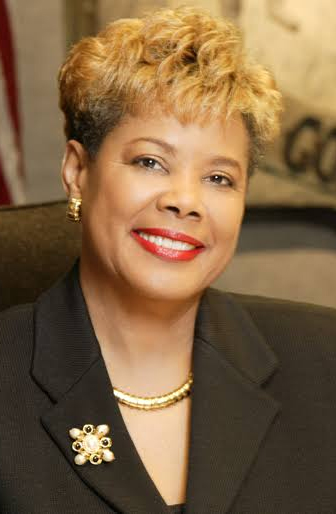
Gainesville City Commissioner Cynthia Moore Chestnut, a longtime Democrat, former state representative and former Alachua County Democratic Party chair, has put that debate squarely in the spotlight by crossing party lines to endorse Republican Byron Donalds. Chestnut said she does not agree with every Donalds policy but wants to see Florida elect its first Black governor and argued that Black voters should not be treated as “political property.” She also criticized Democrats for emerging from the primary with David Jolly and an all-white gubernatorial ticket, saying Black and Hispanic political leadership should not be taken for granted. The endorsement has sparked sharp backlash from fellow Democrats, including state Sen. LaVon Bracy Davis, while Alachua County Democratic leaders responded by publicly rallying behind Jolly. Chestnut insists she remains a Democrat and does not support President Donald Trump, making her decision a striking example of the very question confronting Florida voters when the seperation is difficult to understand: When race, representation, party and ideology collide, which one carries the most weight?
For some, electing Florida’s first Black governor would be a milestone worth celebrating. For others, the more important question is what that governor would do once sworn into office.
The Donalds-Jolly contest is challenging the assumption that racial identity predicts political allegiance.
A Black voter can recognize the significance of Donalds becoming Florida’s first Black governor while opposing Republican policies. A white voter can support Donalds because of conservative ideology rather than his race. Likewise, voters can support Jolly without viewing their choice as a rejection of Black political advancement.
The contrast is particularly striking because Jolly himself once belonged to the Republican Party. He represented Florida in Congress as a Republican before leaving the party, becoming an independent and eventually joining the Democrats.
Donalds, meanwhile, has emerged as a prominent conservative voice and won the Republican nomination with Trump’s backing. The AP described the November contest as a test both of Trump’s influence in his adopted home state and Democrats’ ability to make Florida competitive again.
Many minority voters see more than symbolism at stake with a debate that extends beyond the traditional boundaries of Black voters.
Florida’s Black, Hispanic and other minority communities have watched state and national battles over DEI programs, affirmative action, voting, immigration and education reshape public policy. At the federal level, the Trump administration has also moved aggressively against programs it considers race-based DEI, arguing that government and educational institutions should treat individuals without racial preferences. Civil rights advocates counter that eliminating programs designed to address longstanding disparities can deepen those disparities.
That leaves Florida voters with a choice that resists a simple racial narrative. Donalds can make Black history. Jolly can represent voters who believe Florida needs a political course correction. Neither candidate’s skin color tells voters which philosophy they must embrace.
For a state where race has long intersected with politics, education and civil rights, the 2026 governor’s race could deliver a historic first. But the larger question facing voters may be whether the color that matters most this November is not Black or white — but red or blue.