
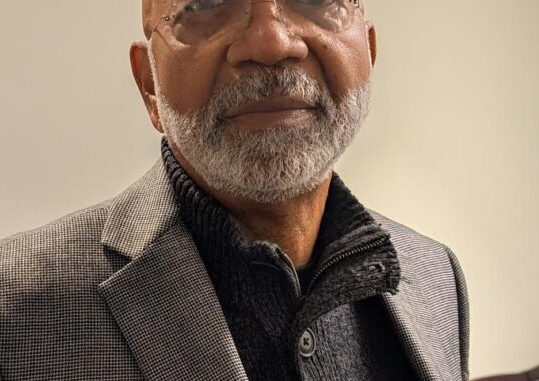
By Wells Todd | In May of this year I travelled to Cuba with a U.S. delegation that delivered desperately needed medical supplies. While there I witnessed the devastating effects of the 67-year-old United States blockade and sanctions against the people of Cuba. For 67 years the U.S has punished the Cuban people for not wanting to be economically exploited and oppressed by corporate America.
The U.S. ended oil shipments from Venezuela to Cuba after the US invaded and kidnapped the president of Venezuela and his wife. Since the January, 2026 oil blockade against Cuba only one oil shipment from Russia has arrived in a Cuban port. While in Cuba we experienced blackouts and water stoppages.
The U.S. oil blockade has created a humanitarian crisis. Without oil a society cannot provide proper services to its population. Without oil there isn’t the capacity to produce electricity. Hospitals in Cuba are unable to provide healthcare which is free to all Cubans from birth to death. The U.S. oil blockage has increased the deaths of infants and children. The infant mortality rate, which had been comparable to the U.S., has risen significantly since the beginning of the U.S. oil blockade. Food spoilage is also affecting the population because of lack of electricity for refrigeration. Gas is extremely limited to carry out commerce, pick up trash and provide transportation for people to get to work. This increases hunger on the island.
African-Americans need to know the truth because Cuba is part of the Black diaspora. Around 62% of the Cuban population is of African ancestry. Since the 1959 Cuban revolution and victory over U.S. imperialism by removing the US-backed dictator, Fulgencio Batista, the people of Cuba have made significant social gains. Cuba’s commitment in the struggle against imperialist aggression was front and center from 1975 to 1991 as Cuban fighters fought South African troops as the apartheid regime invaded Angola. Cuban troops defeated the South African army and was credited with helping to bring about the fall of apartheid in South Africa.
The Cuban government is recognized globally for gains in healthcare, pharmaceutical advancements, free education, gender equity and fighting against racial discrimination. These achievements have been made in spite of the suffocating weight of the U.S. blockade and sanctions. Over the years Cuba has dispatched thousands of doctors, nurses, and health workers to underserved and impoverished communities worldwide. Cuba’s commitment to putting people’s needs before profit are exemplified by the creation of the Latin American School of Medicine (ELAM), the world’s largest medical school. It was established in Havana in 1999. It trains doctors, free of charge, from around the world (including the United States). Since 1999 this school alone has graduated 28,500 doctors from 103 countries. Cuba has trained over 200 U.S. doctors at ELAM. The majority are Black and about a third are Latino. The only thing the Cubans ask is that these doctors return to their home countries to work in underserved communities.
These brief points in Cuba’s history since its revolution are the reason for the 67-year-old blockade the U.S. has imposed on the Cuban people. Each of the above points has meant progress for the people. The progress the Cubans have made that benefit the people are the same social issues Americans continue to fight for here.
We must raise our voice to demand that this government put an end to the 67-year-old blockade, remove Cuba from the State Sponsors of Terrorism List (SSOT) and return Guantanamo Bay to the Cuban people.
US HANDS OFF CUBA!