
by Sylvia Perry
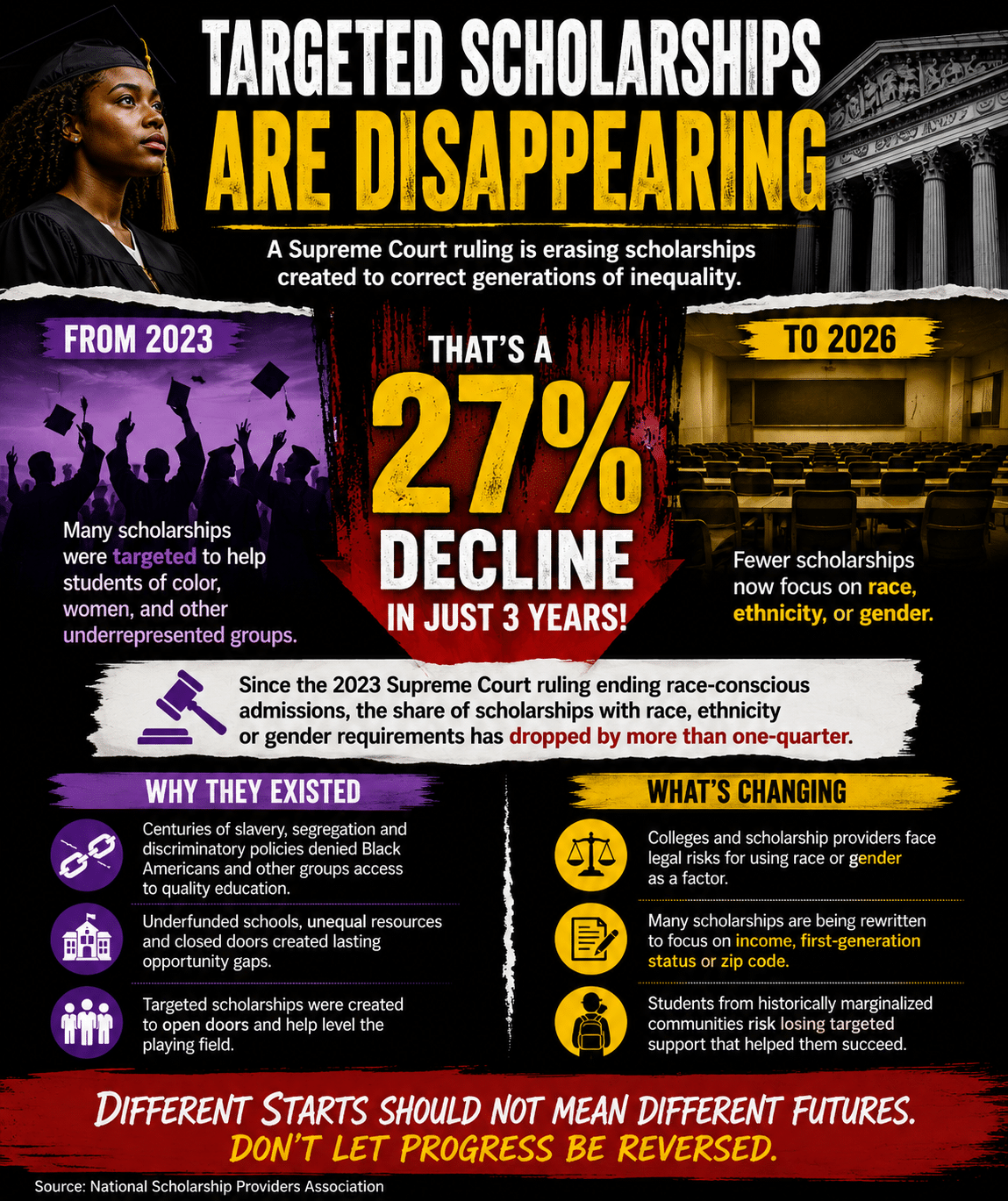
For generations, Black Americans were denied equal access to higher education through segregation, discriminatory admissions policies, unequal public school funding and laws that barred many colleges and universities from admitting Black students. Even after legal segregation ended, persistent racial wealth gaps left many Black families with fewer financial resources to pay for college.
To help address those inequities, colleges, foundations and private donors created scholarships specifically for Black and other historically underrepresented students. Today, many of those scholarships are disappearing or being restructured in the wake of the U.S. Supreme Court’s 2023 decision ending race-conscious college admissions.
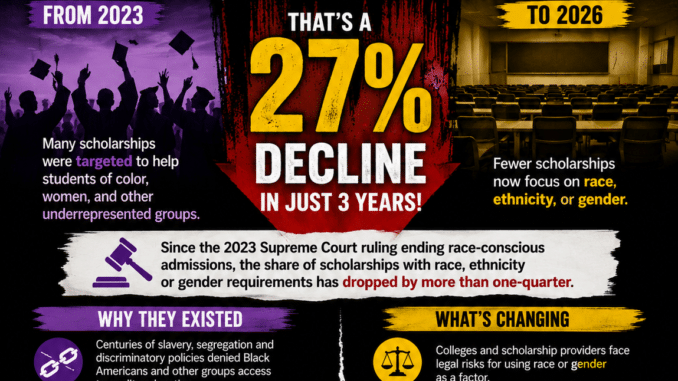
According to the National Scholarship Providers Association, the share of scholarships with race, ethnicity or gender eligibility requirements has fallen by more than 25% since the ruling, dropping from 15% in 2023 to 11% in 2026. Many scholarship providers have broadened eligibility to include all students or shifted to race-neutral criteria such as household income, first-generation college status or ZIP code in an effort to reduce the risk of legal challenges.
The shift comes amid increased scrutiny of diversity initiatives and pressure from lawsuits, legal complaints and actions by the Trump administration, according to reporting by The Washington Post.
Supporters of the changes argue scholarships should be awarded without regard to race and say race-neutral standards promote equal treatment. Critics contend the changes weaken one of the tools designed to address generations of educational inequality and could disproportionately affect Black students, who continue to have significantly lower median household wealth than White families.
The legal uncertainty has also reached donor-funded scholarships. In Iowa, a scholarship established by the late Black chemistry professor Ezra Totton for Black science students has become the subject of a court dispute after the university sought to modify its eligibility requirements. In Wisconsin, the state’s Supreme Court struck down a taxpayer-funded scholarship program for minority students, prompting lawmakers to explore replacing it with one based on income rather than race.
The scholarship changes are unfolding as Black enrollment declines at many of the nation’s most selective predominantly White institutions following the Supreme Court’s affirmative action ruling. However, the overall number of Black students attending college has not fallen at the same rate. Instead, many students are enrolling at other four-year institutions, particularly historically Black colleges and universities.
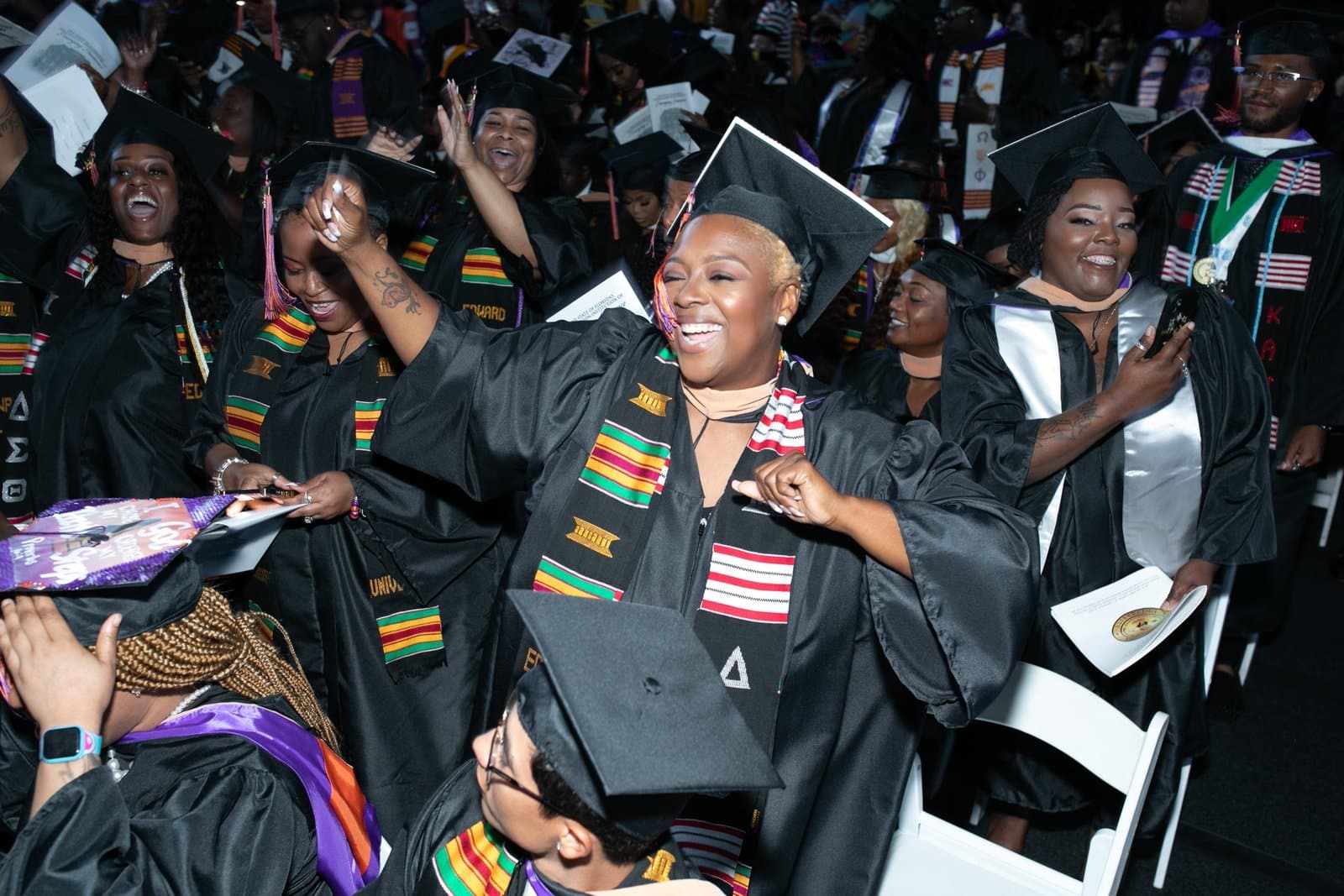
Several HBCUs have reported record applications and enrollment gains since the 2023 ruling. Schools including Hampton University, North Carolina A&T State University, Bethune-Cookman University and Fayetteville State University have reported increased interest from prospective students. National data also show HBCU enrollment grew by nearly 6% in fall 2024, suggesting many Black students are choosing institutions where they see strong academic support, cultural affirmation and a legacy of educating Black professionals.
The trend has also benefited Jacksonville’s own Edward Waters University. Florida’s first HBCU has experienced five consecutive years of enrollment growth, surpassing 1,200 students in fall 2025—the university’s highest enrollment in more than two decades and roughly 30% higher than its 2019 student population. The milestone reflects a broader resurgence at HBCUs nationwide as many Black students seek institutions that offer academic opportunity, cultural affirmation and a historic commitment to their success.
The growing popularity of HBCUs demonstrates that Black students remain committed to pursuing higher education. Unfortunately, the continued decline of scholarships created to address historic racial disparities could make college less affordable for many students, regardless of where they choose to enroll.