
From the Chicago Crusader
In 2019, Fashion Fair, the cosmetics line created by Johnson Publishing Company’s Eunice Johnson, filed for bankruptcy following years of declining sales that ended the cosmetic giant’s decades of growth in department stores across the country.
Today, Fashion Fair is owned by a group that includes former Johnson Publishing Company CEO Desiree Rogers. Rogers broke her promise not to buy Fashion Fair, the iconic Black cosmetics and fashion company, according to Johnson Publishing Company heirs Linda Johnson Rice and her daughter Alexa Rice, in a recent story in the Chicago Sun-Times.
In a revealing interview, the daughter and granddaughter of Johnson Publishing Company founder John H. Johnson said they were shocked when they learned Rogers and a group of investors had bought Fashion Fair after it filed for Chapter 7 bankruptcy.
The revelation provides a glimpse of Rogers, who made critical and, according to sources, questionable decisions in the final years of Johnson Publishing Company before it went bankrupt in 2019. That year, Fashion Fair also filed for bankruptcy as creditors persuaded a judge to liquidate its assets.
According to the Sun-Times article, Alexa said “she and her mother believed there had been an understanding with Rogers that neither would bid on Fashion Fair during the bankruptcy proceedings.” While Linda Johnson Rice did not dwell on Rogers’ actions in the article, Alexa Rice was more candid about her feelings regarding the sale.
“It was the biggest devastation and betrayal I have felt,” Alexa said. “I could not believe it. I was heartbroken.”
Linda said, “That’s done for me. People are gonna do what they’re gonna do, and there are things you can’t control. I cannot let that drag me down.”
In response to Alexa and Linda’s feelings of betrayal, Rogers, CEO of both Fashion Fair and Black Opal Beauty, another cosmetics brand for women of color, responded in an email: “JPC no longer owned the company when we bid [on] it. We were surprised and delighted that our bid was selected and that it would remain in the hands of African Americans.”
When Rogers purchased Fashion Fair, Alexa was a graduate student at Harvard Divinity School, according to the SunTimes. Alexa earned a bachelor’s degree in art history from Wellesley College in Massachusetts in 2011, according to her LinkedIn profile.
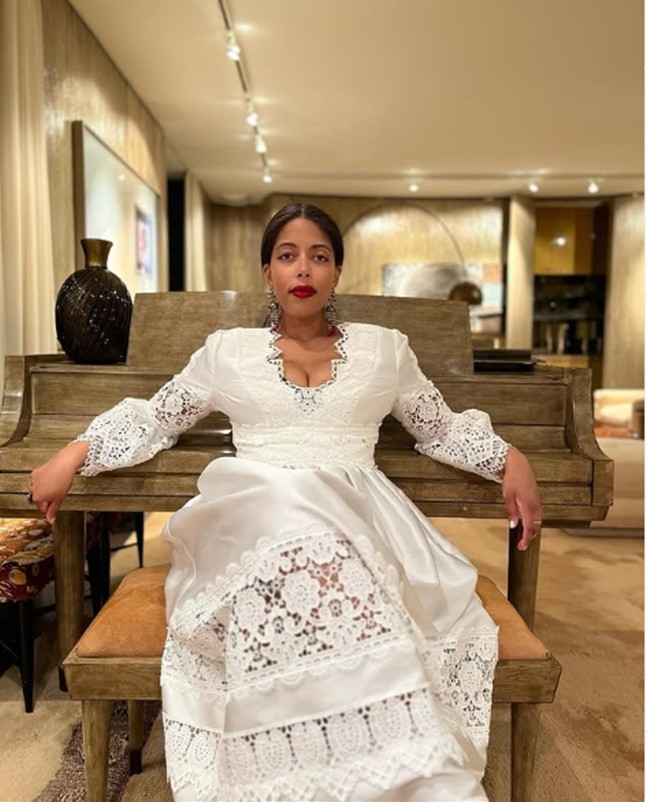
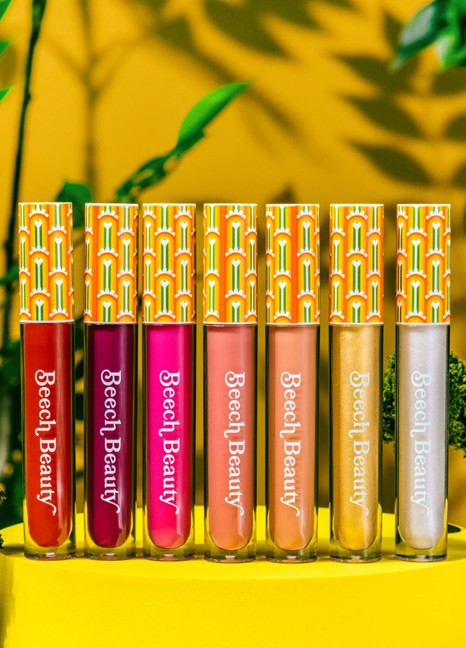
At 37, Alexa launched a new cosmetics line called Beech Beauty. The Chicago Crusader could not reach Alexa for this story.
Rogers, Cheryl Mayberry McKissack and hedge fund Magnetar bought Fashion Fair on November 7, 2019, during bankruptcy proceedings, for $1.85 million. The group also owns Black Opal Beauty, another cosmetics brand for Black women created in 1994.
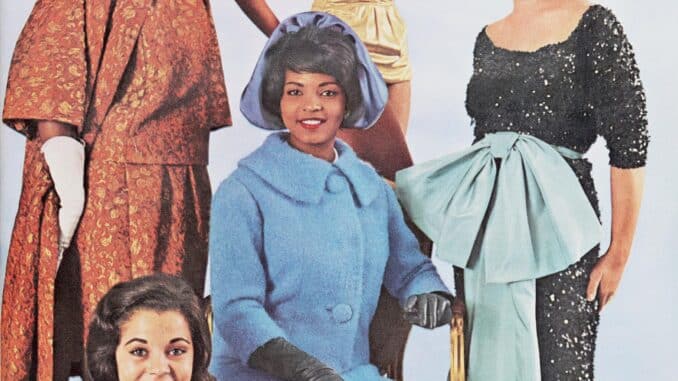
Fashion Fair cosmetics was created in 1973, an offshoot of the traveling fashion show Ebony Fashion Fair, once believed to be the largest traveling fashion show in the world. With its couture gowns and packed shows, Ebony Fashion Fair boosted Johnson Publishing Company’s profile on the global stage.
While producing fashion shows, Johnson Publishing Company founder John H. Johnson and his wife, Eunice, struggled to find makeup to match the darker skin tones of their models. When the two started the Fashion Fair cosmetics line, they were turned down several times before they finally persuaded upscale department stores such as Marshall Field’s and Macy’s to carry makeup products for Black women.
Fashion Fair was at one point the largest Black-owned cosmetics company in the world and sold skin, hair and fragrance products in department stores and online. At its peak, Fashion Fair was sold in more than 1,500 department stores nationwide.
In its final years under Johnson Publishing Company, Fashion Fair declined in popularity, and its products were often out of stock at department stores. As problems mounted, Rogers left Johnson Publishing to work for the city’s tourism agency, Choose Chicago.
In the recent Sun-Times article, Alexa credited her grandmother Eunice for creating Ebony Fashion Fair.
“You can own the business, but you can’t own my grandmother,” she said.
Rogers could credit some of her success to Johnson Publishing Company and to Linda. The two had been friends for decades. Nearly 10 years prior to Rogers’ and her co-owners’ purchase of Fashion Fair, Linda helped Rogers during a difficult period in her career.
In 2010, Rogers was fired as First Lady Michelle Obama’s social secretary after she was blamed for a White House incident in which an uninvited couple crashed a state dinner hosted by President Barack Obama. Rogers was accused of focusing on hosting duties instead of being stationed at security checkpoints.
The gate-crashing incident was one of several criticisms Rogers faced during her short tenure as White House social secretary, a role that organizes and coordinates social events for the First Lady.
Although the position can be high-profile, White House social secretaries historically work behind the scenes. But Rogers was often criticized for being too visible. She clashed with Barack Obama’s Chief of Staff Rahm Emanuel as critics pointed to her high-profile style and an interview with The Wall Street Journal in which she referenced the “Obama brand.”
After she was dismissed as social secretary and disinvited from attending White House adviser Valerie Jarrett’s wedding, Rogers turned to Linda, her longtime friend, who hired her as CEO of Johnson Publishing Company despite her lack of media experience.
Founded by John H. Johnson in 1945 with a $500 loan, Ebony and Jet magazines—the foundation of the Johnson Publishing empire—became popular publications found in millions of Black households across the country. In 1982, Johnson became the first African American to appear on the Forbes 400 list of wealthiest Americans. At one point, his estimated worth was $600 million.

In addition to its Michigan Avenue headquarters, Johnson Publishing Company had an office in New York’s Rockefeller Center. It was the largest Black-owned media company in the world. At one point, it also owned JPC, a television production company that produced nationally syndicated programs. Johnson died in 2005. His wife Eunice died in 2010.
Sources told the Crusader that year, Rogers persuaded Linda to sell the 11-story Johnson Publishing headquarters for $8 million, months after Rogers was hired. Those same sources said that, as CEO, Rogers executed plans to reposition Ebony magazine toward a more upscale audience.
As part of that plan, many of Ebony’s veteran staffers were let go and replaced by employees with high-profile backgrounds. Rogers hired Amy DuBois Barnett as Ebony’s editor-in-chief, a Chicago native who grew up in Hyde Park and earned degrees from Brown and Columbia universities.
At Johnson Publishing Company, sources described Rogers as a “cold” individual more interested in filling Ebony’s pages with fashion and beauty content.
Under Rogers’ plan, Ebony lost many of its longtime readers. In 2014, Jet magazine’s print edition was discontinued amid rising print costs and mounting debt. Ebony went from a monthly publication to a quarterly format as printing costs rose and advertising revenue declined.
Sources told the Crusader that NBA legend Ervin “Magic” Johnson had interest in purchasing Ebony and Jet, but he reportedly lost interest after Linda requested that she remain chairman emeritus as part of the deal.
In 2016, Ebony and Jet were sold to Clear View Group, a private equity firm. In 2019, with more than $35 million in debt, Johnson Publishing Company filed for bankruptcy and sold its $30 million photo archive collection to several philanthropic foundations.
That same year, the former Johnson Publishing Company headquarters at 820 S. Michigan Ave. reopened as an apartment building after developer 3L Real Estate purchased the Chicago landmark in 2017 for $10 million. In 2020, former NBA star and billionaire Ulysses “Junior” Bridgeman purchased Ebony and Jet for $14 million as a gift to his daughter, Eden Bridgeman Sklenar. Sklenar today operates Ebony as a digital-only publication. Ulysees Bridgeman died last year.