
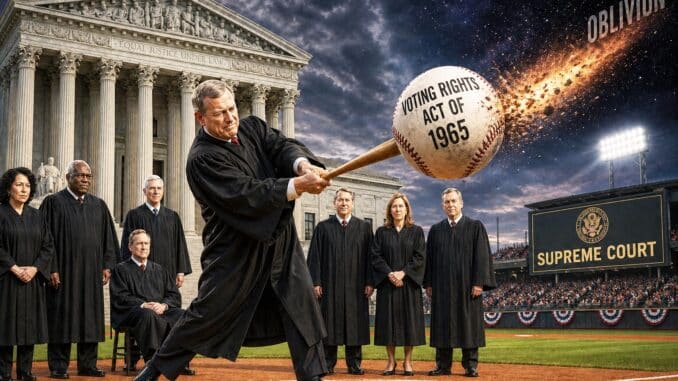
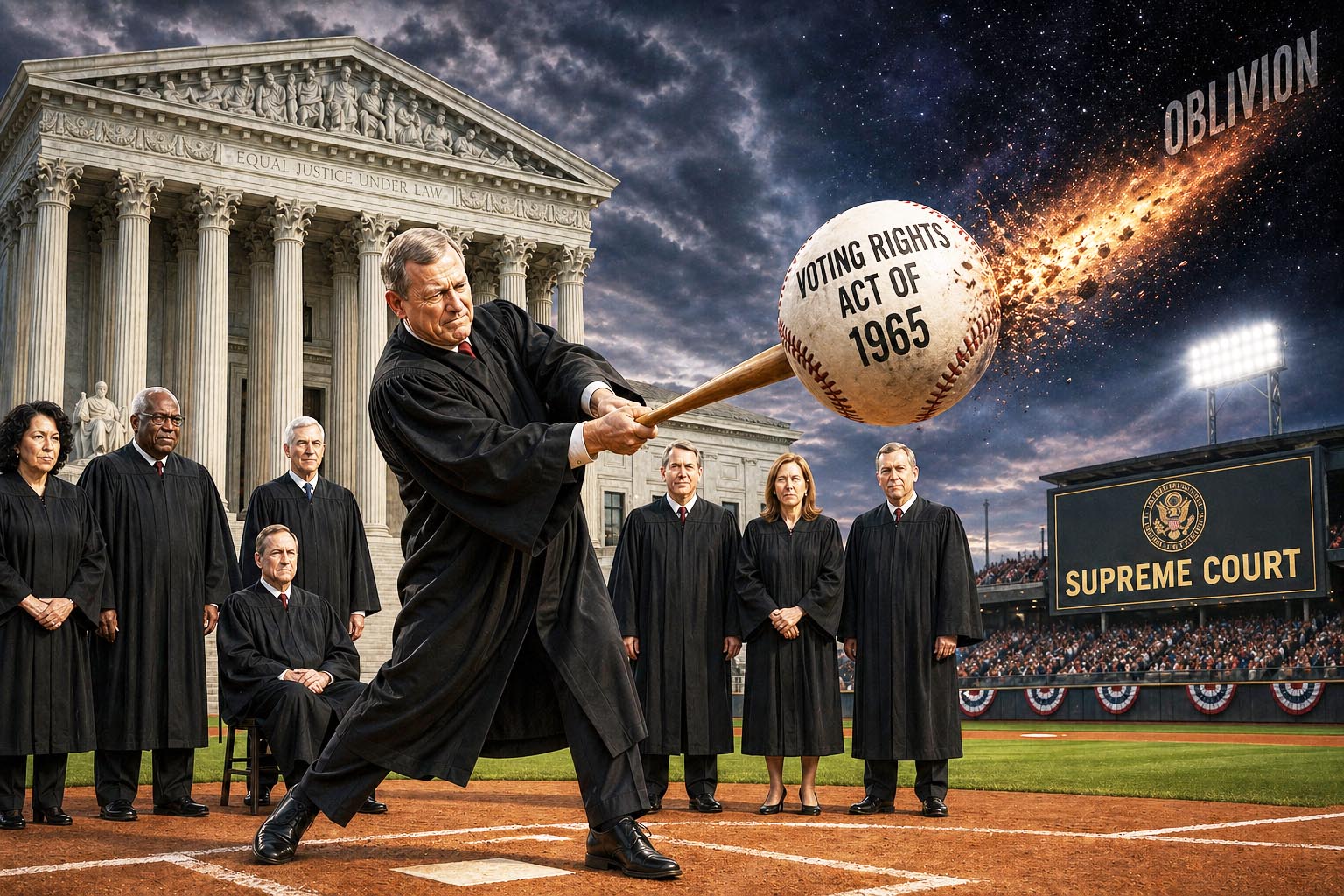
Majority-Black congressional districts, which were created as a direct response to decades of racial discrimination that systematically diluted Black voting power, particularly in the South, were dealt another critical blow today. The U.S. Supreme Court struck down Louisiana’s second majority-Black district, ruling it relied too heavily on race. The 6-3 decision, authored by Samuel Alito and shaped by concerns raised by Chief Justice John Roberts, signals a tightening of how race can be considered in redistricting.
Legal analysts say the ruling could significantly weaken Section 2 — long considered the primary legal mechanism for challenging maps that dilute minority voting strength. If courts limit the ability to draw districts with race in mind, states may have greater latitude to dismantle or redraw districts that currently enable Black voters to elect preferred candidates.
The districts throughout the country were creatively drawn following passage of the Voting Rights Act of 1965 when courts and lawmakers began requiring states to draw districts where Black voters could elect candidates of their choice when racially polarized voting made that otherwise unlikely.
Those districts became a central enforcement tool under Section 2 of the law, which prohibits voting practices that discriminate on the basis of race. Over time, they helped increase Black representation in Congress and provided a pathway for minority communities to gain political influence after generations of exclusion.
Nearly 70 of the 435 congressional districts are protected by Section 2, election law expert Nicholas Stephanopoulos has estimated.
The potential impact is national, but particularly critical in states like Florida, where race and politics are closely intertwined in the redistricting process. Florida has several districts where Black voters play a decisive role, especially in North Florida and parts of Central Florida. In past cycles, courts have intervened when maps were found to weaken Black voting power.
The court’s decision was released as Florida legislators debated a proposed redrawing of the state’s congressional lines, submitted by Republican Gov. Ron DeSantis and intended to give the GOP a chance to pick up as many as four seats in the state’s U.S. House delegation.
Democrats in the Florida Senate urged the Republican supermajority to delay debate to at least offer lawmakers a chance to read the decision and consult lawyers on how it might affect DeSantis’ proposal. Republicans refused.
Under the new legal landscape, those types of challenges could become more difficult. If states are no longer required — or are more restricted — in drawing majority-Black districts, existing maps could be reconfigured in ways that disperse Black voters across multiple districts, reducing their collective influence.
That shift could affect not only representation but also policy outcomes. Majority-Black districts have historically increased the likelihood of electing Black lawmakers and candidates focused on issues such as criminal justice reform, economic equity and voting access. Changes to those districts could alter the composition of congressional delegations and, by extension, the balance of power in closely divided chambers.
The ruling also builds on earlier decisions, including Shelby County v. Holder, which removed federal preclearance requirements for states with histories of discrimination. Together, these decisions mark a continued narrowing of federal oversight in voting rights enforcement.
For Black voters, the implications are both immediate and long term. In the short term, the decision could trigger new legal battles over district maps in multiple states. Over time, it may redefine how — or whether — race can be used to ensure fair representation.
“Today’s Supreme Court decision effectively guts a key pillar of the Voting Rights Act, freeing state legislatures to gerrymander legislative districts to systematically dilute and weaken the voting power of racial minorities – so long as they do it under the guise of “partisanship” rather than explicit “racial bias.” And it serves as just one more example of how a majority of the current Court seems intent on abandoning its vital role in ensuring equal participation in our democracy and protecting the rights of minority groups against majority overreach.” said President Barack Obama in a statement. “The good news is that such setbacks can be overcome. But that will only happen if citizens across the country who cherish our democratic ideals continue to mobilize and vote in record numbers – not just in the upcoming midterms or in high profile races, but in every election and every level,” he shared.
Civil rights advocates warn that without clear protections, the gains made since the 1960s could be incrementally reversed. Supporters of the ruling argue it reinforces constitutional limits by ensuring race is not the predominant factor in drawing districts.
As states prepare for future redistricting cycles, the decision is expected to reshape the legal and political landscape — raising fundamental questions about how voting rights are protected and how representative democracy functions for minority communities across the country.