
by Sylvia Perry
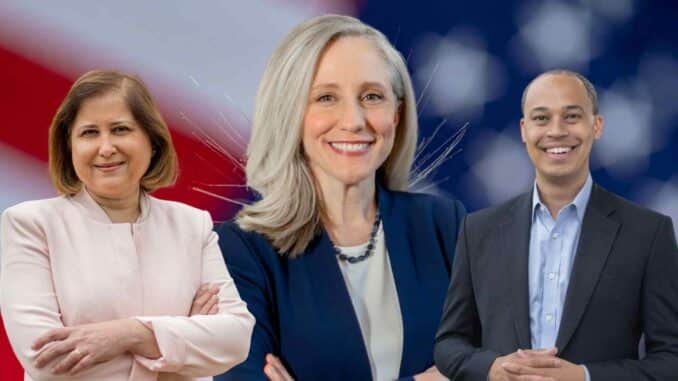
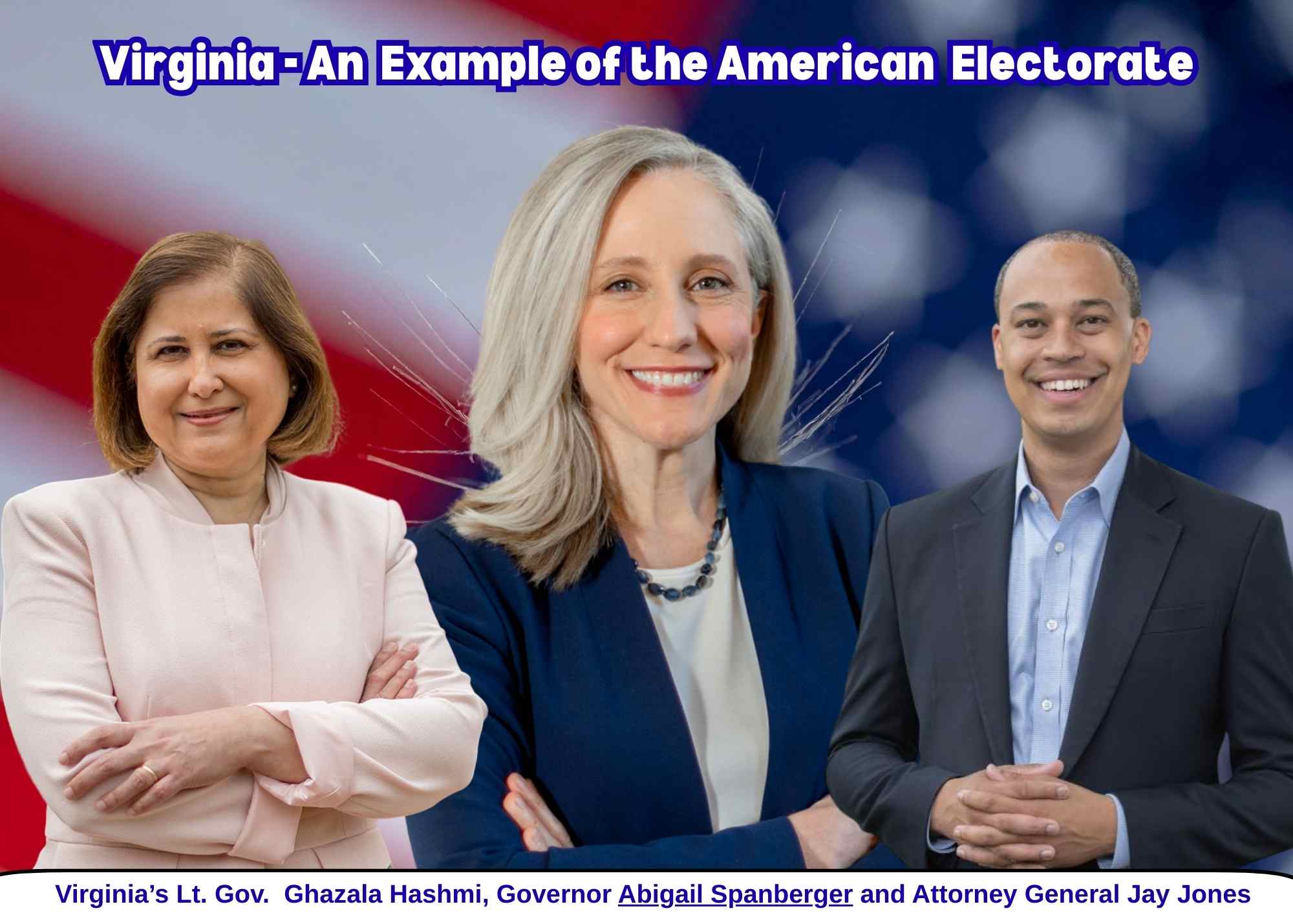
RICHMOND, Va. — As the despot actions of the Commander in Chief are witnessed around the world, Virginia’s voters had other ideas. Once the capital of the confederacy, their electorate has put into power three statewide officials that reflect not only diversity but change. In a moment underscored by history and symbolism, the state of Virginia inaugurated a leadership team unlike any in its past, swearing in its first female governor Abigail Spanberger, a Muslim Lieutenant Governor, Ghazala Hashmi and a Black Attorney General, Jay Jones in a city that once served as the capital of the Confederacy.
The ceremony at the Virginia State Capitol marked a striking turn for a state long associated with the Civil War, Jim Crow laws and decades of resistance to civil rights. More than 150 years after Richmond was the seat of the Confederate government, Virginia’s highest elected offices are now held by leaders whose identities reflect a broader cross-section of the modern electorate.
Spanberger took the oath of office as Virginia’s first woman to serve as governor and Virginia simultaneously inaugurated its first Muslim lieutenant governor and its first Black attorney general, milestones that would have been unthinkable for most of the Commonwealth’s history.
“This inauguration is not just about who we are today, but who we aspire to be,” the new governor said in her inaugural address, pledging to focus on economic growth, public education and protecting democratic institutions.
The lieutenant governor, the first Muslim elected statewide in Virginia, called the day a testament to the power of civic participation, while the attorney general, one of the most prominent Black elected officials in the state’s history, emphasized equal justice and accountability under the law.
Virginia’s political transformation has been years in the making. Once a reliably Republican state, it has shifted in recent elections as suburban growth, demographic changes and higher turnout among younger voters, women and communities of color reshaped the electorate. The new administration’s makeup reflects those changes and signals the growing influence of voters who were once marginalized in statewide politics.
Political analysts say the inauguration carries national significance as both parties look ahead to the 2026 midterm elections, which are expected to hinge on turnout and coalition-building in closely divided states.
“Virginia offers a preview of where the electorate is headed in many parts of the country,” said a political science professor at a Richmond-area university. “The state’s leadership now mirrors the voters who are increasingly decisive in midterm and presidential elections.”
Democrats point to the inauguration as evidence that messages centered on inclusion, voting rights and opportunity can mobilize a broad coalition. Republicans counter that voters remain focused on inflation, crime and government spending, and warn against reading too much into symbolism.
Still, the setting itself carried weight. The Capitol steps, once a backdrop for segregation-era power, now hosted a ceremony highlighting representation and change. For supporters, the moment illustrated progress; for strategists, it offered clues about what may motivate voters nationwide.
As Virginia’s new leaders begin their terms, the state is poised to remain a political bellwether — its historic inauguration serving as both a reflection of its past and a signal of how identity, turnout and shifting demographics may shape the coming midterm elections across America.